Fine Motor Skills Normal Sorting Worksheets for Ages 3-8
3 filtered results
Difficulty Level
Grade
Age
-
From - To
Subject
Activity
Standards
Enhance your child's fine motor skills with our engaging Normal Sorting Worksheets, designed specifically for ages 3-8. These worksheets offer playful and educational activities that encourage sorting and categorizing objects, helping young learners develop essential coordination and dexterity. Each worksheet is thoughtfully crafted to spark curiosity and creativity, allowing children to practice important skills like color recognition, shapes, and patterns while enjoying hands-on experiences. Perfect for home or classroom use, our printable materials provide a fun way for kids to learn through play. Explore the world of sorting and give your child a head start in their developmental journey today!
Favorites
With answer key
Interactive
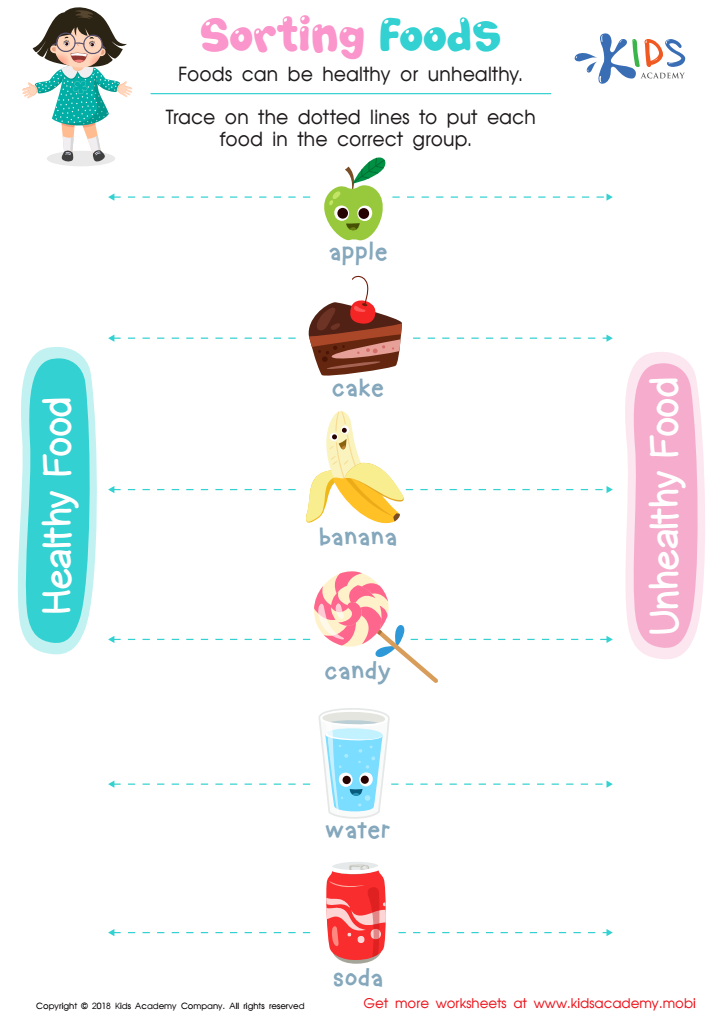
Sorting Food Worksheet
This delightful worksheet boosts critical thinking and fine motor skills. Kids use prior knowledge and pictures to sort foods into healthy and unhealthy groups. Tracing lines support accurate sorting and matching. Enjoy fun and free learning!
 Assign to My Students
Sorting Food Worksheet
Worksheet
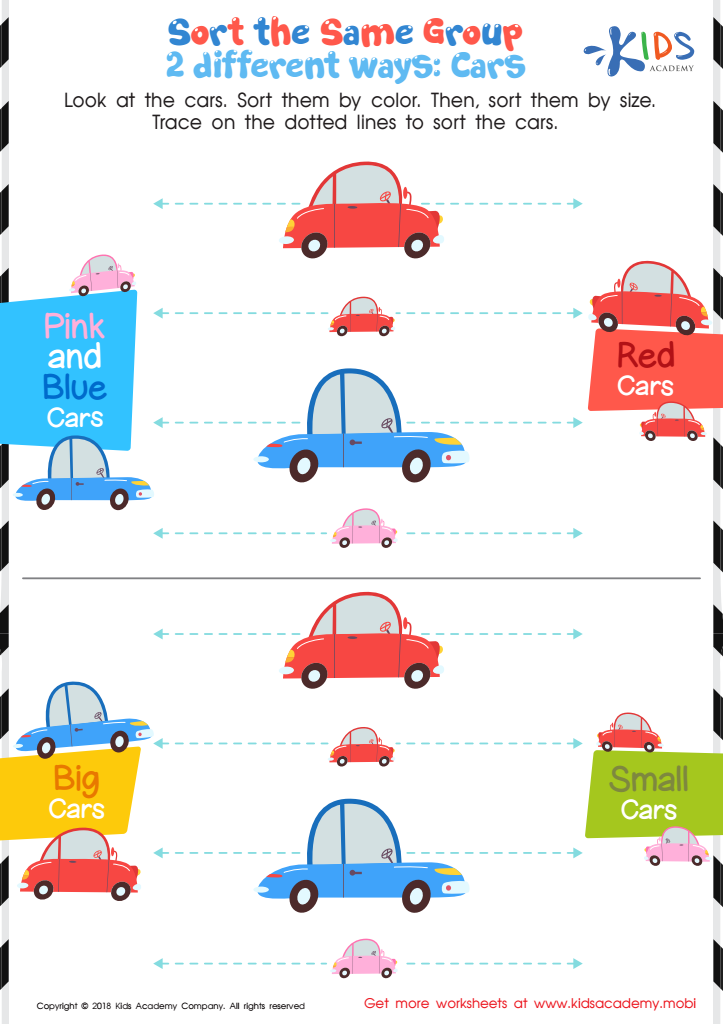
Sort the Same Group 2 Different Ways: Cars Worksheet
Look at the pictures with your child. Can they identify the objects? Ask them to sort the cars first by color and then size. Assist them to trace the dotted lines to sort the cars by color and size. This worksheet lets you easily assess your child's color and size organization skills.
Sort the Same Group 2 Different Ways: Cars Worksheet
Worksheet
Join Kids Academy for Free
Who is primarily going to use this learning content?





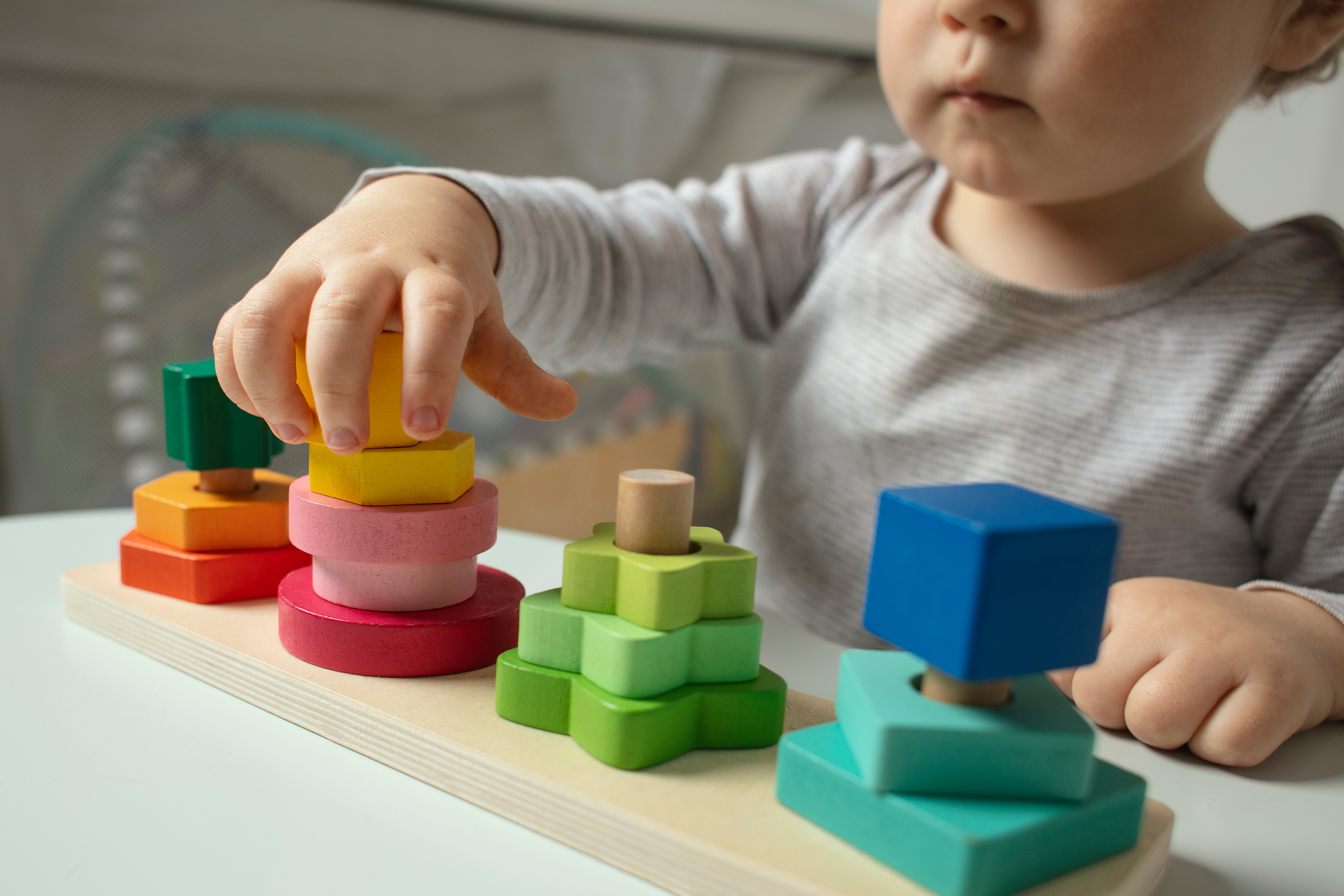


Fine motor skills are essential abilities that involve the coordination of small muscles in the hands and fingers. For children aged 3-8, developing these skills is crucial for various everyday tasks, such as writing, buttoning clothes, and using utensils. Normal sorting activities—like organizing beads, blocks, or shapes—play a pivotal role in enhancing these skills.
Parents and teachers should prioritize fine motor skill development because it directly influences a child's academic readiness and overall self-sufficiency. Engaging in sorting activities helps improve hand-eye coordination, dexterity, and finger strength. As children manipulate objects, they also enhance their cognitive abilities by categorizing and making decisions about size, shape, or color.
Moreover, fine motor skills lay the groundwork for future learning experiences. Proficient skills lead to better handwriting and the ability to complete tasks more independently, fostering self-confidence and reducing frustration. In a broader context, early investment in fine motor development can influence a child's emotional and social growth, as these skills are fundamental to collaborating and interacting with peers.
Ultimately, supporting fine motor skill development through normal sorting activities equips children with the essential tools needed for successful lifelong learning and daily living.