Contextual understanding Normal Building Vocabulary Worksheets for Ages 3-8
5 filtered results
-
From - To
Enhance your child’s vocabulary with our "Contextual Understanding Normal Building Vocabulary Worksheets" designed for ages 3-8. These engaging worksheets focus on teaching kids how to understand words in context, promoting both reading comprehension and language skills. Through fun activities and relatable scenarios, young learners can connect new words to their everyday experiences. Our user-friendly worksheets are ideal for early education settings and home learning, fostering a love for language while enhancing cognitive skills. Explore our diverse selection to support your child’s growth and build their confidence in vocabulary usage. Instill the joy of learning with our thoughtfully crafted resources today!
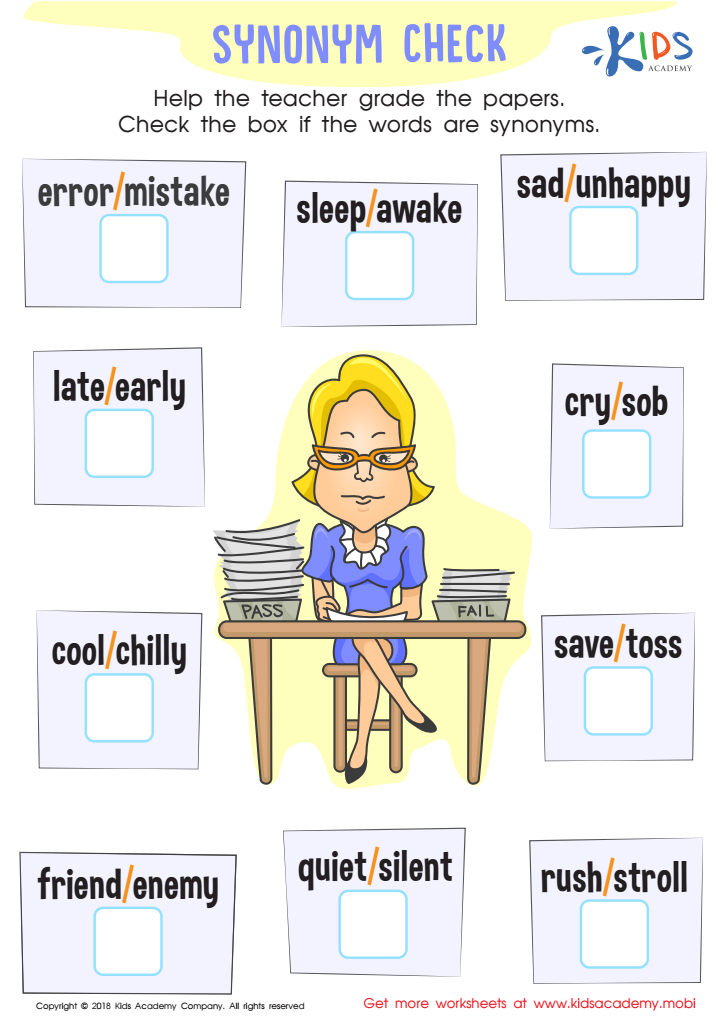
Synonym Check Worksheet
 Assign to My Students











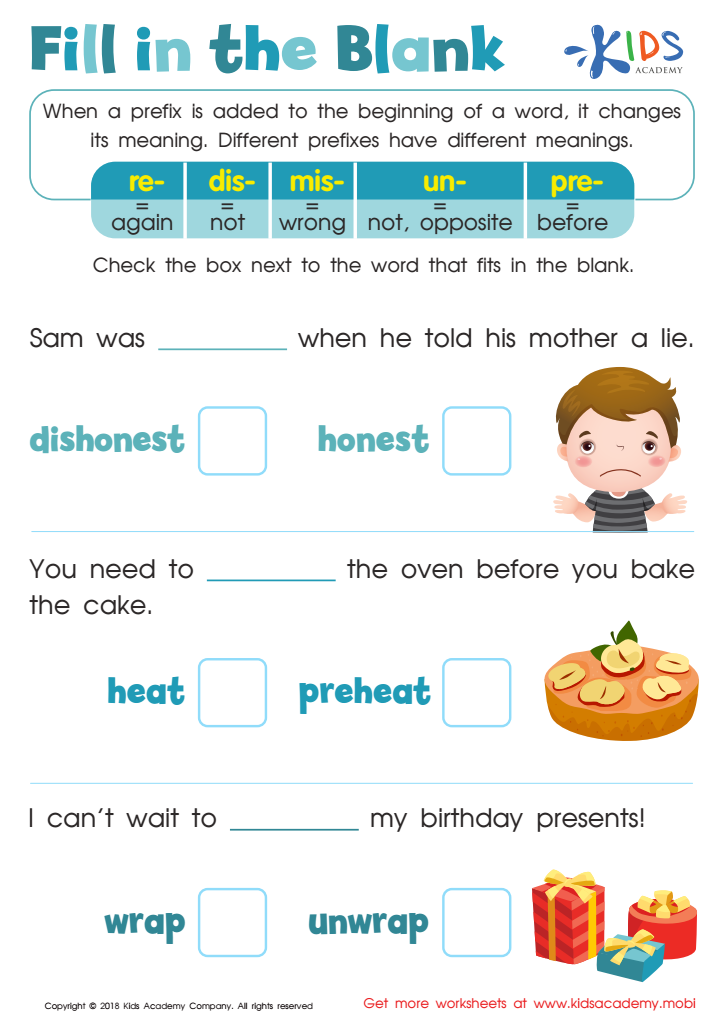
Reading: Fill in the Blank Worksheet
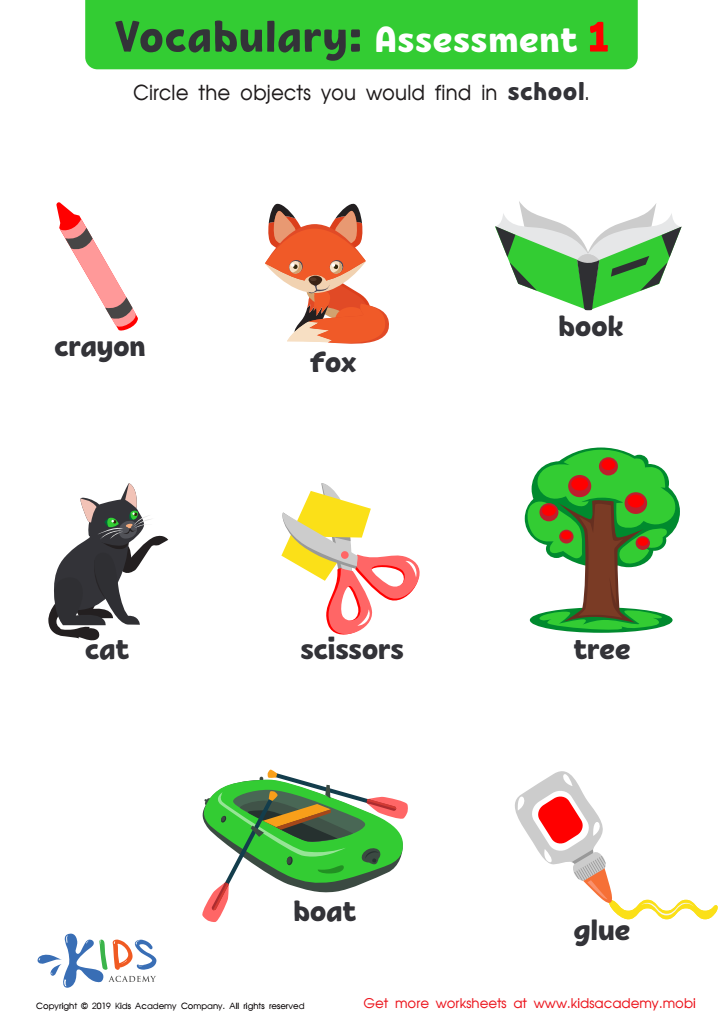
Vocabulary: Assessment 1 Worksheet
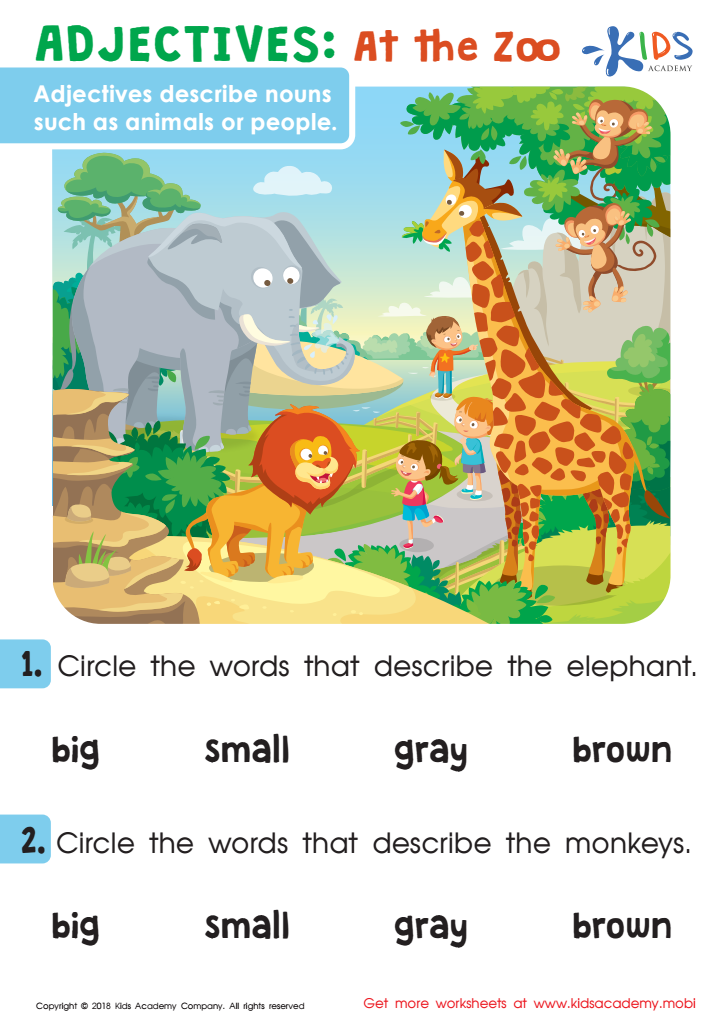
Adjectives: At The Zoo Worksheet
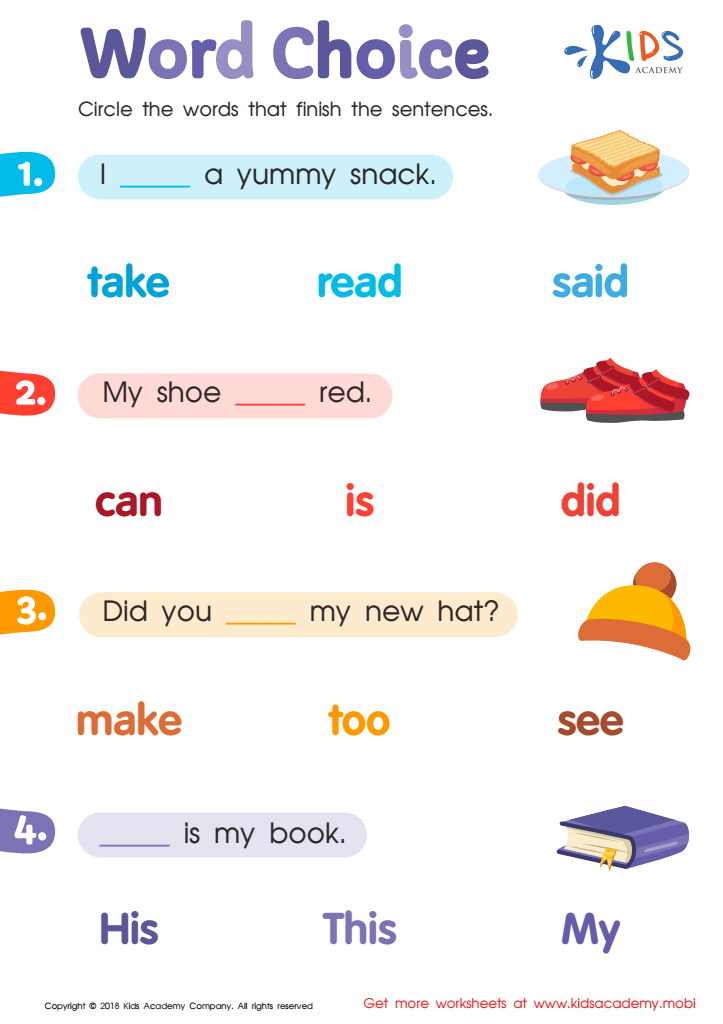
Word Choice Worksheet








Contextual understanding and vocabulary development are critical for children aged 3-8, as they lay the foundation for effective communication and learning. During these formative years, children explore language primarily through interactions with parents, teachers, and their environment. Vocabulary is not just about knowing words; it involves understanding their meanings based on context. When children learn words in meaningful situations, they can better grasp nuances and relationships, leading to improved comprehension skills.
Parental and teacher involvement is crucial. By engaging children in conversations, providing diverse reading materials, and encouraging storytelling, adults can introduce new vocabulary in context. This connection fosters curiosity and relevance, making language acquisition enjoyable and effective. Contextual understanding helps children interpret language based on situational cues, enhancing their ability to follow instructions and participate in discussions more actively.
Moreover, strong vocabulary skills are linked to greater academic success. Children with rich vocabularies can express themselves more precisely and comprehend complex texts when they continue their education. Consequently, by prioritizing contextual understanding and vocabulary building, parents and teachers empower children to become confident communicators, critical thinkers, and lifelong learners. Investing in these areas during early development sets the stage for future educational achievements and social interactions.








