
Letter recognition Normal Building Vocabulary Worksheets for Ages 3-8
4 filtered results
Difficulty Level
Grade
Age
-
From - To
Subject
Activity
Standards
Enhance your child's literacy skills with our engaging Letter Recognition Normal Building Vocabulary Worksheets, designed for ages 3-8. These worksheets focus on recognizing letters and understanding their sounds, vital building blocks for effective reading and vocabulary development. Featuring fun and interactive activities, children will match letters, trace their shapes, and identify words that start with specific letters. Perfect for home or classroom use, these worksheets stimulate young minds while making learning enjoyable. Give your child the tools they need for early reading success and boost their confidence with our thoughtfully crafted resources, tailored to foster a strong foundation in literacy!
Favorites
With answer key
Interactive
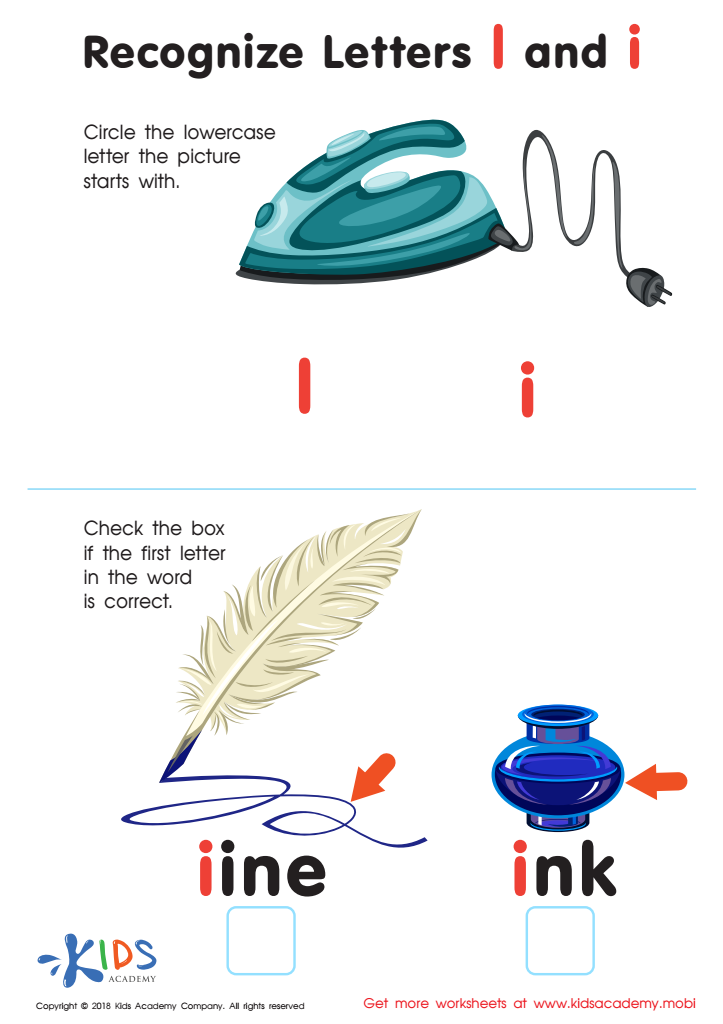
Recognize Letters l and i Worksheet
Help your child become familiar with uppercase and lowercase letters. Have them look at the pictures in the worksheet and circle the lowercase letter the picture starts with. For example: which one is the lowercase "i", the capital "I" or the small "i"?
 Assign to My Students
Recognize Letters l and i Worksheet
Worksheet











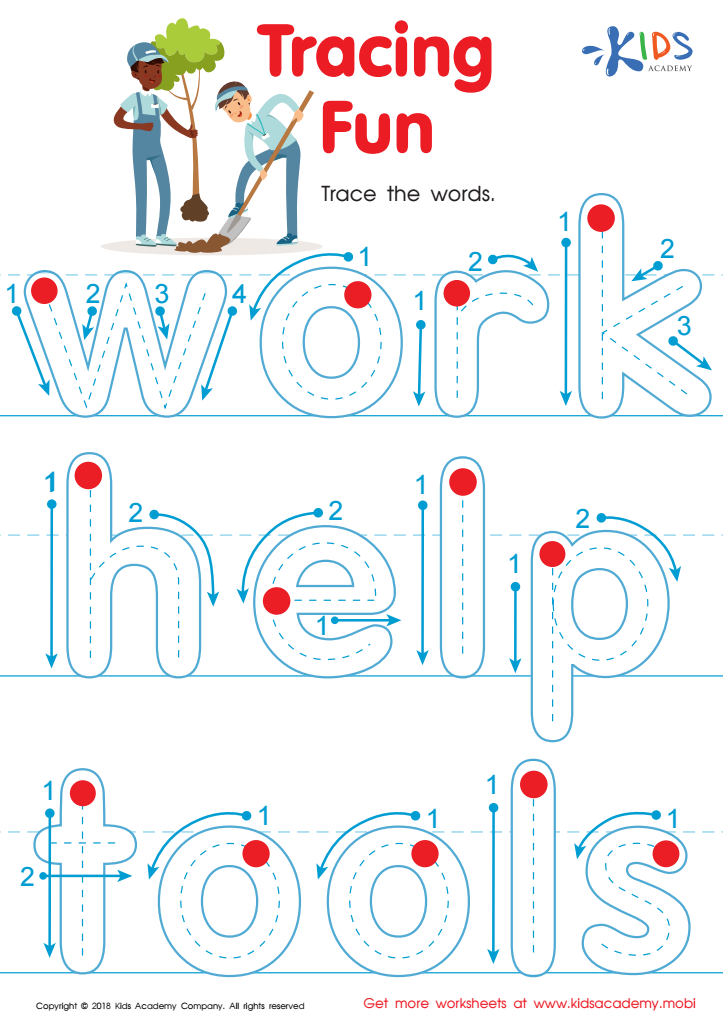
Tracing Fun Worksheet
Believe it or not, good handwriting helps with reading! Starting at the top left and writing legibly builds reading skills. This free worksheet helps little learners practice basic sight words. Red dots show them where to start and the words provide reinforcement without them realising. An enjoyable way to boost their reading and writing.
Tracing Fun Worksheet
Worksheet
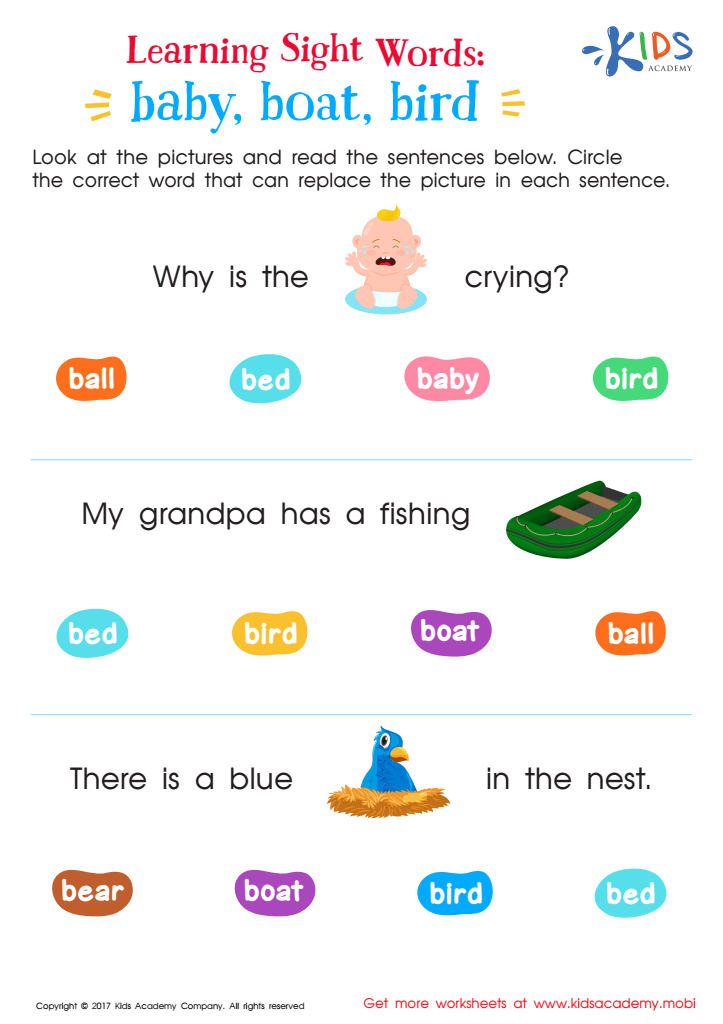
Baby, Boat, Bird Worksheet Sight Words Worksheet
Sight words are an essential part of fluency; help kids build it by writing and reading them. This worksheet is a great way to start.
Baby, Boat, Bird Worksheet Sight Words Worksheet
Worksheet
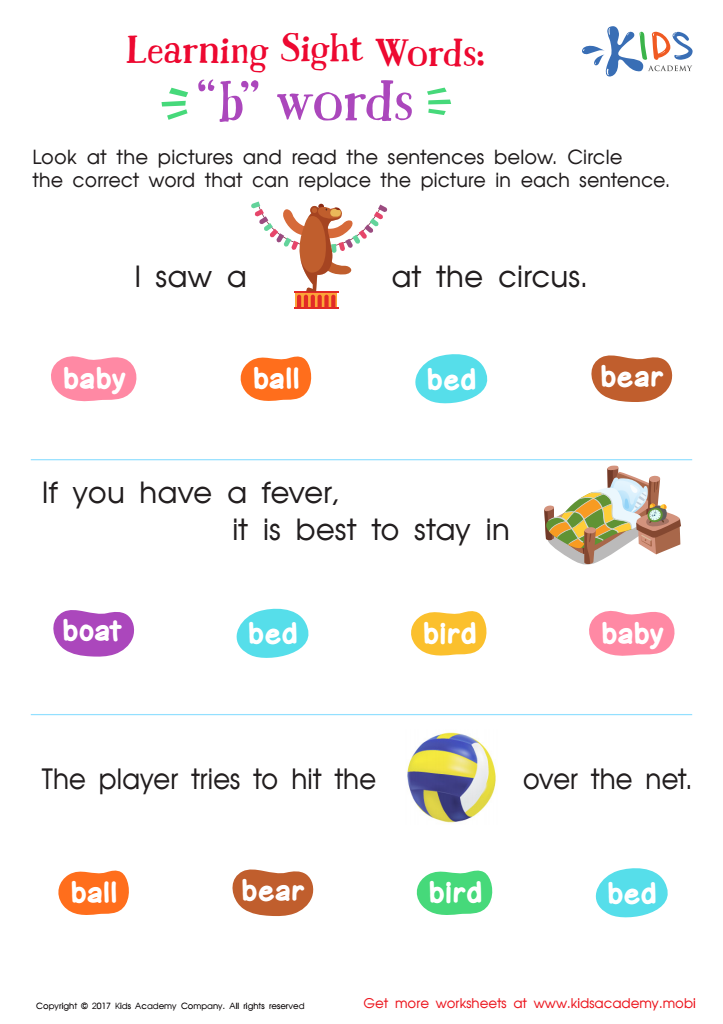
"B" Words Printable Sight Words Worksheet
Kids will learn sight words quickly with this fun worksheet! "B" Words offers guided practice with simple sentences and pictures. Build your child's reading confidence with this helpful worksheet and watch them become a master!
"B" Words Printable Sight Words Worksheet
Worksheet
Join Kids Academy for Free
Who is primarily going to use this learning content?








Letter recognition and vocabulary building are foundational skills for children ages 3-8, crucial for their overall literacy development. At this age, children are like sponges, absorbing language and concepts that will shape their communication abilities and stimulate cognitive growth. Understanding letters helps them decode words, laying the groundwork for reading and writing later on. Recognition of both uppercase and lowercase letters familiarizes children with different text forms and enhances their ability to engage with printed materials.
Furthermore, building vocabulary nurtures language skills, enabling children to express themselves clearly and effectively. A robust vocabulary is linked to improved reading comprehension, fostering greater academic success as they progress through school. When children encounter a wealth of words, they develop critical thinking and creativity, as language is the medium through which they navigate and understand their world.
Parents and teachers should prioritize these skills through playful and engaging methods, such as interactive storytelling, songs, and games, to reinforce letter recognition and vocabulary. Such early intervention not only enhances literacy outcomes but also instills a love for learning, encouraging lifelong readers and effective communicators. Investing time and resources in these foundational skills today paves the way for brighter educational futures.








