Phonics recognition Normal Building Vocabulary Worksheets for Ages 3-8
3 filtered results
-
From - To
Enhance your child's reading journey with our Phonics Recognition Normal Building Vocabulary Worksheets, designed specifically for ages 3-8. These engaging worksheets focus on developing phonemic awareness and vocabulary skills through fun and interactive activities. Each worksheet encourages young learners to recognize sounds, blend letters, and expand their word bank, fostering a solid foundation for reading success. Tailored to various learning levels, they promote confidence and independence in early literacy. Whether at home or in the classroom, these worksheets are an invaluable resource for teaching phonics in an enjoyable way. Start building your child's vocabulary today!
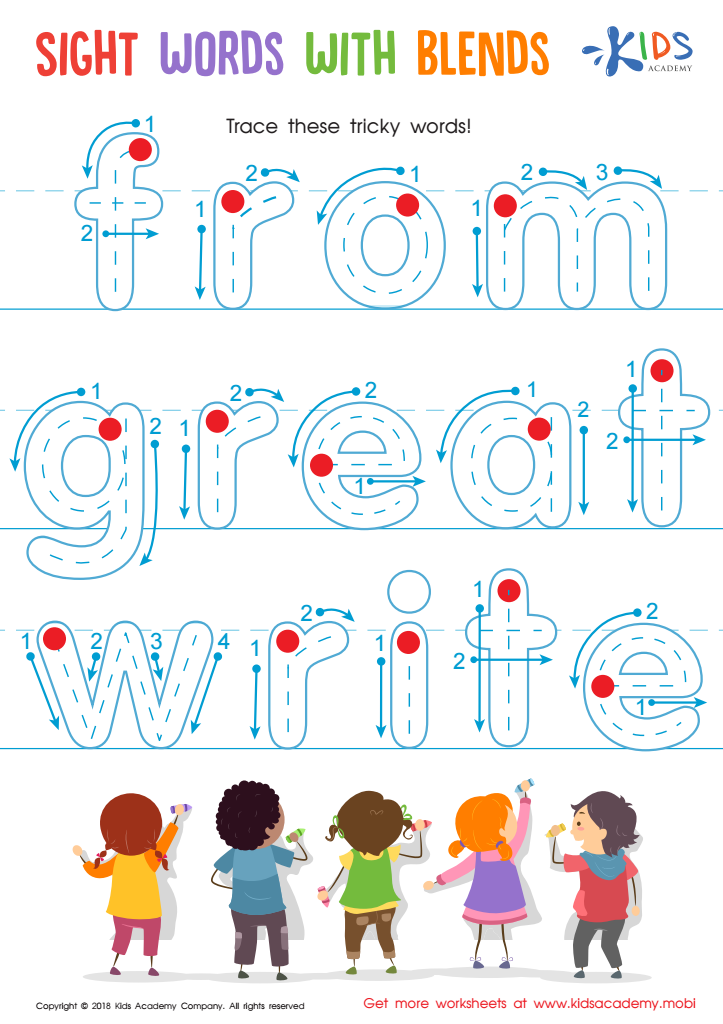
Sight Words with Blends Worksheet
 Assign to My Students











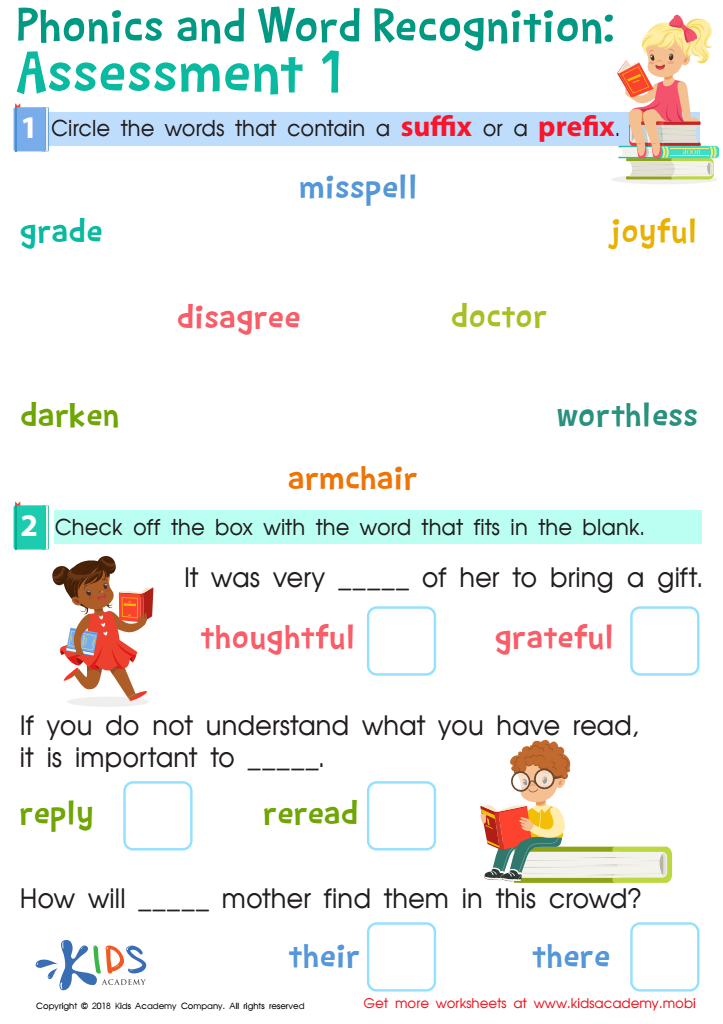
Phonics and Word Recognition: Assessment 1 Worksheet
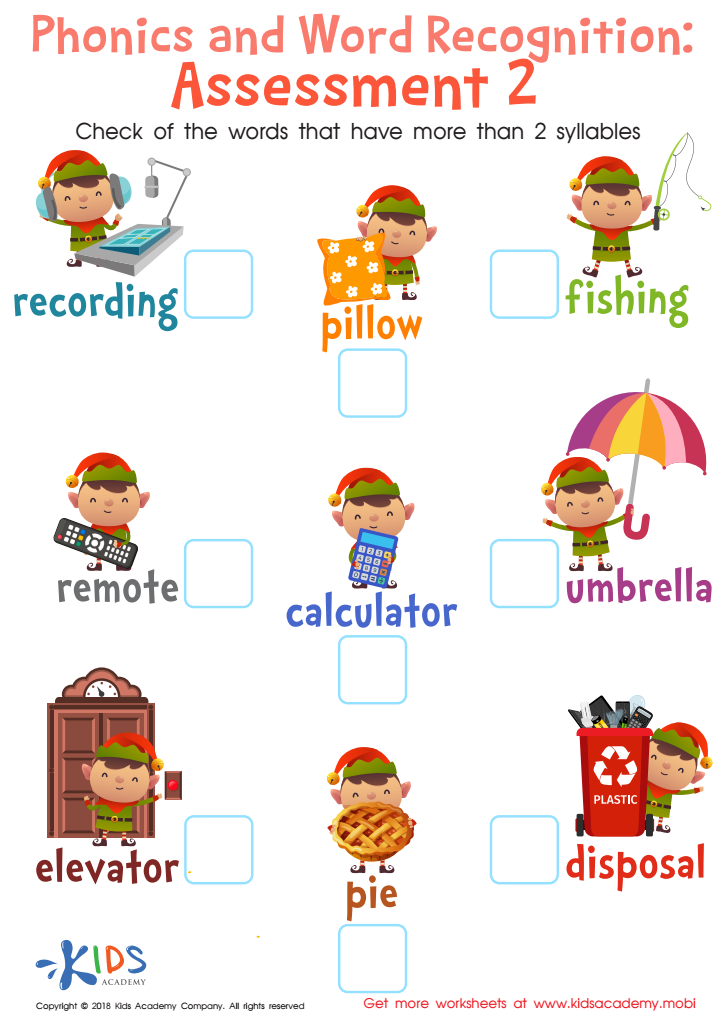
Phonics and Word Recognition: Assessment 2 Worksheet






.jpg)

Phonics recognition and vocabulary building are crucial components of early literacy development for children aged 3-8. These skills lay the foundation for reading and writing, which are essential for academic success. Understanding phonics—how sounds correspond to letters—enables children to decode words, leading to better reading fluency and comprehension. When children can recognize and manipulate sounds, they become more confident readers.
Building vocabulary enhances their ability to express themselves and comprehend spoken and written language. A rich vocabulary allows children to make connections between words, which is vital for understanding context and meaning in their reading materials. Teachers and parents play a significant role in fostering a stimulating environment where children can explore language through interactive play, storytelling, and discussion.
Moreover, early intervention in phonics and vocabulary can prevent literacy-related challenges later in life. As children progress in their educational journey, strong phonics and vocabulary skills contribute to overall literacy development, affecting future learning, social skills, and cognitive growth. When educators and families prioritize these skills, they set the foundation for lifelong learning and success, reinforcing the importance of foundational literacy in shaping a child's future. Thus, focusing on phonics and vocabulary is essential for nurturing competent and confident readers and communicators.








