Understanding prefixes Normal Building Vocabulary Worksheets for Ages 3-8
3 filtered results
-
From - To
Discover the exciting world of prefixes with our "Understanding Prefixes" worksheets, designed for children ages 3-8. As young learners begin to build their vocabulary, these engaging activities introduce the concept of prefixes and how they modify the meanings of root words. Our kid-friendly worksheets include fun exercises that promote recognition, understanding, and usage of common prefixes. By integrating play and education, we make learning about language both enjoyable and effective. Perfect for early grade teachers and parents, these worksheets help foster a strong foundation in language skills that will benefit children as they grow. Start enhancing vocabulary today!
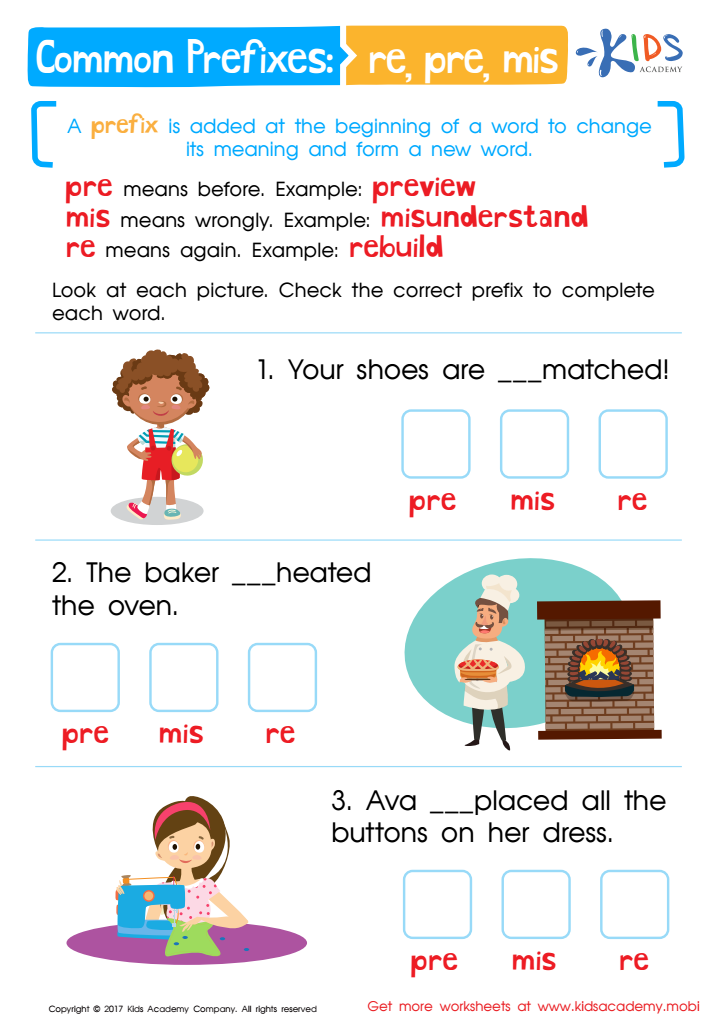
Common Prefixes Worksheet: RE, PRE, MIS
 Assign to My Students











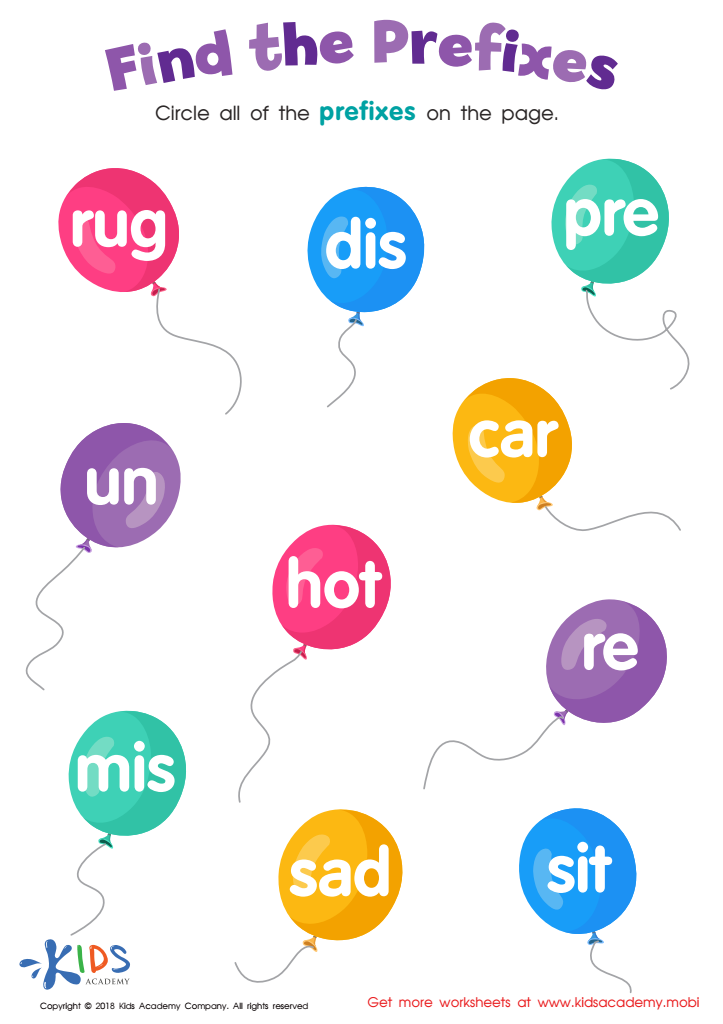
Reading: Find the Prefixes Worksheet
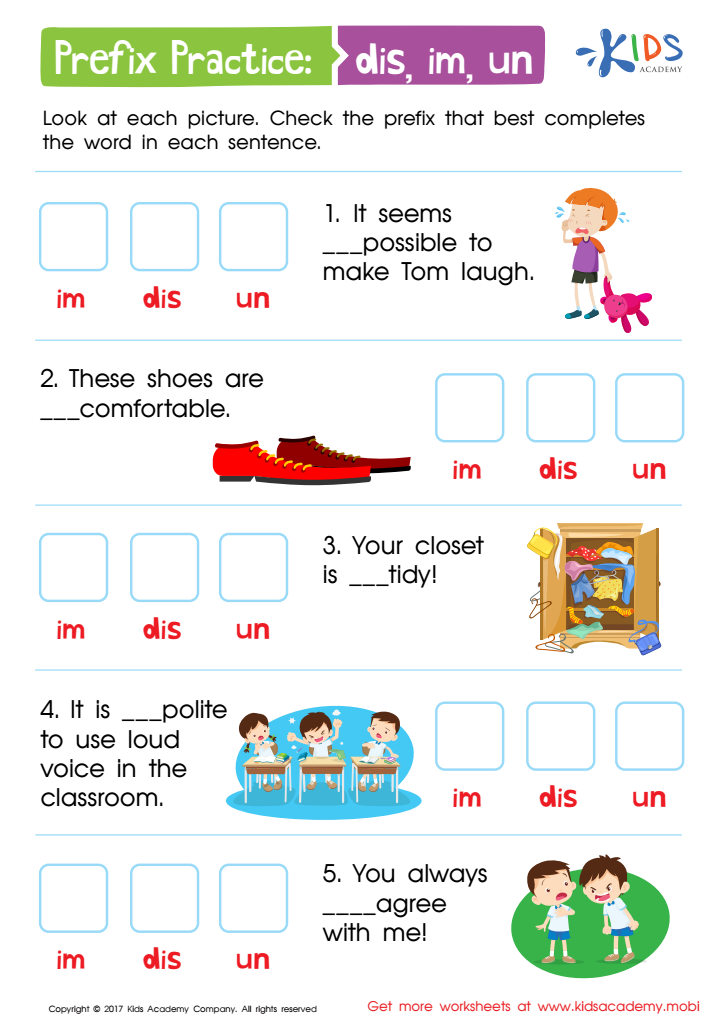
Prefix Practice Worksheet: DIS, IM, UM






.jpg)
Understanding prefixes is crucial for building vocabulary in children aged 3-8, and both parents and teachers play significant roles in this developmental aspect. Prefixes are the building blocks of many words; they can alter meaning and expand a child's vocabulary. By knowing prefixes, children can decode unfamiliar words, enabling them to read with greater confidence and comprehension.
For teachers, integrating prefix lessons into the curriculum can stimulate curiosity and strengthen vocabulary skills, promoting literacy from an early age. For instance, when children understand that “un-” means “not,” they can easily infer the meaning of words like "unhappy" or "undo." This enhances their critical thinking and problem-solving abilities.
Parents, too, can support their children's vocabulary development through conversations that highlight prefixes—like discussing the word "redo" when cleaning up after an art project. The more exposure children have to terms that incorporate prefixes, the more adept they become at understanding and using language.
By prioritizing prefix education, caregivers ensure children are well-equipped for advanced language skills in later years, laying a foundation for academic success. This practice fosters enthusiasm for learning and confidence in communication, essential tools for every child's growth.








