Verb identification Normal Building Vocabulary Worksheets for Ages 3-8
3 filtered results
-
From - To
Explore our engaging Verb Identification Normal Building Vocabulary Worksheets, ideal for children ages 3-8! Designed to enhance language skills, these worksheets help young learners recognize and understand verbs in a fun and interactive way. With colorful illustrations and age-appropriate activities, kids will enjoy identifying verbs in sentences, matching actions to pictures, and completing creative exercises that boost their vocabulary. These resources are perfect for home practice or classroom use, promoting essential reading and comprehension skills. Encourage your child's love for language and lay the foundation for effective communication with our dynamic and educational verb identification worksheets!
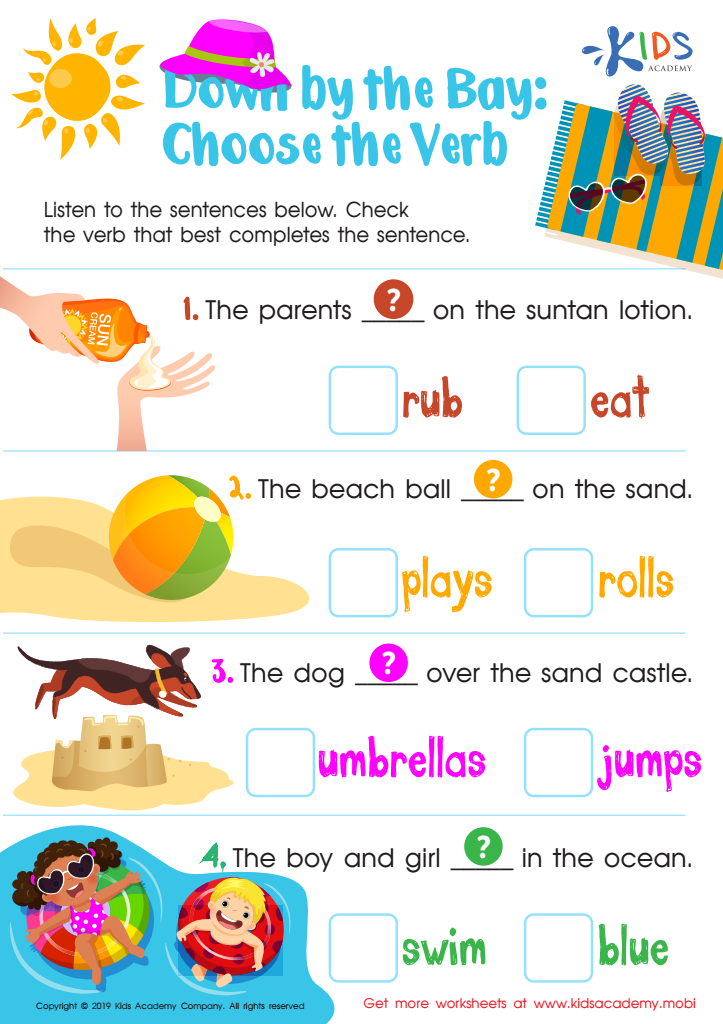
Down by the Bay: Choose the Verb Worksheet
 Assign to My Students











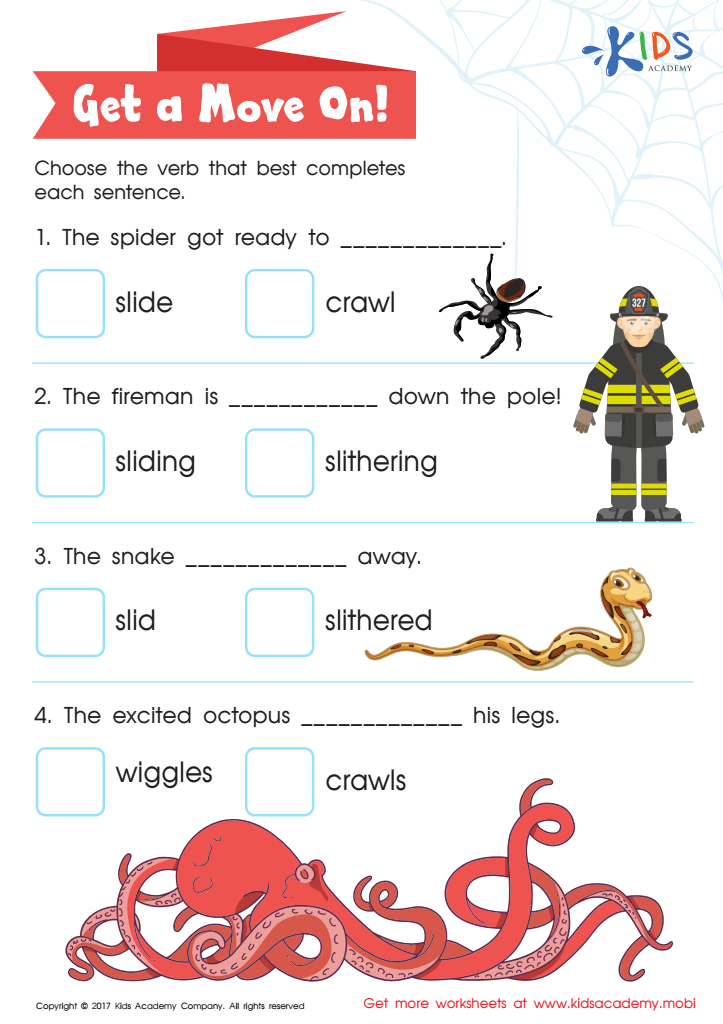
Verb Worksheet
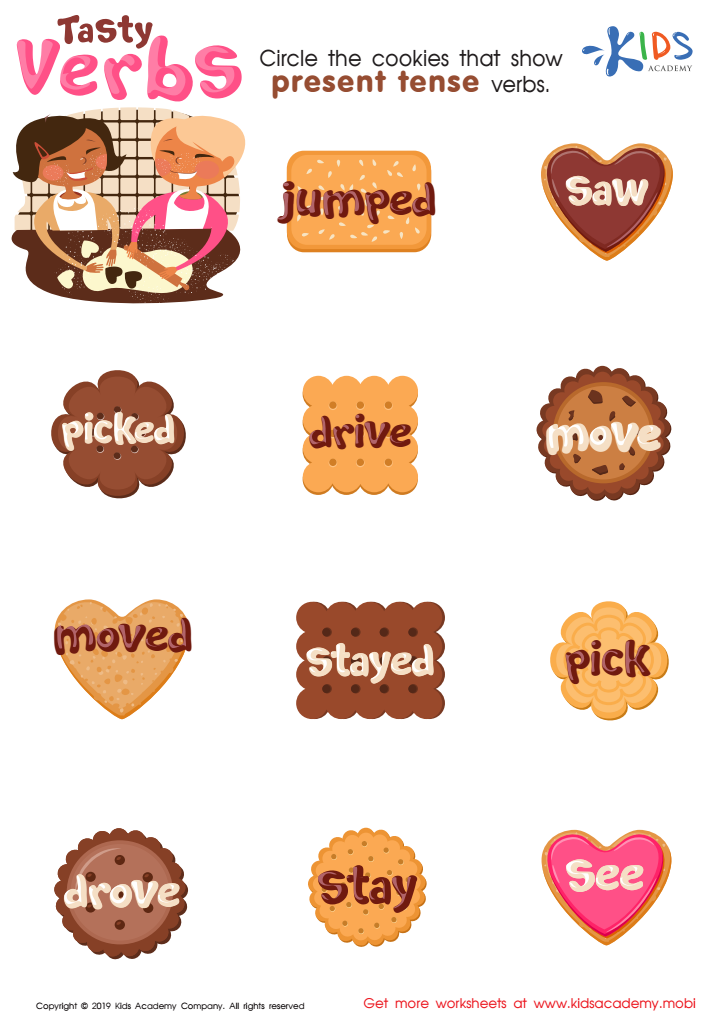
Tasty Verbs Worksheet








Parents and teachers play a crucial role in the linguistic development of children aged 3-8, and understanding verb identification is essential for building vocabulary. Verbs are action words that describe what someone does or what happens. Mastering verbs aids in sentence construction, enhances language comprehension, and improves communication skills.
From a developmental perspective, children between ages 3 and 8 are in a critical phase of language acquisition. This is the time when they begin forming more complex sentences and communicating feelings, actions, and ideas. When parents and teachers emphasize verb identification, they enable children to engage with language actively. This engagement not only enriches vocabulary but also stimulates cognitive skills, encouraging creativity and critical thinking through storytelling and imaginative play.
Additionally, a strong vocabulary foundation empowers children in their academic journeys, as they can better understand instructions, read texts, and articulate responses. By incorporating activities focused on verbs—like games, songs, and storytelling—adults can make learning enjoyable and effective. In summary, prioritizing verb identification and vocabulary building is vital for fostering effective communication, confidence, and a love for language in young learners, setting the stage for future academic and social success.








