
Word identification Normal Building Vocabulary Worksheets for Ages 3-8
3 filtered results
Difficulty Level
Grade
Age
-
From - To
Subject
Activity
Standards
Discover engaging and effective Word Identification worksheets for children ages 3-8, designed to enhance vocabulary building. Our resources at Kids Academy are crafted to make learning fun and interactive. These worksheets help young learners recognize, understand, and use new words in context, fostering strong reading and comprehension skills. Perfect for early readers, each activity is thoughtfully structured to support gradual vocabulary growth while keeping kids motivated. Empower your child’s learning journey with our age-appropriate and expert-approved materials that cater to various learning styles. Start building a solid foundation in language today!
Favorites
With answer key
Interactive
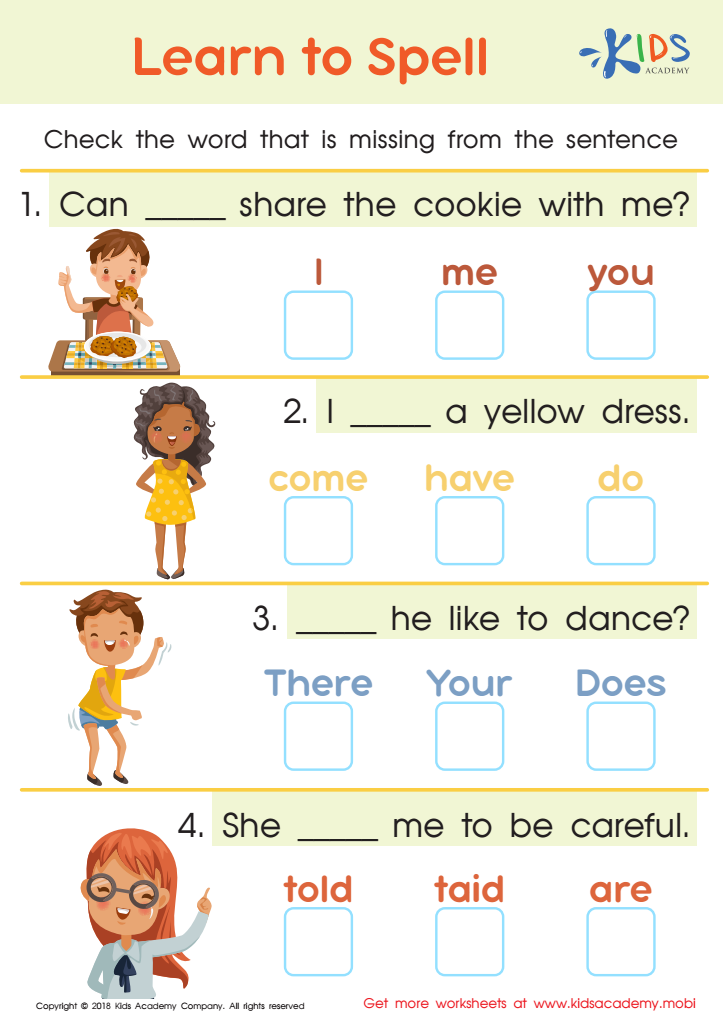
Learn to Spell Worksheet
Help sharpen spelling skills with a simple worksheet. Read sentences aloud and show which word is missing. Ask students to pick the correct word from the options. Ensure they check the missing word for accuracy.
 Assign to My Students
Learn to Spell Worksheet
Worksheet











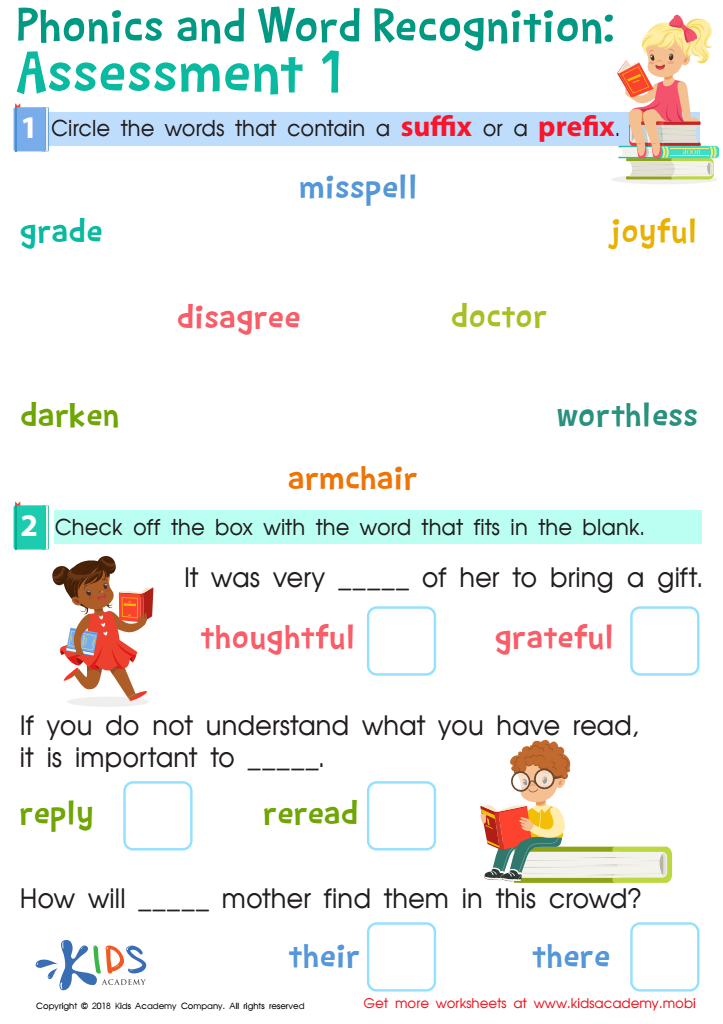
Phonics and Word Recognition: Assessment 1 Worksheet
Explain prefixes (words added to start of another word to give it a new meaning) and suffixes (added to end of word to change its meaning) to your kids with examples like 'unhappy' (prefix) and 'forgetful' (suffix). Now, help your child complete this worksheet, including circling words and checking boxes.
Phonics and Word Recognition: Assessment 1 Worksheet
Worksheet
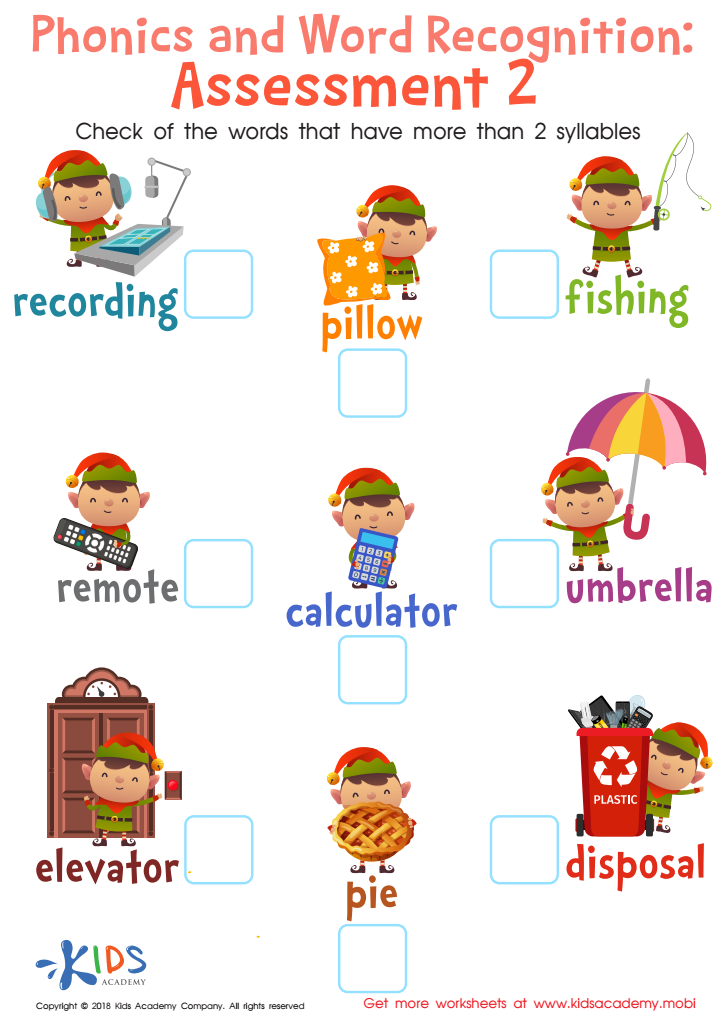
Phonics and Word Recognition: Assessment 2 Worksheet
Help your kids learn proper pronunciation by counting syllables. Most words they'll encounter have 1-3 syllables, making them simple to say. Have them repeat the words in your worksheet after you. Focus on longer words with more than two syllables.
Phonics and Word Recognition: Assessment 2 Worksheet
Worksheet
Join Kids Academy for Free
Who is primarily going to use this learning content?







.jpg)
Word identification and vocabulary building for children ages 3-8 are essential for laying a strong foundation in literacy, which is critical for their long-term academic success and personal development. During this period, children's brains are highly receptive and capable of acquiring new words and concepts rapidly. Ensuring that children develop good word identification skills means they can quickly recognize and understand written words, enabling them to read fluently, which is key to enjoying and benefiting from reading.
Building a robust vocabulary allows children to express themselves more clearly, understand instructions better, and engage more fully in classroom discussions and social interactions. A strong vocabulary is also linked to better comprehension skills and critical thinking, directly influencing their ability to learn across all subjects, including science, math, and social studies.
Parents and teachers play a crucial role in this developmental stage by providing a language-rich environment filled with books, conversations, and various engaging literacy activities. By fostering these skills early on, adults help children to develop confidence in their reading abilities, inspiring a lifelong love for learning. Early literacy skills not only contribute to academic success but also to better future communication, socialization, and overall cognitive development. Prioritizing these skills creates a solid groundwork for a child's future educational journey.








