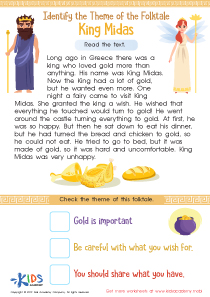
Contextual understanding Normal Reading Worksheets for Ages 3-8
6 filtered results
-
From - To
Unlock your child’s reading potential with our Contextual Understanding Normal Reading Worksheets, designed specifically for kids aged 3-8. These engaging worksheets provide a fun, interactive way to enhance comprehension skills by encouraging young learners to connect words and sentences to their meanings and contexts. With a variety of activities, including matching exercises and story-based questions, children will develop essential literacy skills while exploring fascinating themes. Foster a love for reading and build a solid foundation for their academic journey. Perfect for both home and classroom use, these worksheets are a valuable resource for early childhood educators and parents alike. Start your learning adventure today!
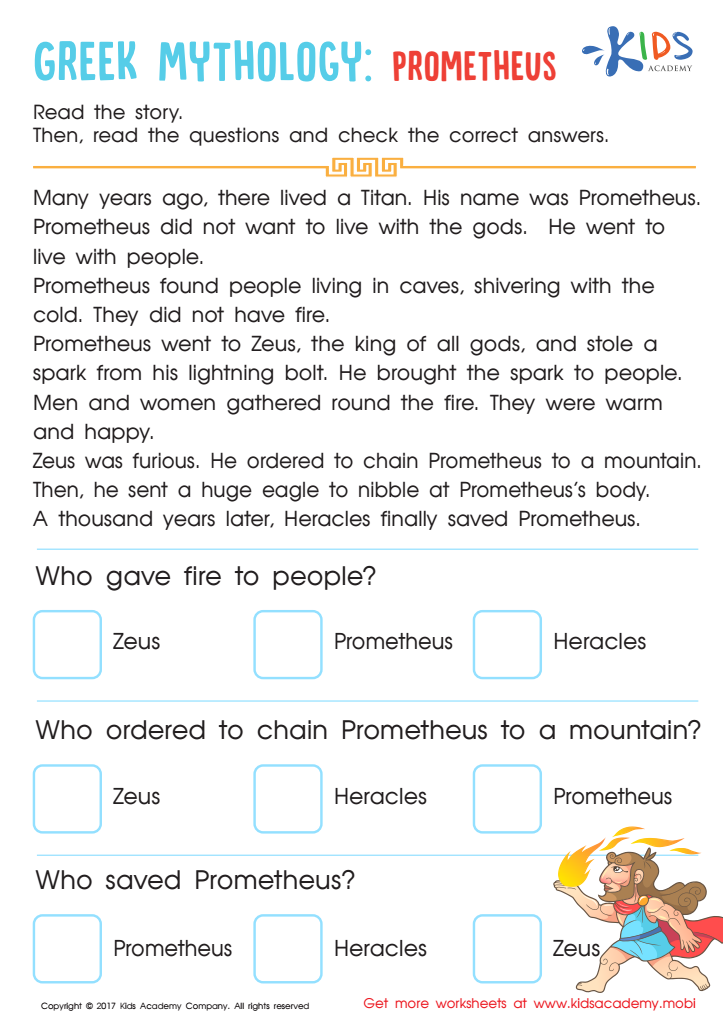
Prometheus Story Worksheet
 Assign to My Students
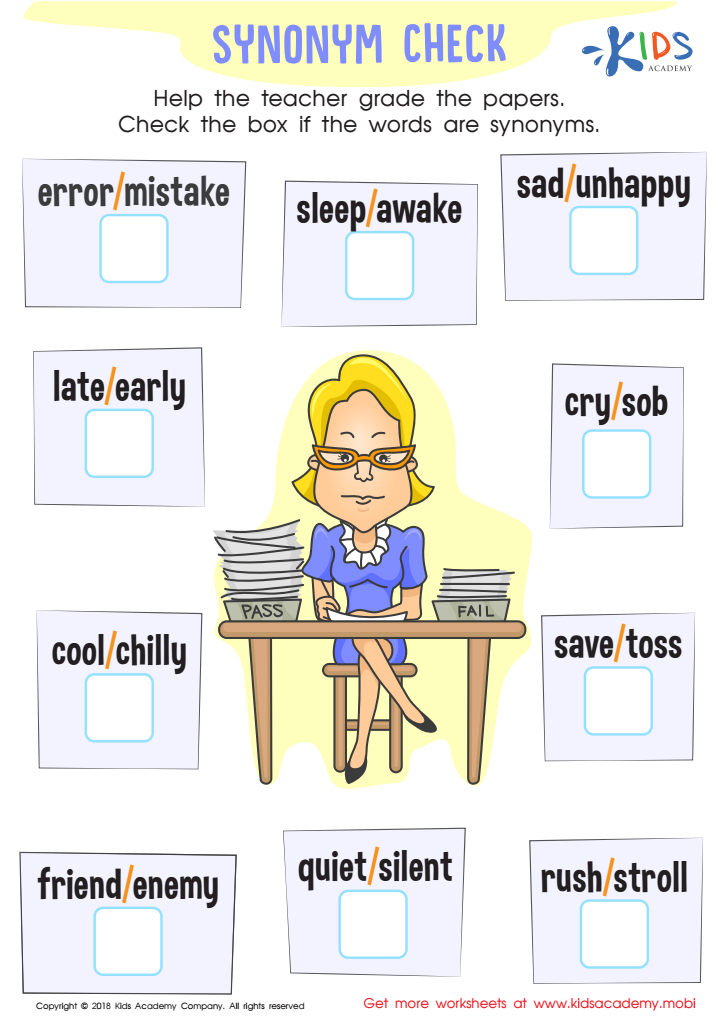
Synonym Check Worksheet
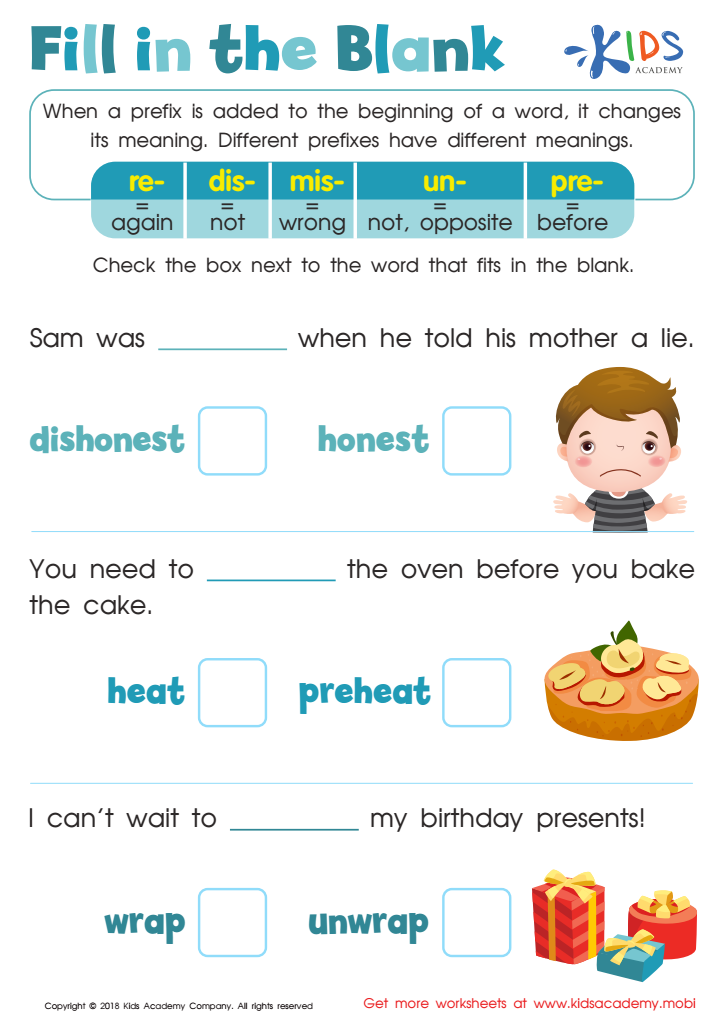
Reading: Fill in the Blank Worksheet
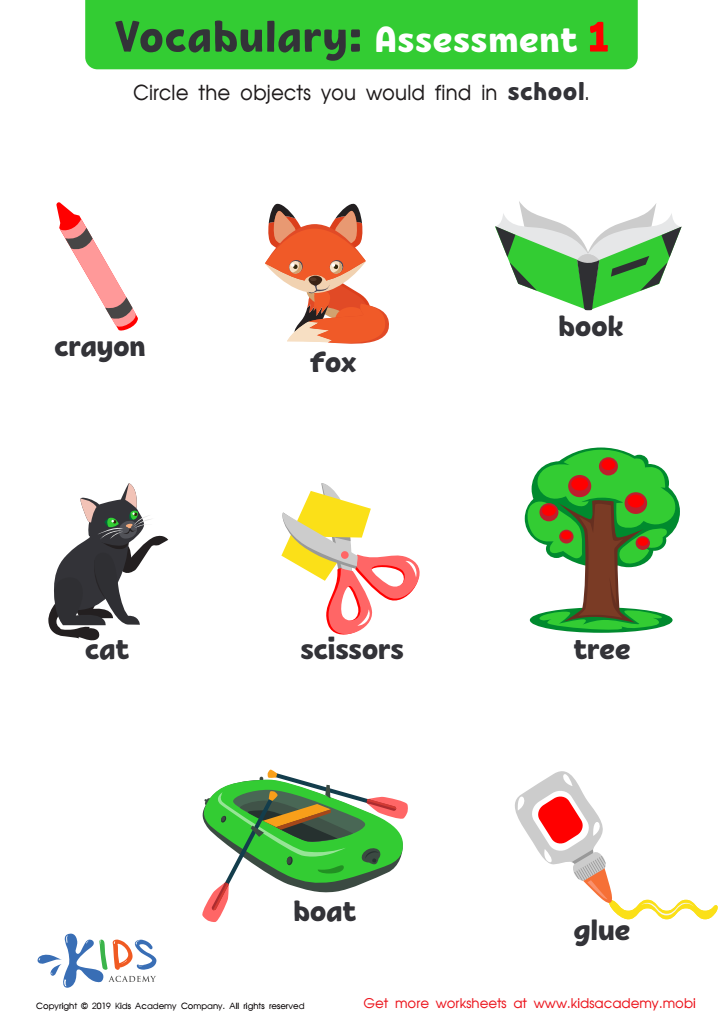
Vocabulary: Assessment 1 Worksheet
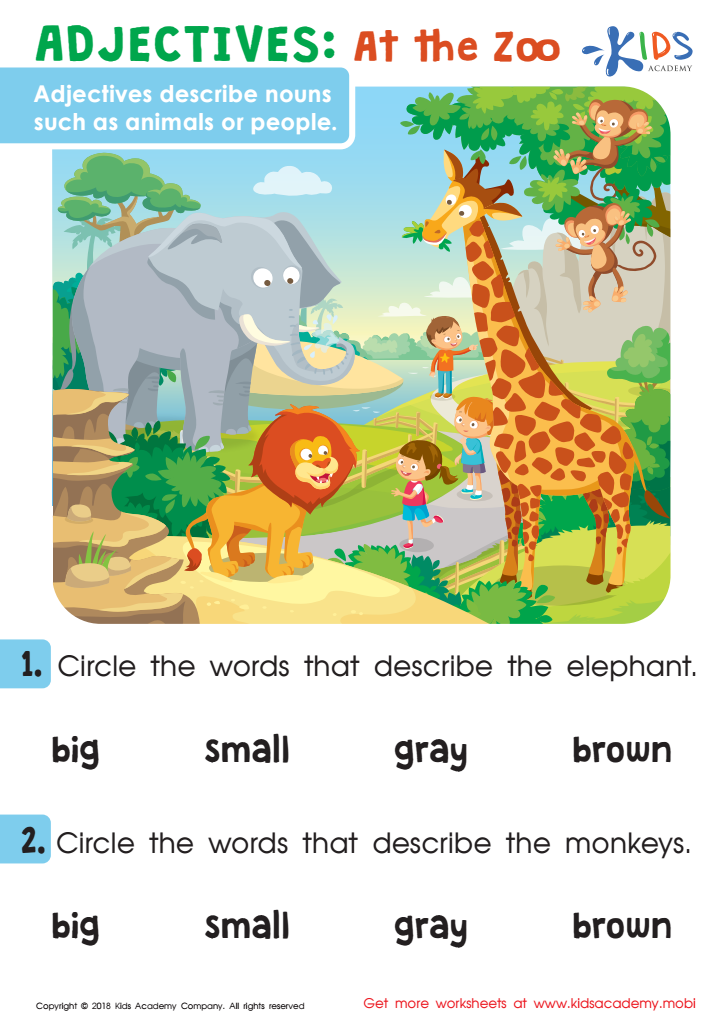
Adjectives: At The Zoo Worksheet
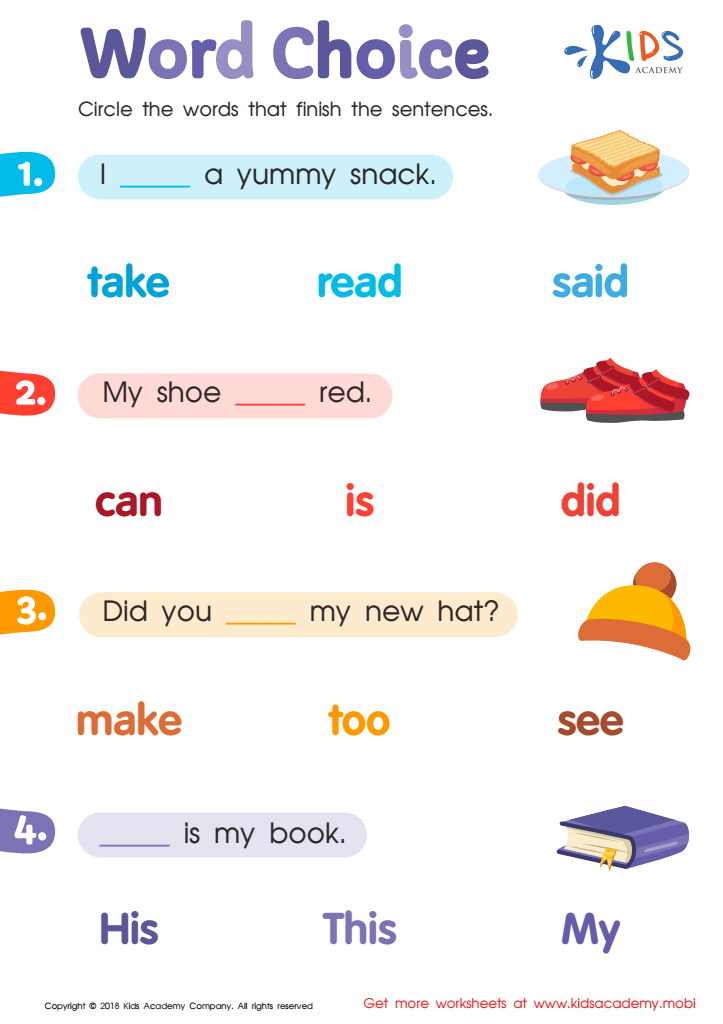
Word Choice Worksheet








Contextual understanding in reading is crucial for children aged 3-8 as it forms the foundation for their overall literacy development. At this early stage, children are not just decoding letters and words; they are trying to make sense of the world around them. Contextual understanding helps children connect stories to their own experiences, fostering deeper comprehension and engagement with the material.
Parents and teachers should care because when children learn to relate new information to what they already know, it enhances their critical thinking skills and encourages lifelong learning. This age group is naturally curious and imaginative; by harnessing this curiosity through context-rich reading, educators can cultivate a love for books that encourages reading for pleasure, not just obligation.
Moreover, meaningful discussions about context help develop vocabulary and language skills. The more words children know and comprehend within various contexts, the better they will be able to express themselves and understand others. For these reasons, investing time in contextual reading not only enriches a child's educational journey but also strengthens their social and emotional development, making it an essential aspect of childhood education and parenting.