Critical thinking development Normal Reading Worksheets for Ages 3-8
3 filtered results
-
From - To
Enhance your child's reading skills while fostering critical thinking with our Normal Reading Worksheets designed for ages 3-8. These engaging and interactive worksheets focus on developing essential analytical skills through colorful illustrations and age-appropriate exercises. Children will explore stories, answer questions, and solve puzzles that encourage them to think deeply and critically about the content. By integrating fun and learning, these worksheets help young learners build comprehension, make predictions, and enhance their problem-solving abilities. Equip your child with the tools for academic success while sparking their love for reading with our thoughtfully designed critical thinking worksheets!
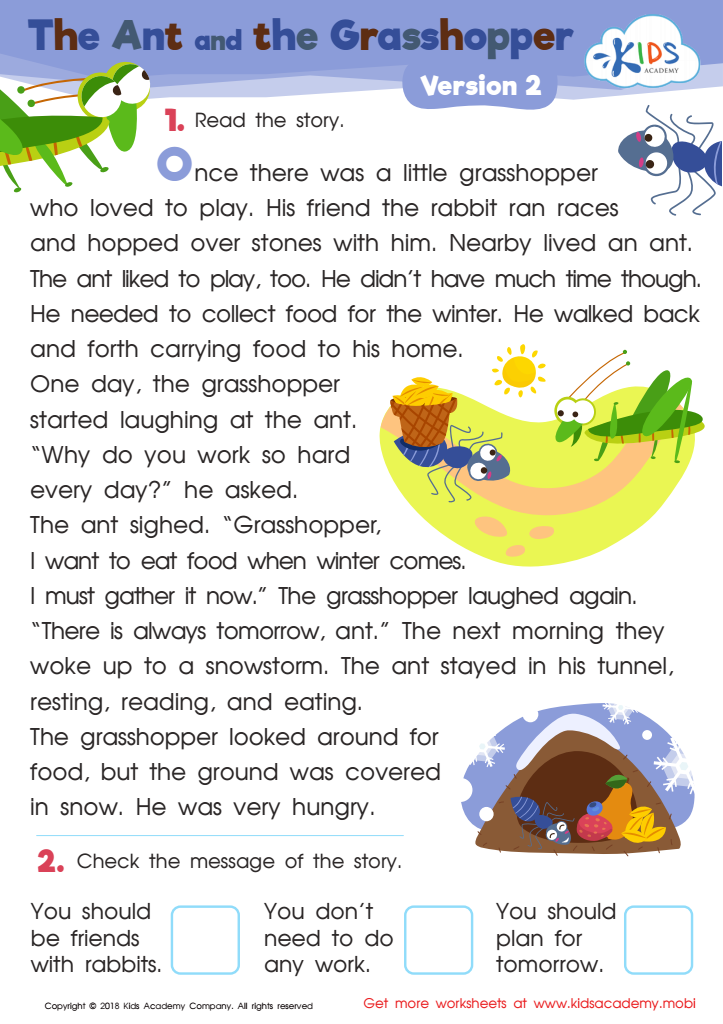
The Ant and The Grasshopper Version 2 Worksheet
 Assign to My Students
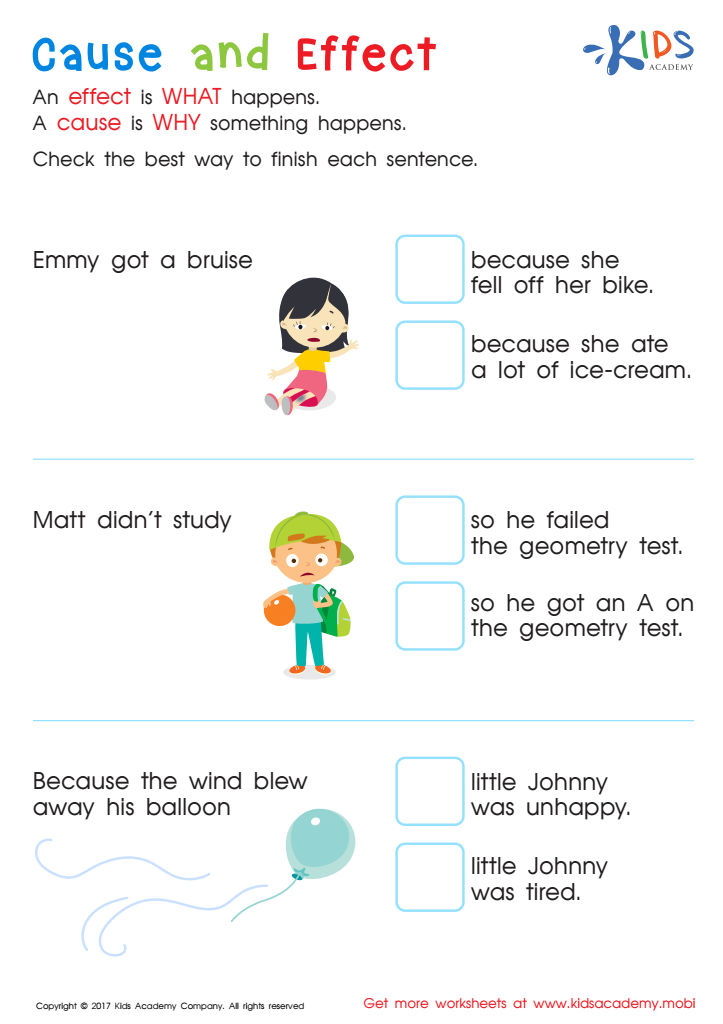
Cause and Effect Worksheet
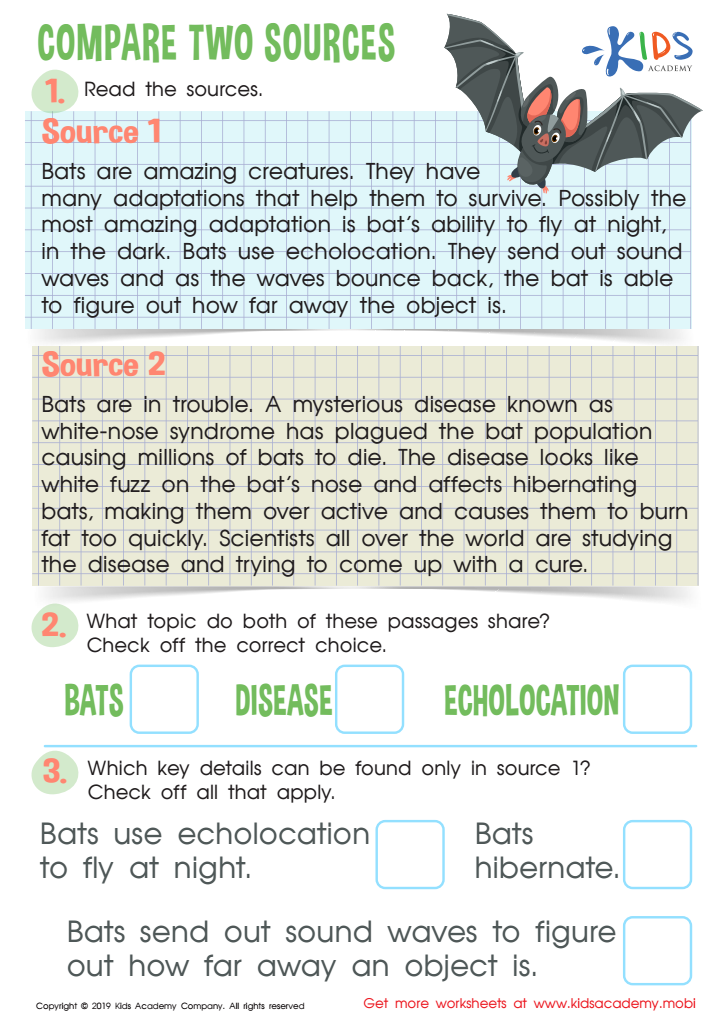
Compare Two Sources Worksheet






.jpg)

Critical thinking development in early years, particularly for children aged 3 to 8, is crucial for their overall growth and learning capabilities. During these formative years, children are not just absorbing facts; they are beginning to make sense of the world around them. Parents and teachers should care about fostering critical thinking because it enhances problem-solving skills and creativity, allowing children to ask questions, explore various solutions, and develop their unique perspectives.
Engaging children in activities that promote critical thinking encourages them to think independently and promotes decision-making skills. Reading plays a central role in this process. Exposure to quality literature stimulates imagination and language development while also providing scenarios that challenge children's thinking. When parents and teachers support discussions about stories or real-life situations, they help children analyze situations, infer meanings, and consider different viewpoints.
Moreover, critical thinking lays the foundation for academic success. Children who learn to think critically are more adept at navigating school tasks, tackling challenges, and collaborating with peers. Encouraging these skills in early education helps prepare children for a dynamic future, where adaptability and analytical skills will be paramount. Thus, nurturing critical thinking through reading and discussion is essential for developing well-rounded, intellectually engaged individuals.








