Moral lesson understanding Normal Reading Worksheets for Ages 3-8
5 filtered results
-
From - To
Enhance your child's reading skills with our "Moral Lesson Understanding Normal Reading Worksheets" designed for ages 3-8. These engaging worksheets help young learners grasp essential moral concepts through relatable stories and illustrative scenarios. By reinforcing values such as kindness, honesty, and cooperation, your child not only improves reading comprehension but also develops a deeper understanding of important life lessons. Each worksheet is crafted to be age-appropriate, making it fun and easy to learn. Encourage your child's emotional growth and literacy skills simultaneously with our interactive resources that promise to nurture both the heart and mind. Explore fun learning today!
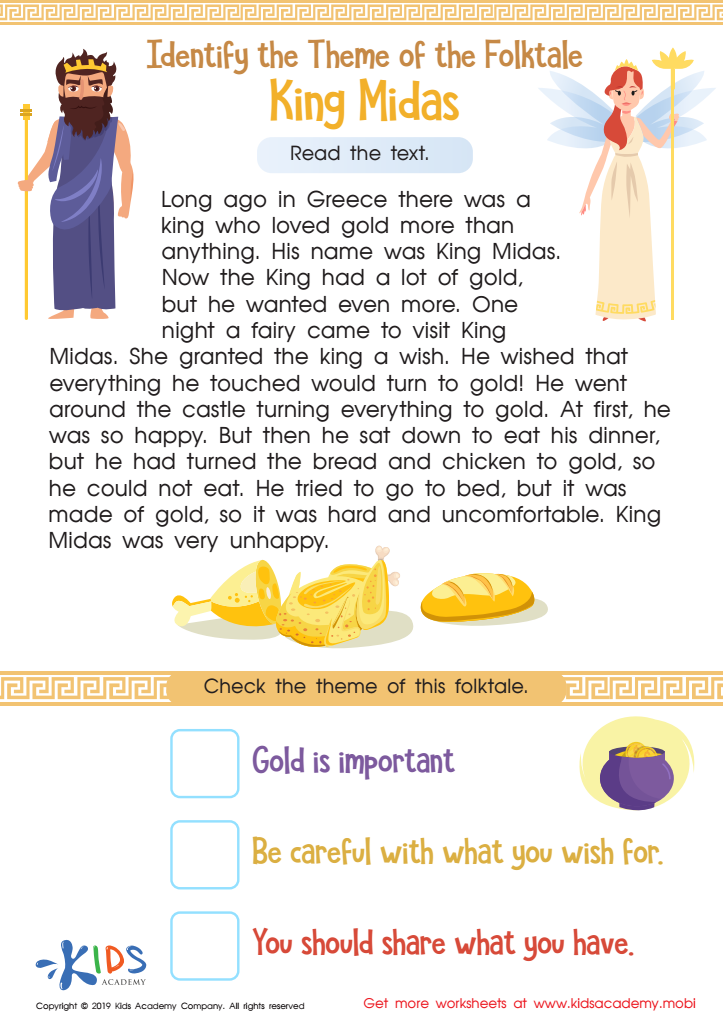
King Midas Worksheet
 Assign to My Students
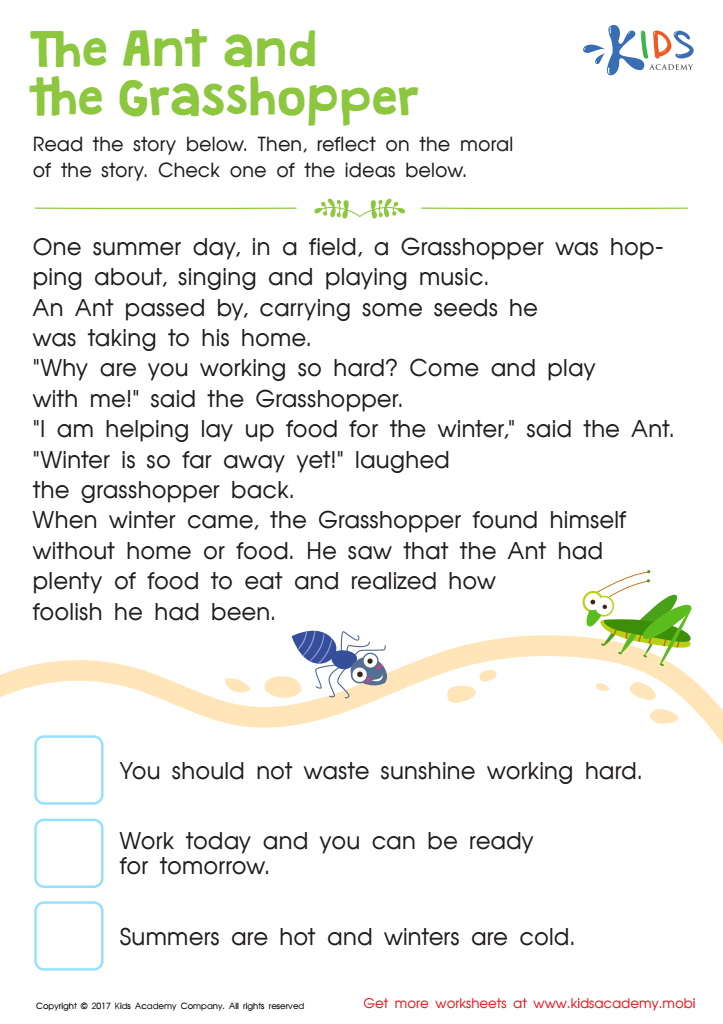
The Ant and The Grasshopper Printable
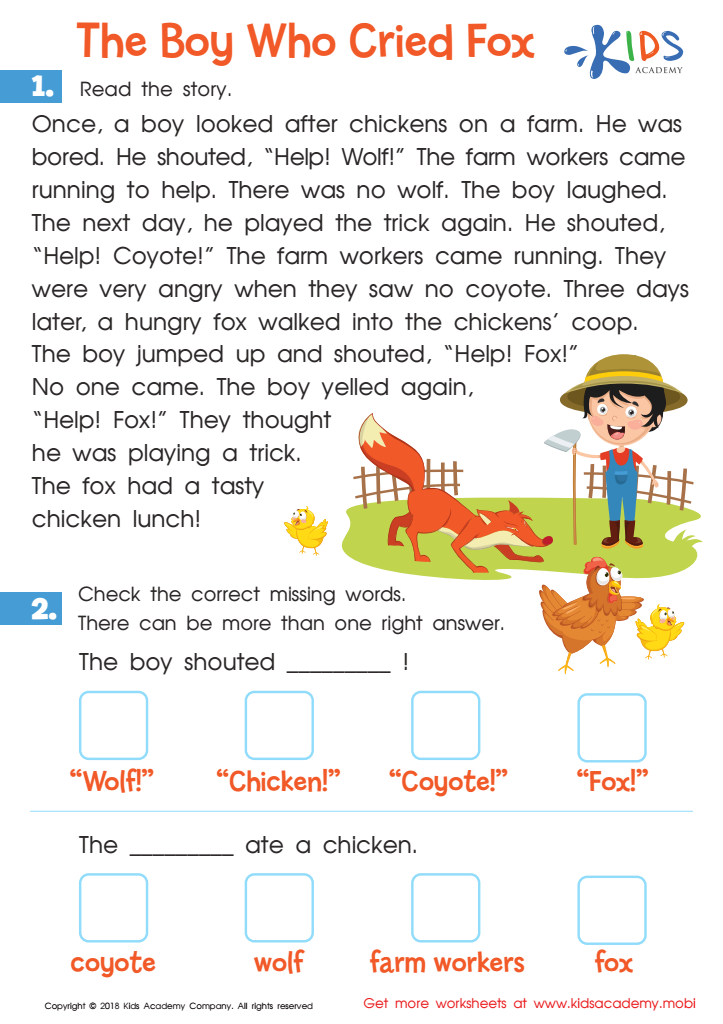
The Boy Who Cried Fox Worksheet
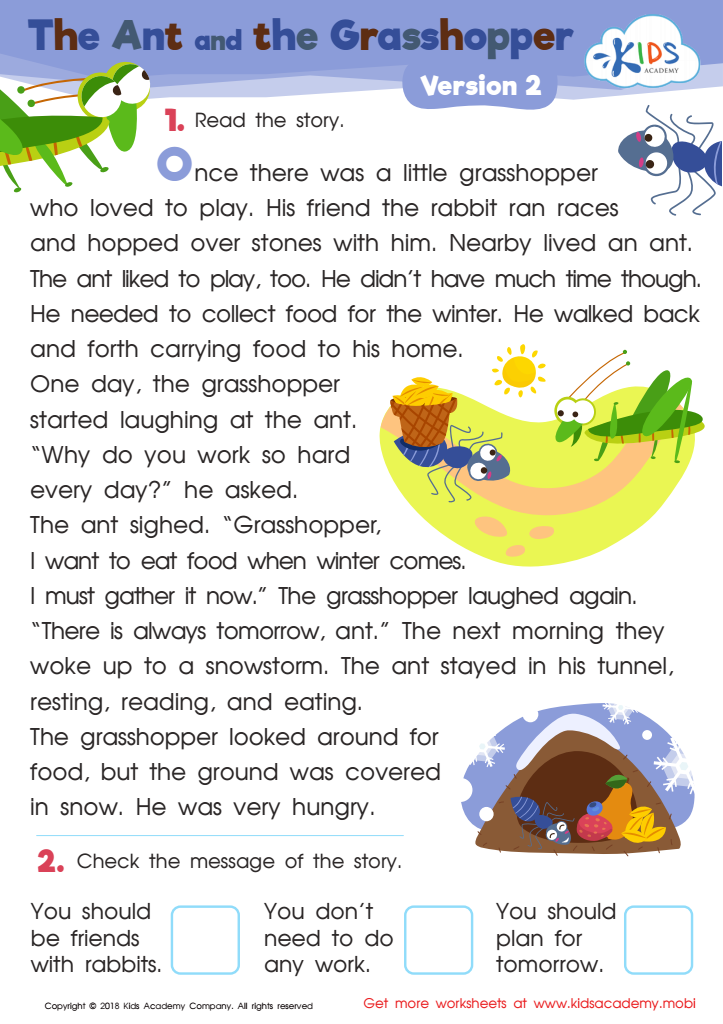
The Ant and The Grasshopper Version 2 Worksheet
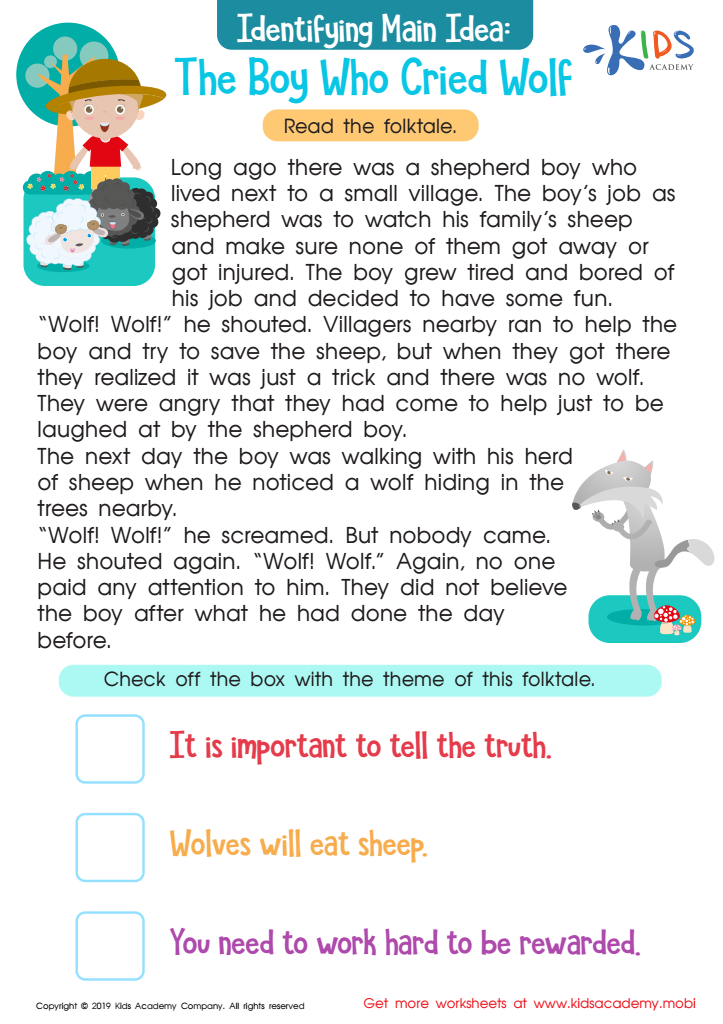
The Boy Who Cried Wolf Part 2 Worksheet






Understanding moral lessons during the crucial reading stages of ages 3-8 is essential for children’s development. At this formative age, children are like sponges, absorbing not just words but also values, behaviors, and social norms. Parents and teachers play a pivotal role in guiding this learning process.
First, moral lessons embedded in stories help children develop empathy, making them more aware of others’ feelings and perspectives. This foundation is crucial for nurturing healthy relationships as they grow. Interactive reading sessions provide opportunities for discussion, allowing adults to explain complex moral concepts in a way that is relatable and understandable.
Second, reading together offers a safe space for children to explore difficult topics, such as honesty, kindness, and sharing, helping them navigate social interactions. These discussions enhance critical thinking and enable young readers to evaluate situations all around them.
Moreover, instilling moral values through reading contributes to a child’s overall character development, encouraging responsible behavior and fostering a sense of community. When parents and teachers prioritize moral lesson understanding in reading, they are not just teaching children to read; they are shaping compassionate, thoughtful individuals prepared to face the world. In essence, it is an investment in their future societal roles.








