
Story analysis Normal Reading Worksheets for Ages 3-8
5 filtered results
Difficulty Level
Grade
Age
-
From - To
Subject
Activity
Standards
Introducing our engaging "Story Analysis Normal Reading Worksheets" designed for children ages 3-8! These interactive worksheets help young readers develop critical thinking by exploring story elements like characters, plot, and setting. Kids will enjoy activities that challenge their comprehension skills while inspiring a love for reading. Our fun, age-appropriate exercises support early literacy development, guiding children to understand and analyze stories in a way that excites and educates. Give your child a head start on their reading journey with our thoughtfully crafted worksheets tailored to enhance learning and ensure a bright literary future.
Favorites
With answer key
Interactive
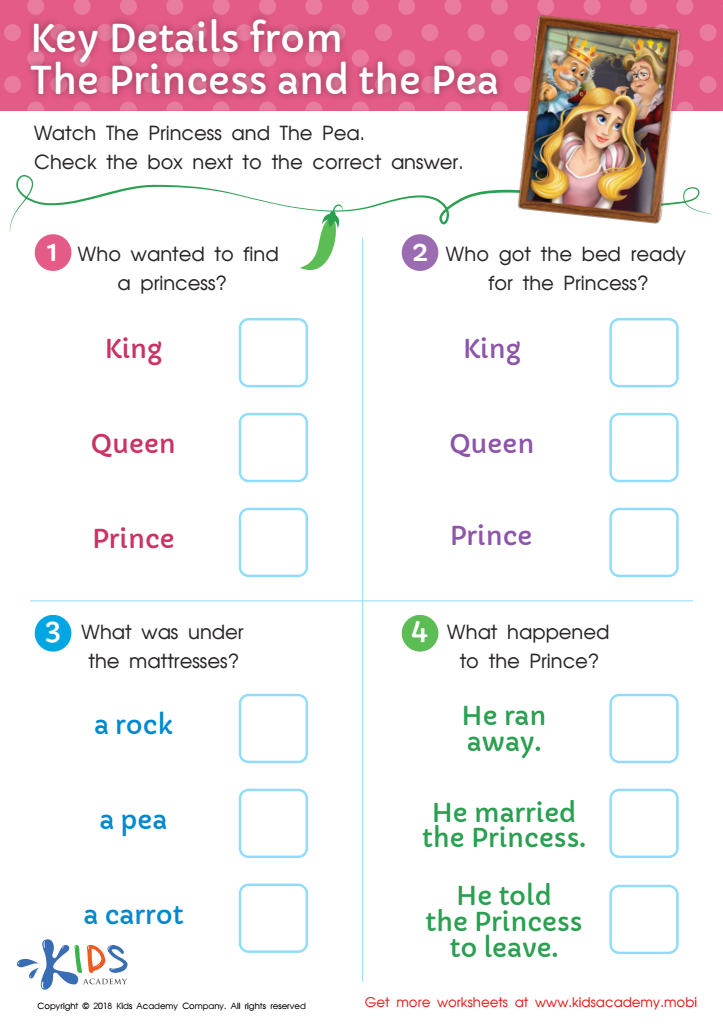
Key Details from the Princess and the Pea Worksheet
After reading The Princess and the Pea, ask your students questions to assess their comprehension of the story. Check their knowledge of key details. This printable can be used to help evaluate their understanding. Encouraging the recall of story events helps build important reading skills.
 Assign to My Students
Key Details from the Princess and the Pea Worksheet
Worksheet
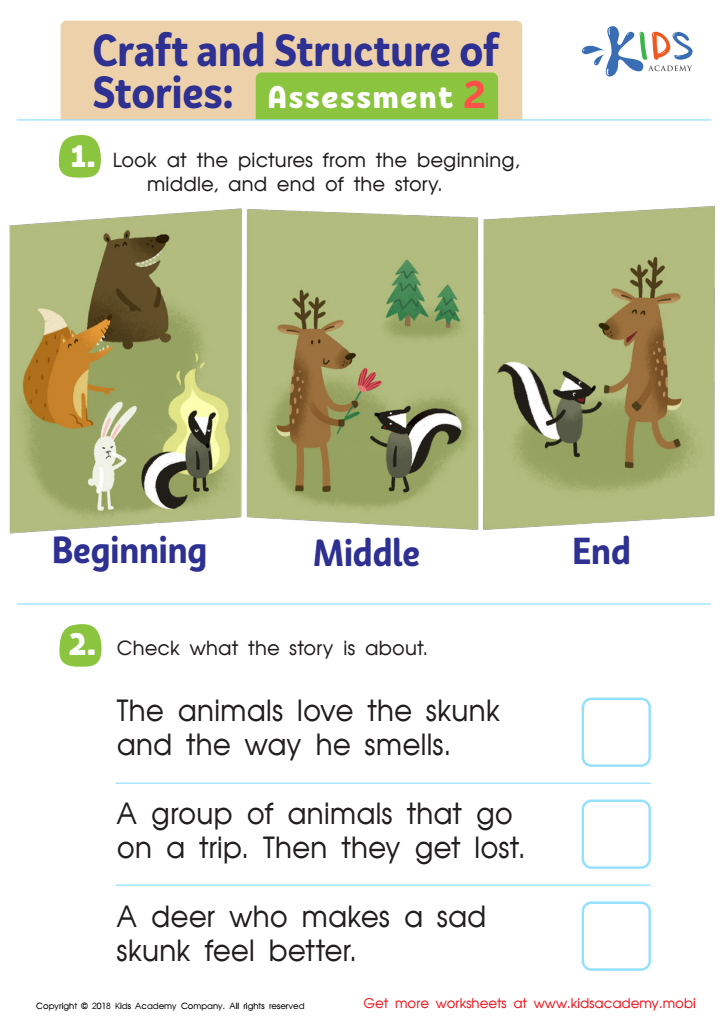
Craft and Structure of Stories: Assessment 2 Worksheet
Help your child assess their story sequencing and reading comprehension skills using this cute worksheet! It encourages them to look at the three pictures on the page, each representing a scene from the beginning, middle and end. Ask them what the story is about, then let them check the box next to the correct answer. This is a great way to ensure they understand the main events of a story.
Craft and Structure of Stories: Assessment 2 Worksheet
Worksheet
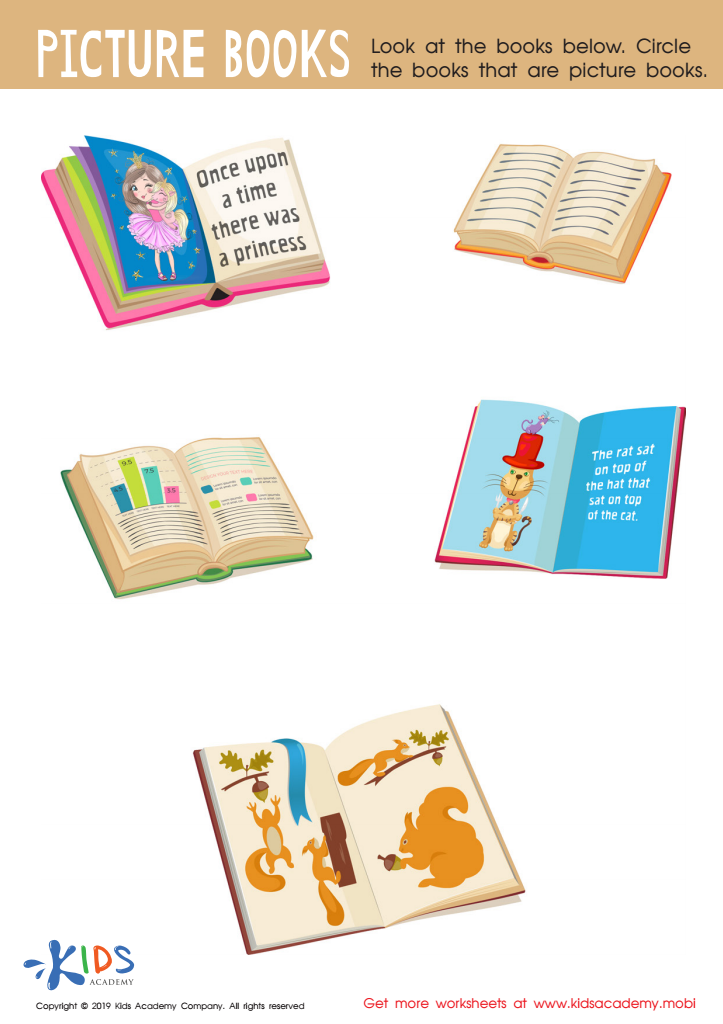
Picture Books Worksheet
Kids will love this exercise! Get their imaginations going with five colorful picture books. Ask them to circle the books that are picture books and have them enjoy the exciting stories, along with the colorful images. Reading can become that much more enjoyable!
Picture Books Worksheet
Worksheet
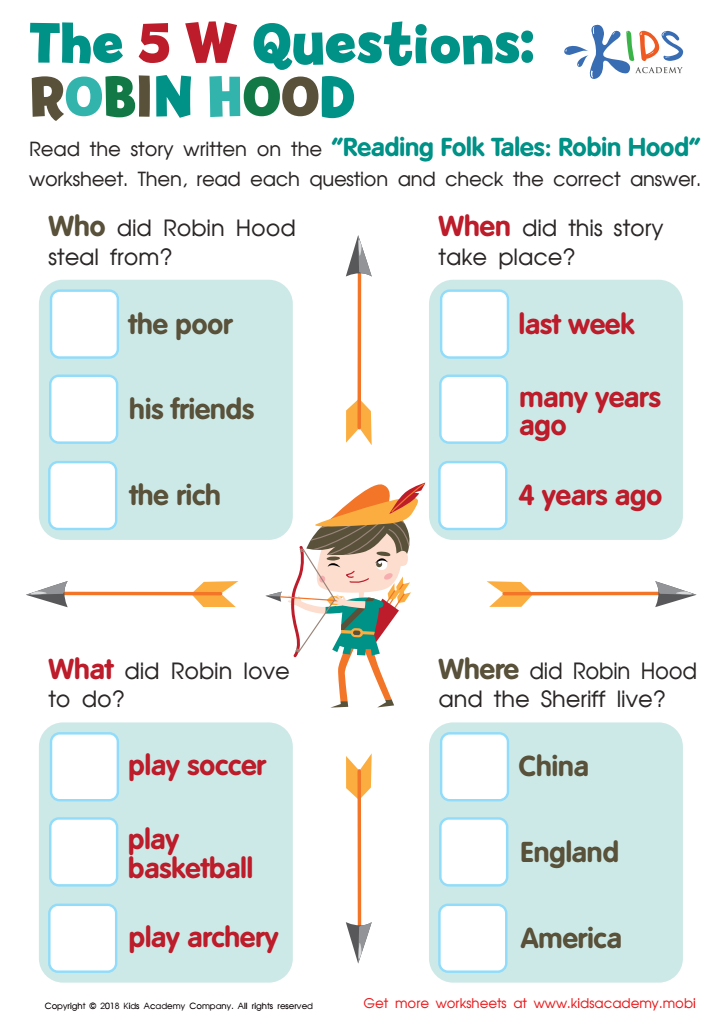
The 5 W Questions: Robin Hood Worksheet
Before embarking on this Robin Hood adventure, ensure your child reads and comprehends the 'Reading Folk Tales: Robin Hood' worksheet. Have them consider the story's lessons, and observe the details. Read the questions and help your kids select the correct answers.
The 5 W Questions: Robin Hood Worksheet
Worksheet
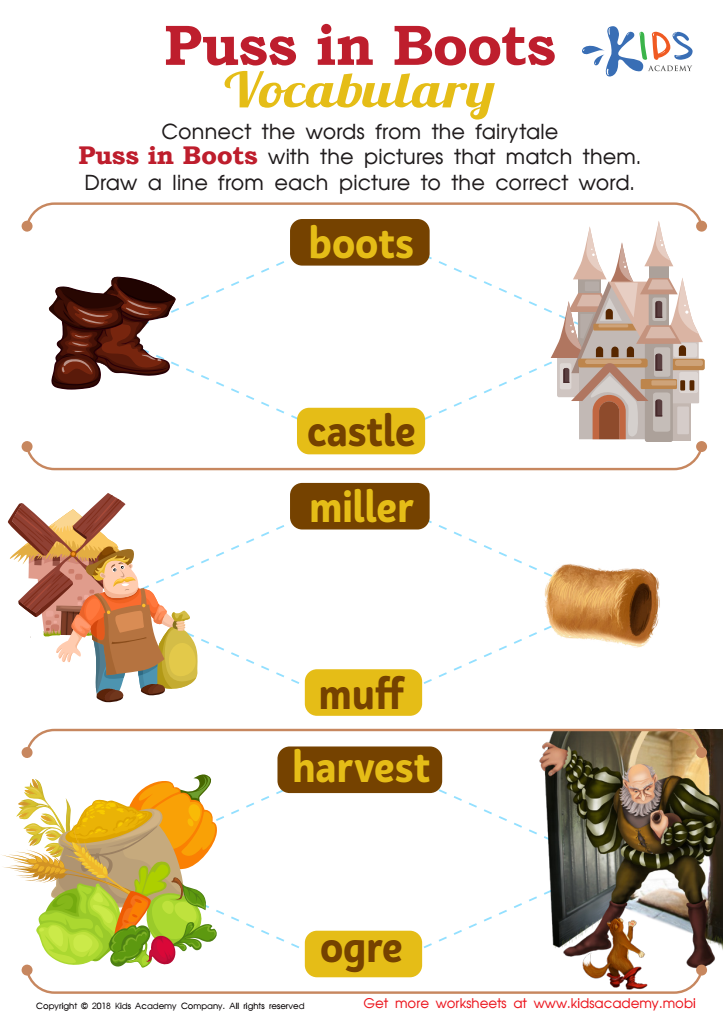
Puss in Boots Vocabulary Worksheet
Let your kids enjoy story-telling while learning at the same time. Help them learn from the fairytale, Puss in Boots, by connecting words from the worksheet with the matching pictures. Ask them to draw a line between each picture and corresponding word to build their vocabulary.
Puss in Boots Vocabulary Worksheet
Worksheet
Join Kids Academy for Free
Who is primarily going to use this learning content?








Parents and teachers should care about story analysis and normal reading for children ages 3-8 because these activities are foundational for early literacy and cognitive development. At this critical stage, young children are rapidly developing their language skills, comprehension, and imaginative abilities. Story analysis helps children understand and interact with narratives, aiding in the development of critical thinking and the ability to sequence events—skills that are essential for academic success.
Engaging children in normal reading routines supports vocabulary acquisition and the recognition of phonetic patterns. This regular exposure to language structures enhances their ability to read independently and improves listening and attention skills. By discussing stories, asking questions, and exploring characters and plots, adults can help children develop empathy and emotional intelligence as they relate to the experiences and feelings of characters.
Moreover, the shared activity of reading and analyzing stories strengthens the emotional bond between children and adults, creating a positive association with reading that can last a lifetime. It also provides an opportunity to instill values, cultural awareness, and problem-solving skills. Ultimately, prioritizing story analysis and normal reading ensures a well-rounded developmental foundation, setting the stage for future academic achievement and instilling a lifelong love of reading.








