Visual interpretation Normal Reading Worksheets for Ages 3-8
5 filtered results
-
From - To
Explore our engaging Visual Interpretation Normal Reading Worksheets designed specifically for children aged 3 to 8. These worksheets encourage young learners to enhance their reading comprehension through visual cues and story illustrations. By interpreting images and visuals, children develop critical thinking skills and a deeper understanding of text. Each worksheet is crafted to be age-appropriate and exciting, making learning fun and effective. Ideal for classrooms or at home, our resources support early literacy development while fostering creativity. Dive into a world of colorful visuals and interactive reading exercises today, and watch your child's reading skills flourish!
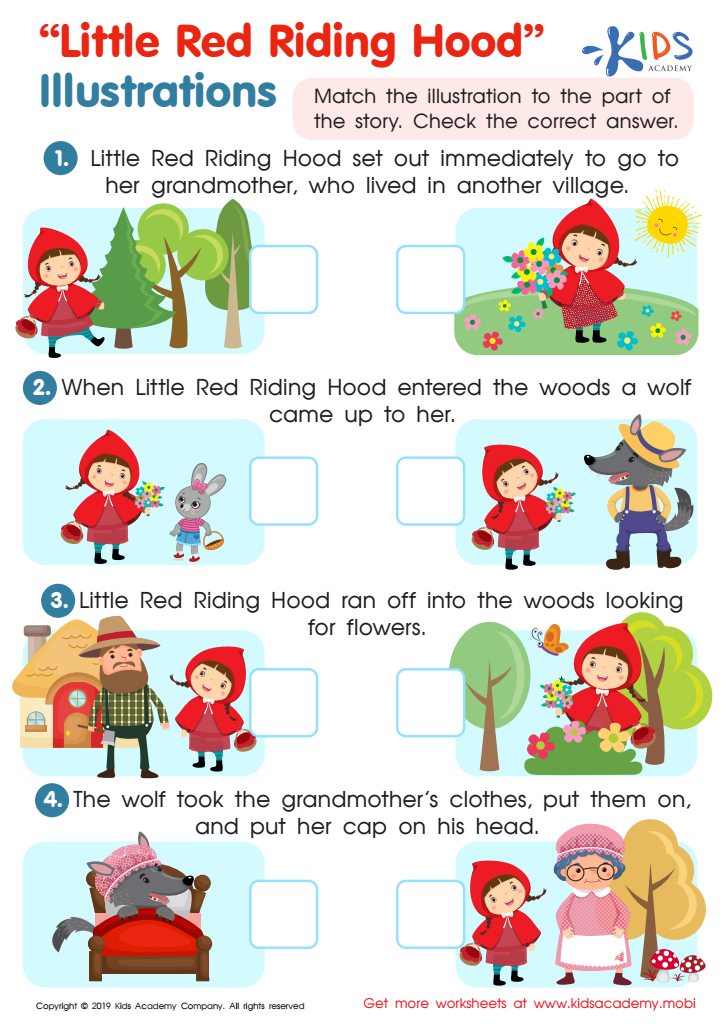
Little Red Riding Hood: Illustrations Worksheet
 Assign to My Students
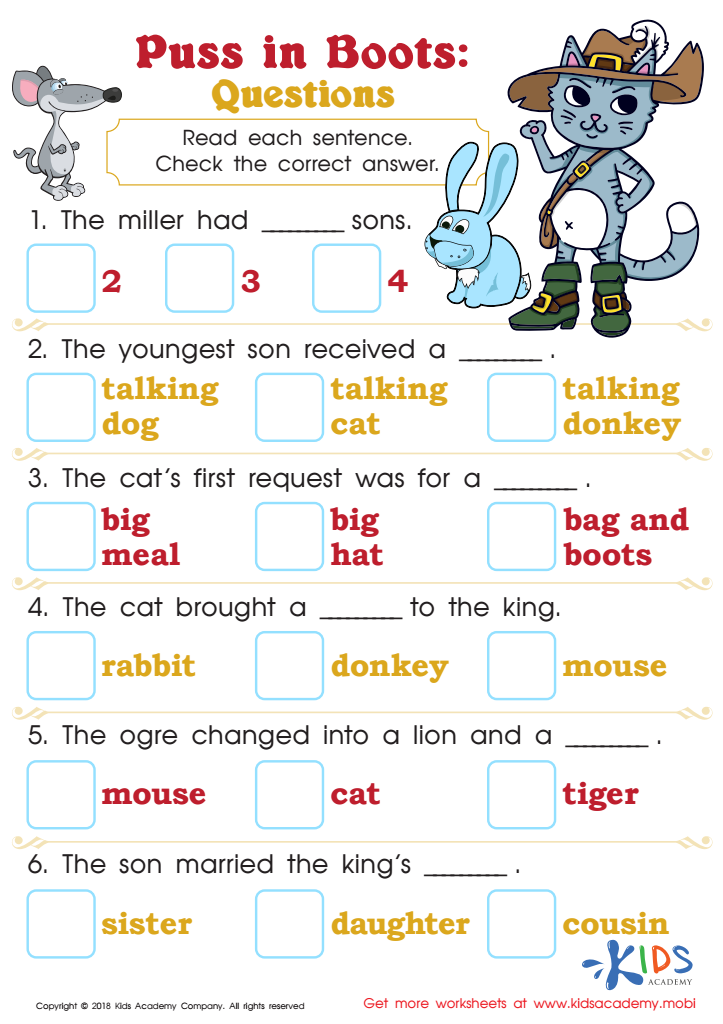
Puss in Boots: Questions Worksheet
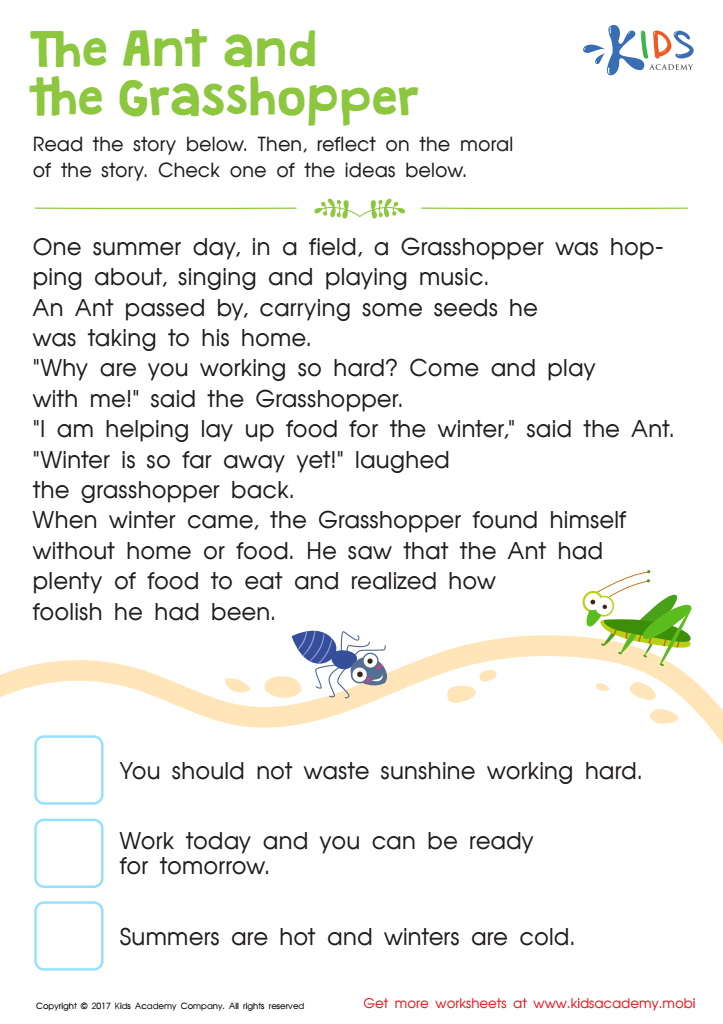
The Ant and The Grasshopper Printable
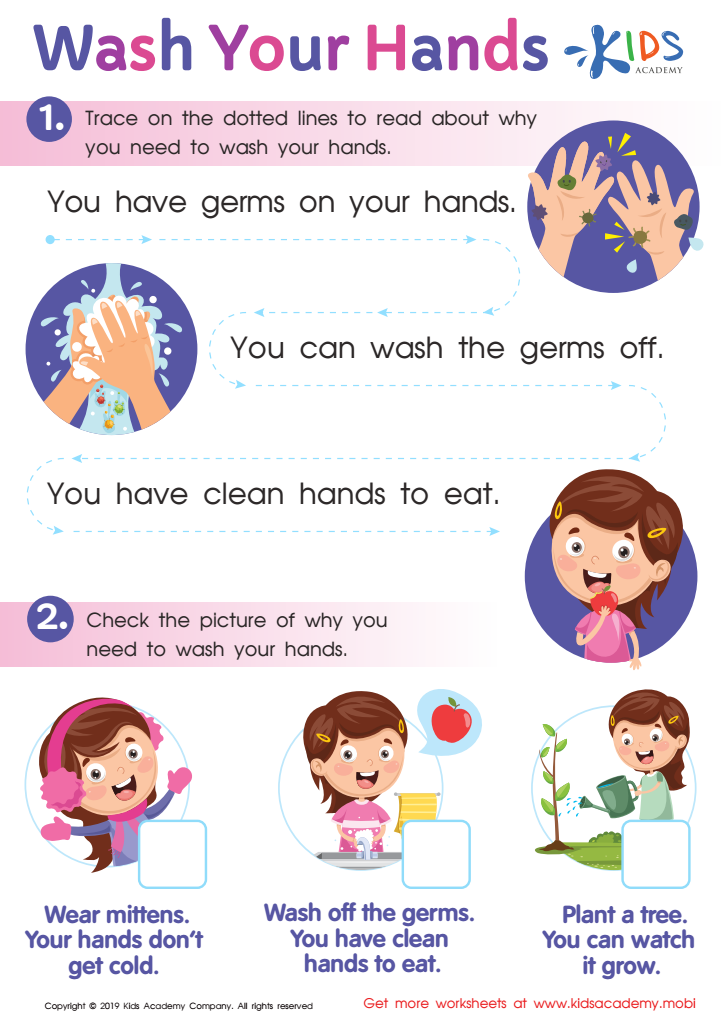
Wash Your Hands Worksheet
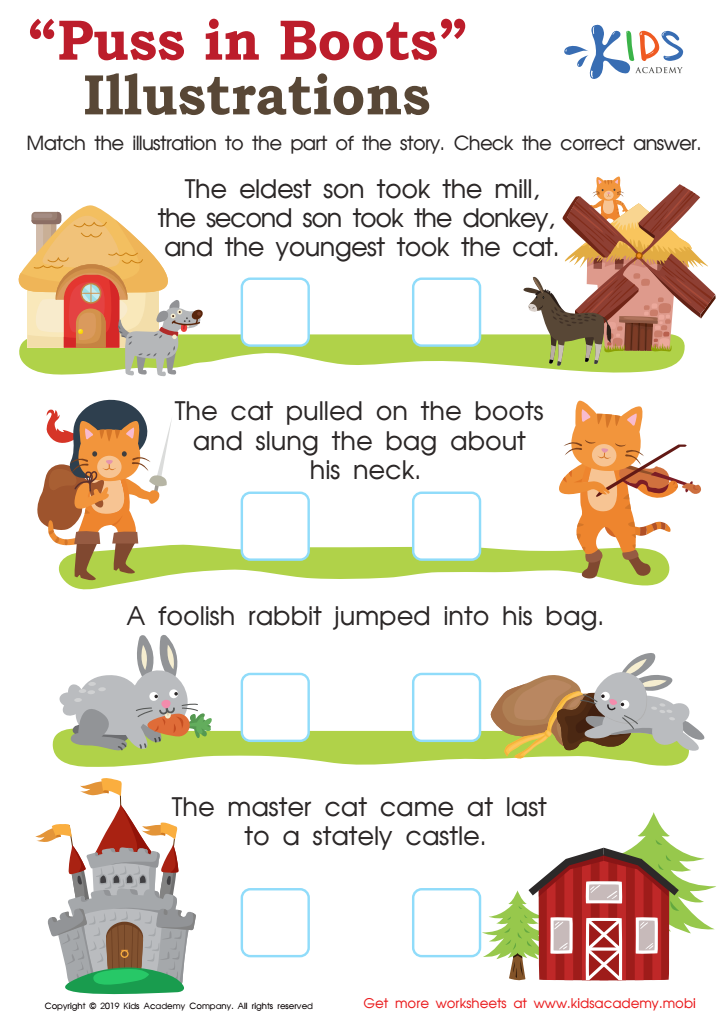
Puss in Boots Illustrations Worksheet



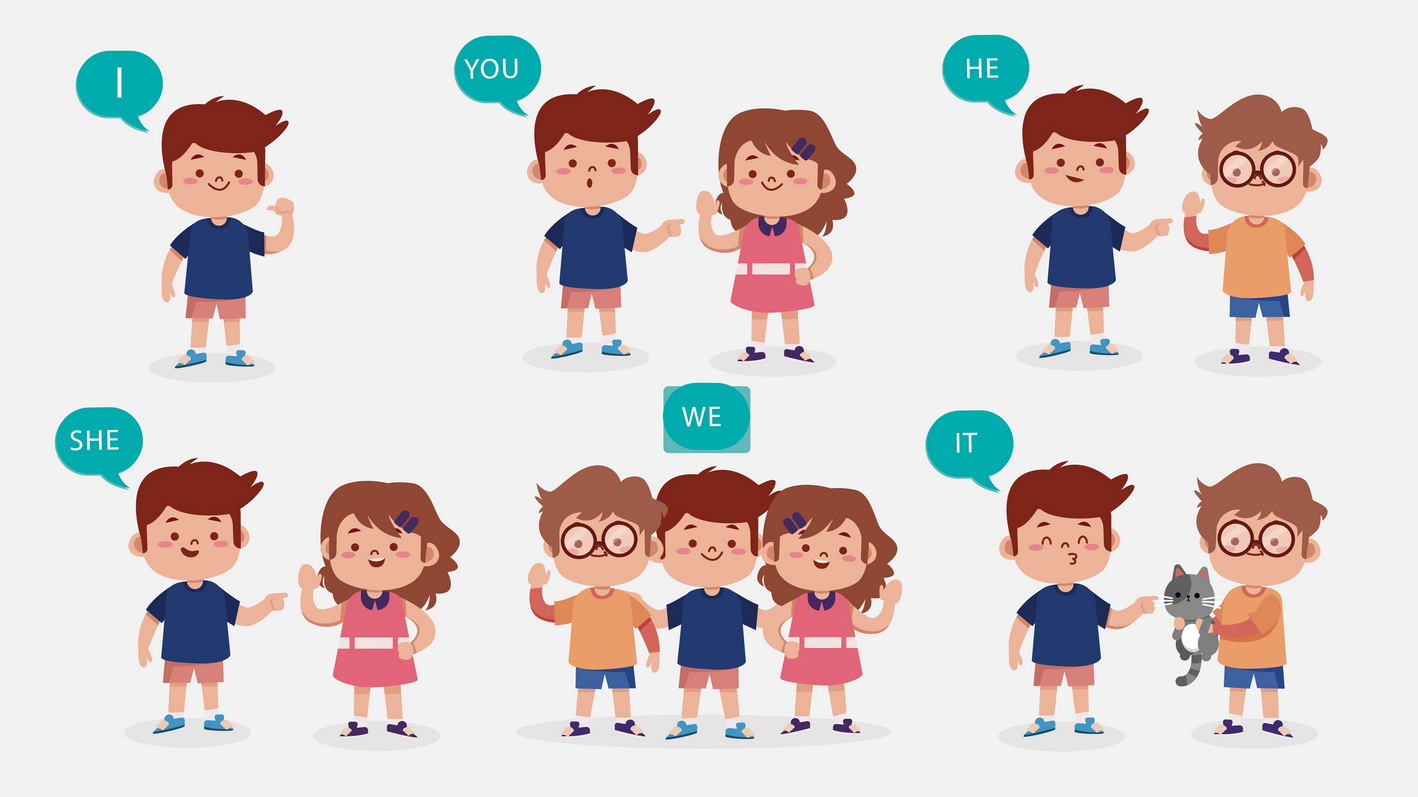



Visual interpretation is a crucial aspect of literacy development for children aged 3-8. During these formative years, children are not only learning to decode words but are also developing their ability to make sense of visual information around them. Fostering these skills can significantly enhance their reading comprehension and overall academic success.
Parents and teachers should care about visual interpretation because it aids in the holistic development of a child’s reading abilities. Children who can interpret images, diagrams, and illustrations alongside text tend to understand and retain information better. Furthermore, visual literacy helps cultivate critical thinking and analysis, enabling children to draw connections between texts and visual content in everyday life.
In a world increasingly dominated by visual media, strong visual interpretation skills equip children with the tools they need to navigate complex information. By encouraging this skill in young learners, parents and teachers can promote engagement with reading materials, making the learning process more enjoyable and meaningful. Ultimately, this foundation contributes to a child's love of reading, setting the stage for lifelong learning and success. Thus, nurturing visual interpretation in early education is fundamental for developing proficient and thoughtful readers.








