Word identification Normal Reading Worksheets for Ages 3-8
5 filtered results
-
From - To
Our "Word Identification Normal Reading Worksheets for Ages 3-8" offer engaging and educational practice to support early readers. Perfect for parents and educators, these worksheets help develop essential skills like phonetics and sight word recognition. Each worksheet is thoughtfully designed to suit the developmental needs of children aged 3 to 8, fostering confidence and excitement in young learners. With fun activities and colorful illustrations, kids can enjoy learning new words while enhancing their reading abilities. Help your child succeed with our expertly crafted resources that make word identification fun and effective. Explore our collection today!
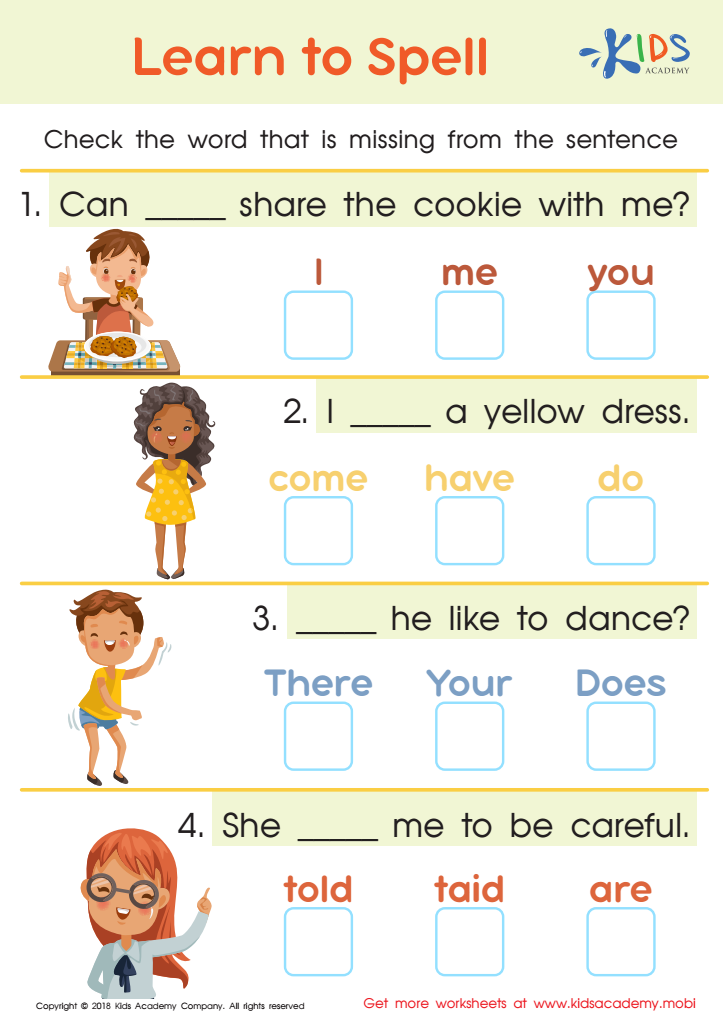
Learn to Spell Worksheet
 Assign to My Students
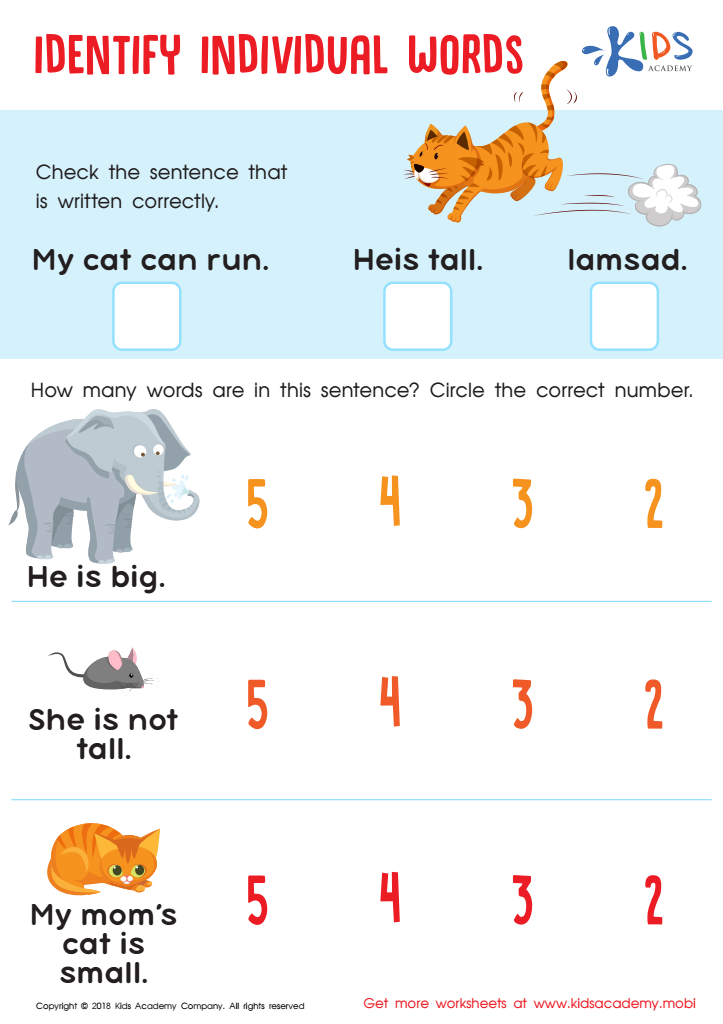
Identify Individual Words Worksheet
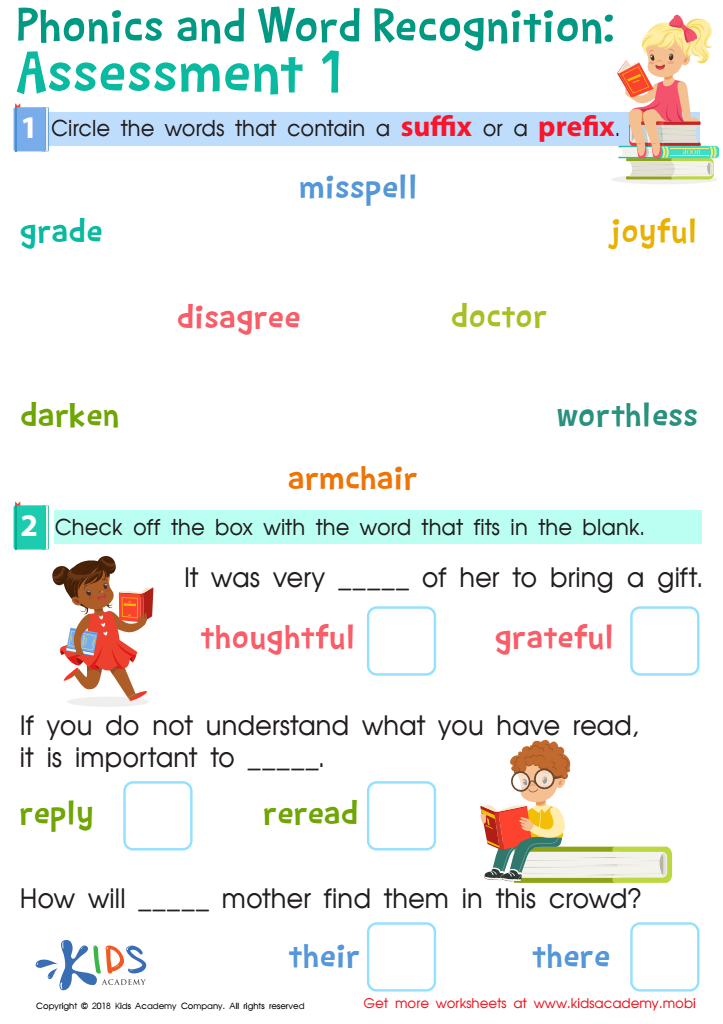
Phonics and Word Recognition: Assessment 1 Worksheet
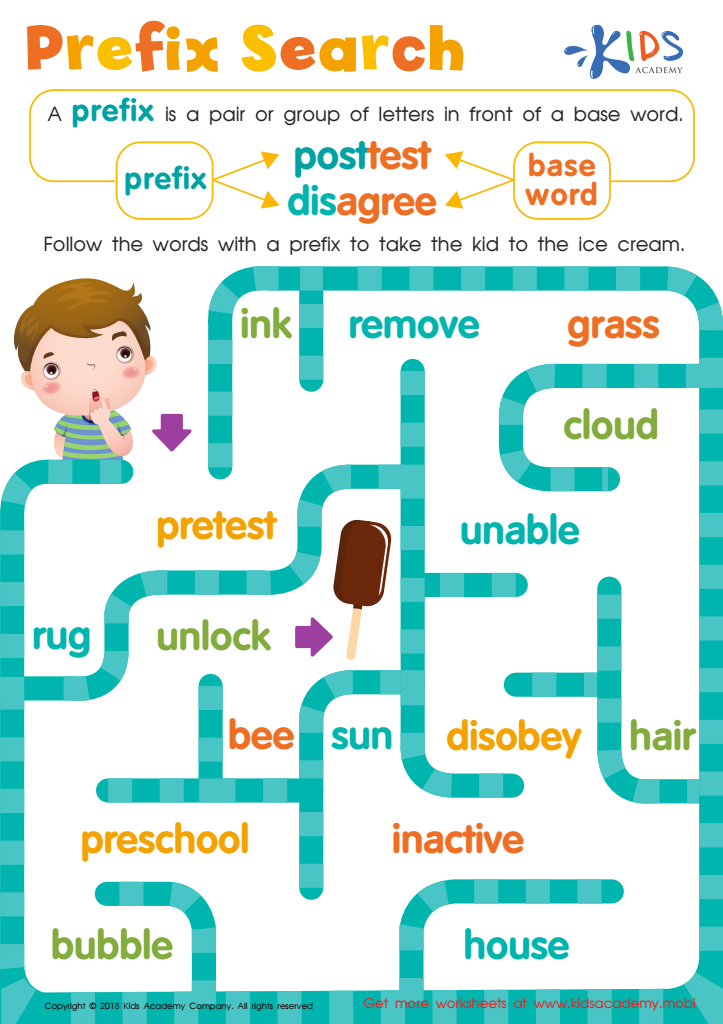
Reading: Prefix Search Worksheet
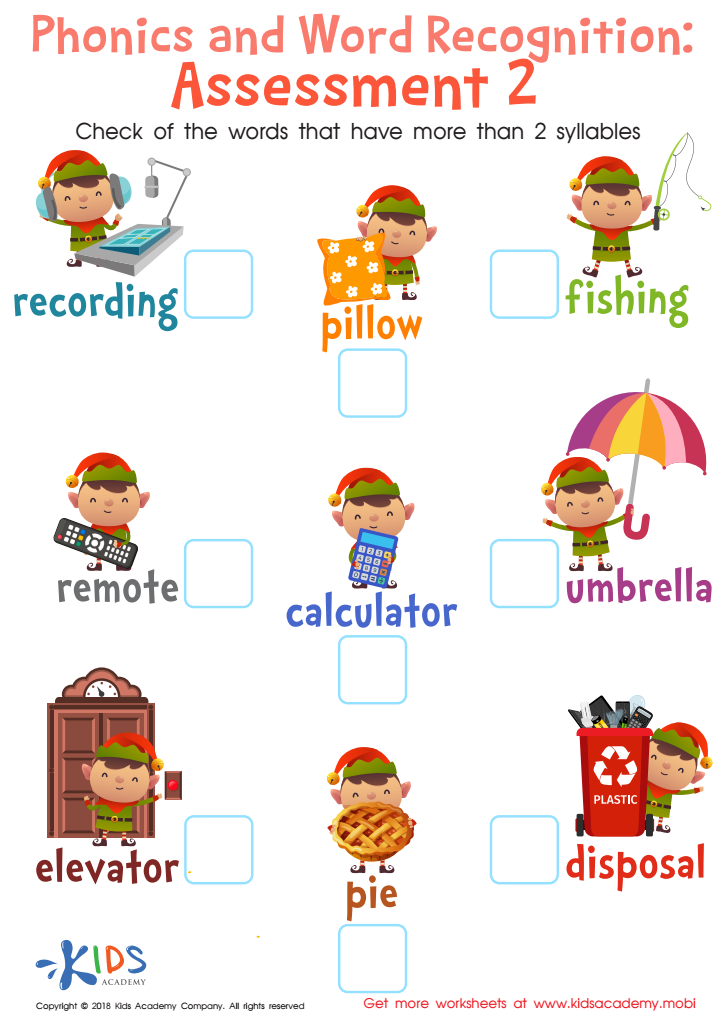
Phonics and Word Recognition: Assessment 2 Worksheet








Word identification is an essential milestone in early reading development for children ages 3-8. Understanding how to recognize and read words accurately facilitates crucial literacy skills that are fundamental for overall academic achievement and lifelong learning. During the ages of 3-8, children are particularly receptive to language acquisition, making it a prime period for developing reading fluency.
For parents and teachers, prioritizing word identification lays the groundwork for confident and proficient reading. First, it aids in comprehension by enabling children to read text smoothly and focus their cognitive resources on understanding meaning rather than decoding individual words. This boosts their ability to learn from books, fostering a love for reading and learning overall.
Second, early word recognition skills have been linked to later success in school. Children who swiftly recognize words are better prepared for the increased reading demands in higher grades. They exhibit enhanced vocabulary, better spelling abilities, and improved communication skills.
Moreover, effective word identification strategies involve phonemic awareness, letter-sound correspondence, and phonological processing. By nurturing these aspects, parents and teachers support children's cognitive development and ensure they are equipped to tackle more complex literacy tasks.
In summary, focusing on word identification for young children is critical. It not only supports immediate reading fluency and comprehension but also lays the foundation for academic success and intellectual growth.








