Moral understanding Normal Reading Comprehension Worksheets for Ages 3-8
5 filtered results
-
From - To
Explore our engaging Moral Understanding Normal Reading Comprehension Worksheets designed specifically for children aged 3-8. These worksheets help young learners develop essential moral reasoning skills while improving their reading comprehension. Each activity combines age-appropriate texts and thought-provoking questions, encouraging children to reflect on ethical dilemmas and understand important values. Our resources cater to various learning styles, ensuring that every child can grasp key concepts of fairness, empathy, and honesty. Ideal for classrooms or home learning environments, these worksheets promote critical thinking and discussion among peers and family, making learning a fun and purposeful experience. Start nurturing moral understanding today!
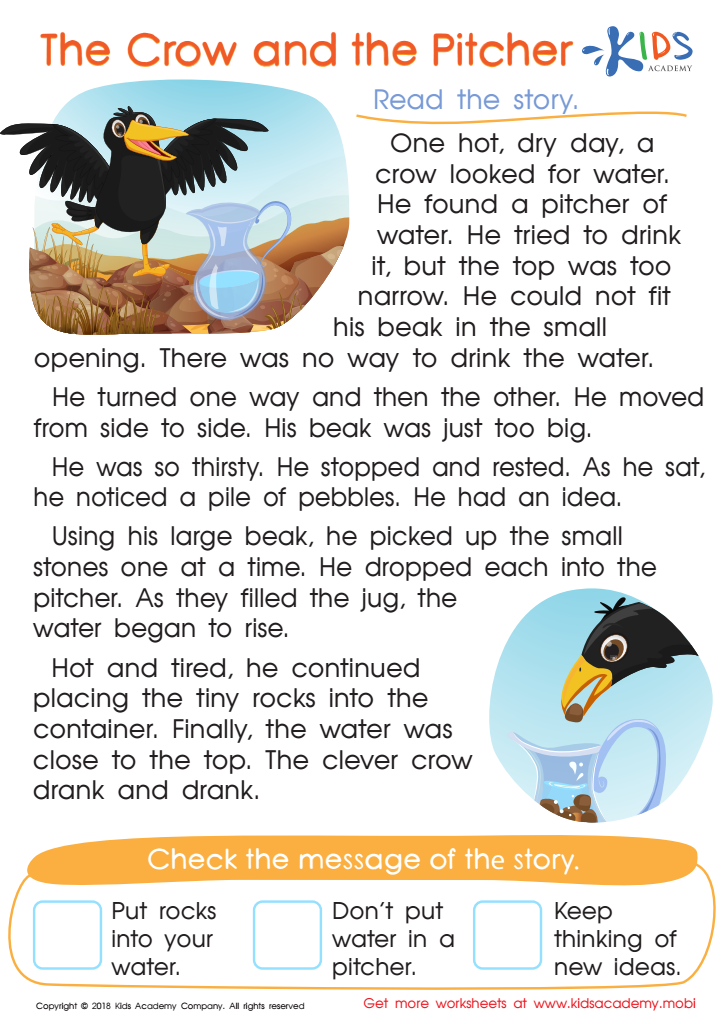
The Crow and the Pitcher Worksheet
 Assign to My Students
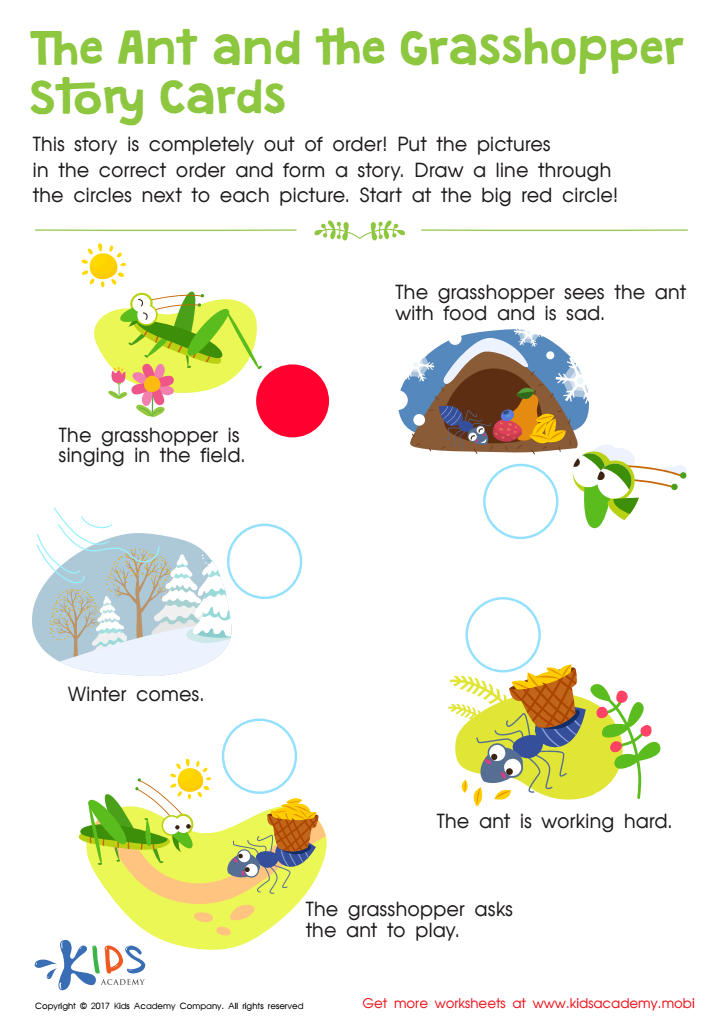
The Ant and The Grasshopper Worksheet
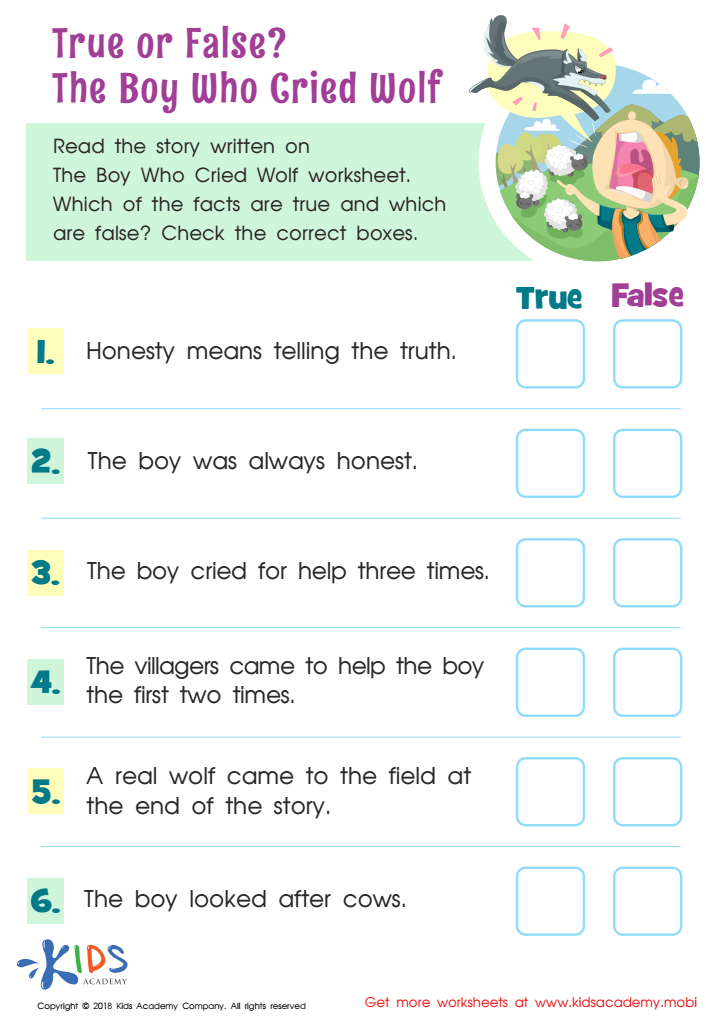
True or False? The Boy Who Cried Wolf Worksheet
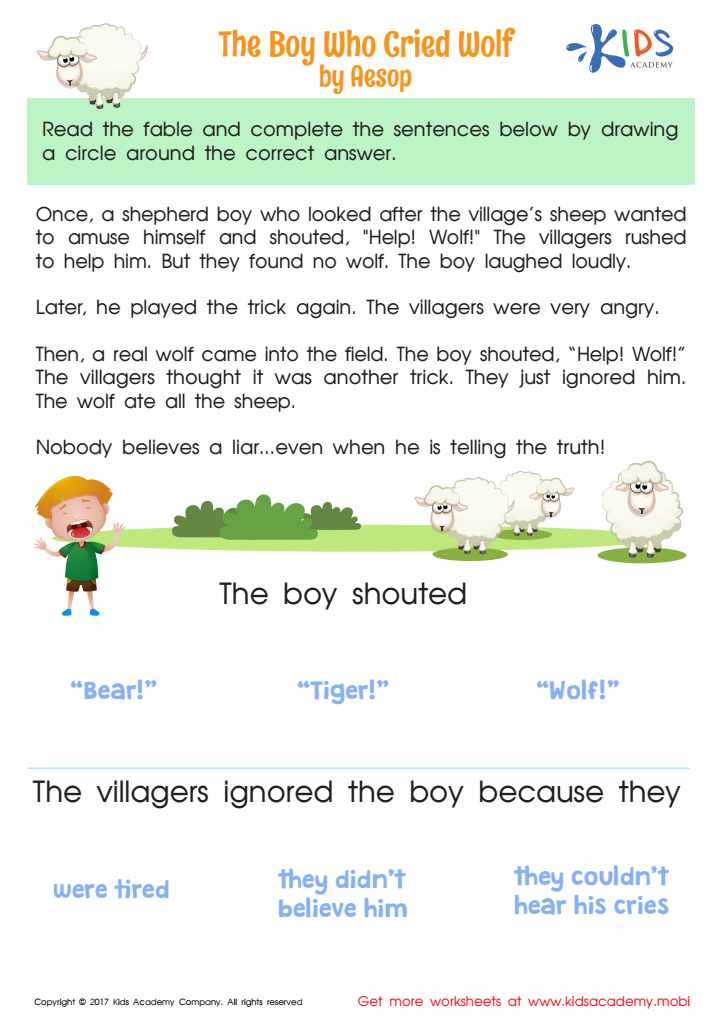
The Boy Who Cried Wolf Worksheet
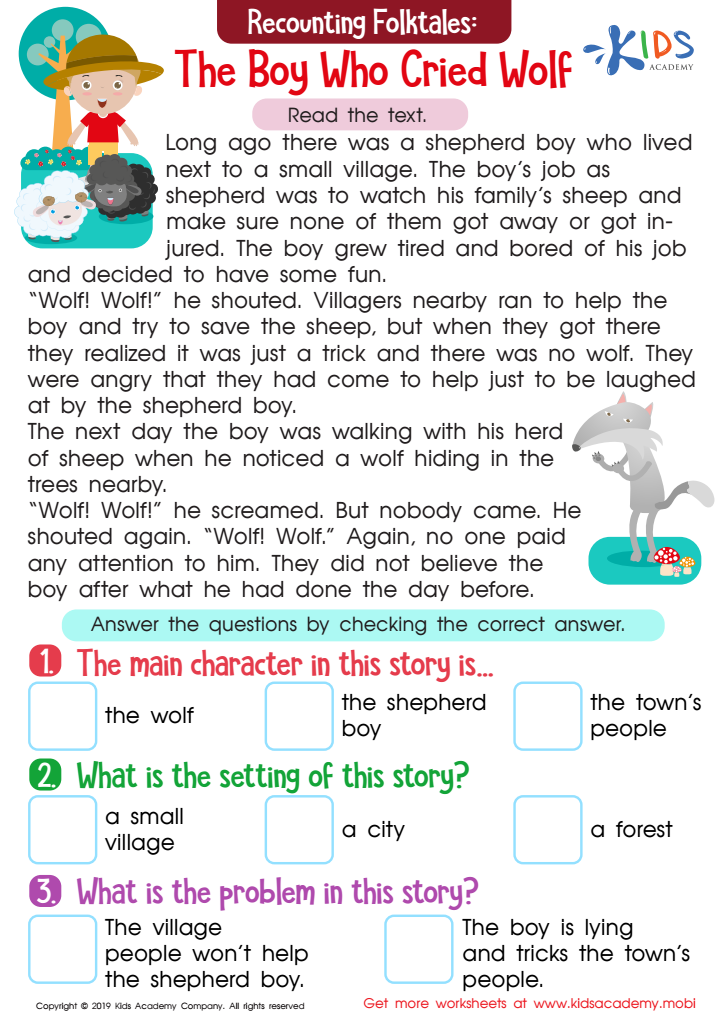
The Boy Who Cried Wolf Part 1 Worksheet


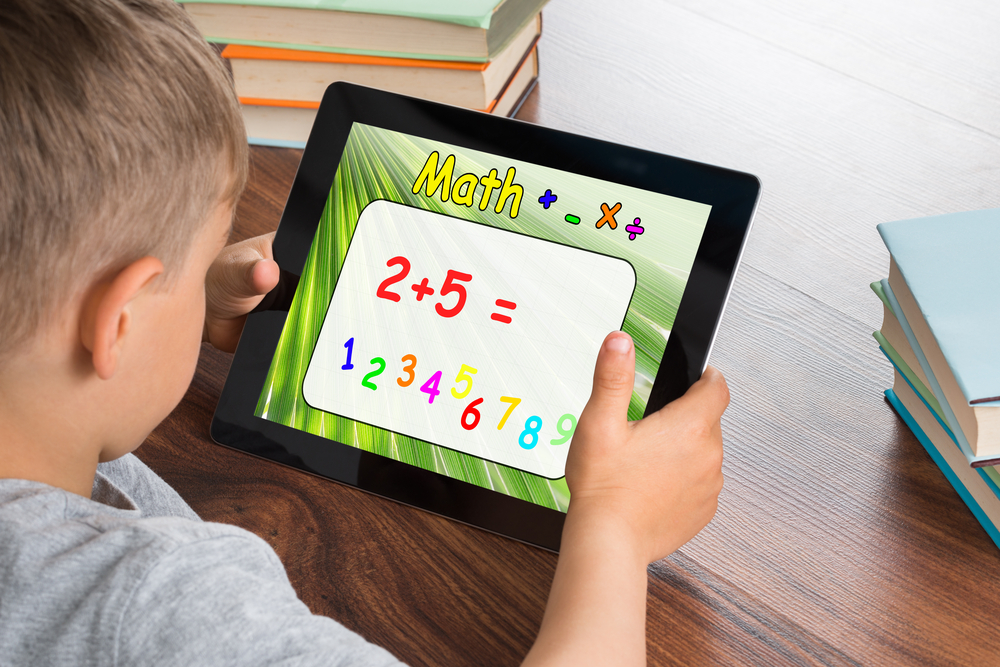

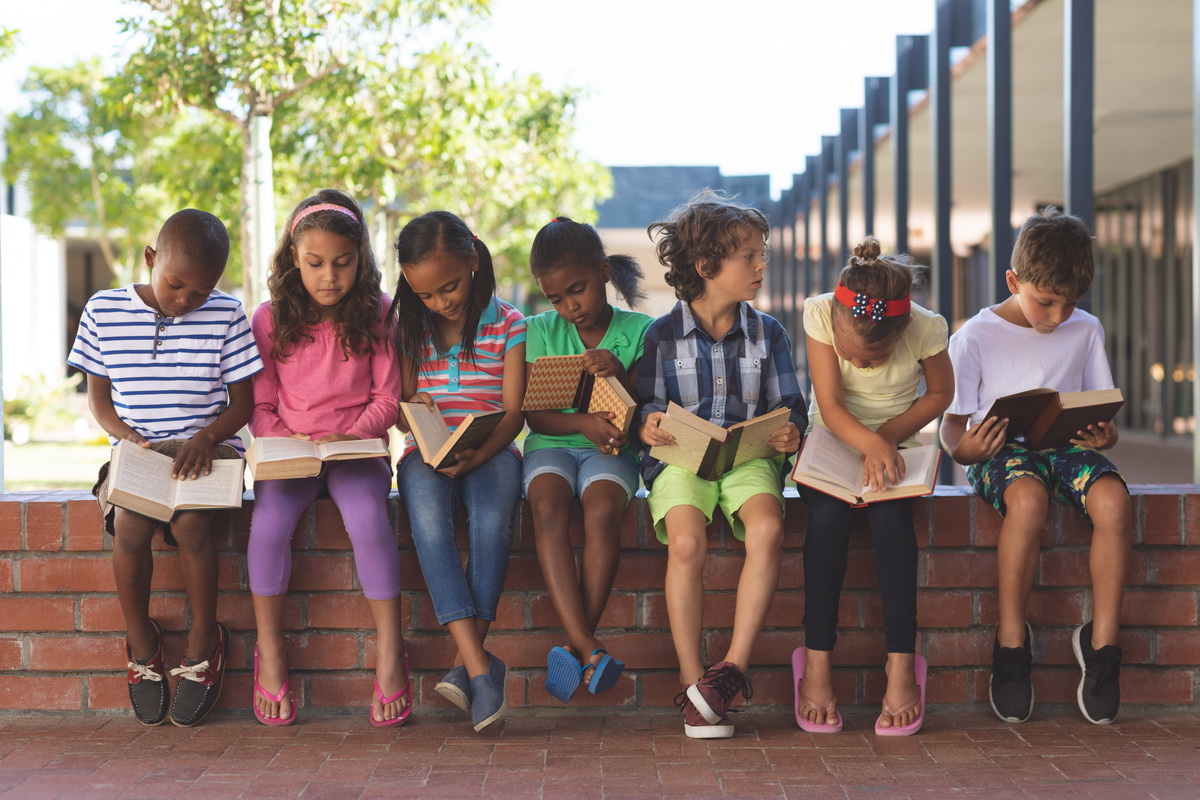



Parents and teachers should care about moral understanding and reading comprehension for children ages 3-8 because these skills are foundational for lifelong learning and social development. Moral understanding helps kids grasp concepts of right and wrong while fostering empathy and cooperation. As children engage with stories, they encounter diverse characters and situations, learning to recognize and reflect on moral dilemmas.
Simultaneously, normal reading comprehension ensures children can understand and engage with what they read. This comprehension is crucial not only for academic success but also for making sense of the world around them. When children can decode text and grasp its meaning, they become better equipped to explore complex social narratives and moral lessons embedded in literature.
The synergy between moral understanding and reading comprehension enhances critical thinking, promoting ethical decision-making and empathy. As children analyze stories and characters, they learn to identify emotions, motivations, and consequences. This skill set not only enriches their literary experiences but also shapes their interactions with peers and society. In essence, fostering these abilities in early childhood cultivates well-rounded individuals who can navigate both academic challenges and social scenarios with confidence, compassion, and sound judgment.








