Story analysis Normal Reading Comprehension Worksheets for Ages 3-8
4 filtered results
-
From - To
Enhance your child's reading comprehension with our engaging Story Analysis Worksheets, designed for ages 3-8. These interactive resources foster critical thinking and understanding of narrative elements. Each worksheet encourages young learners to explore characters, settings, and plot developments, promoting both love for reading and essential analytical skills. With colorful visuals and age-appropriate questions, children will have fun while honing their ability to retell stories and discuss them meaningfully. Perfect for classroom use or home learning, our worksheets support diverse learning styles and lay a strong foundation for future literacy success. Discover the joys of reading and comprehension today!
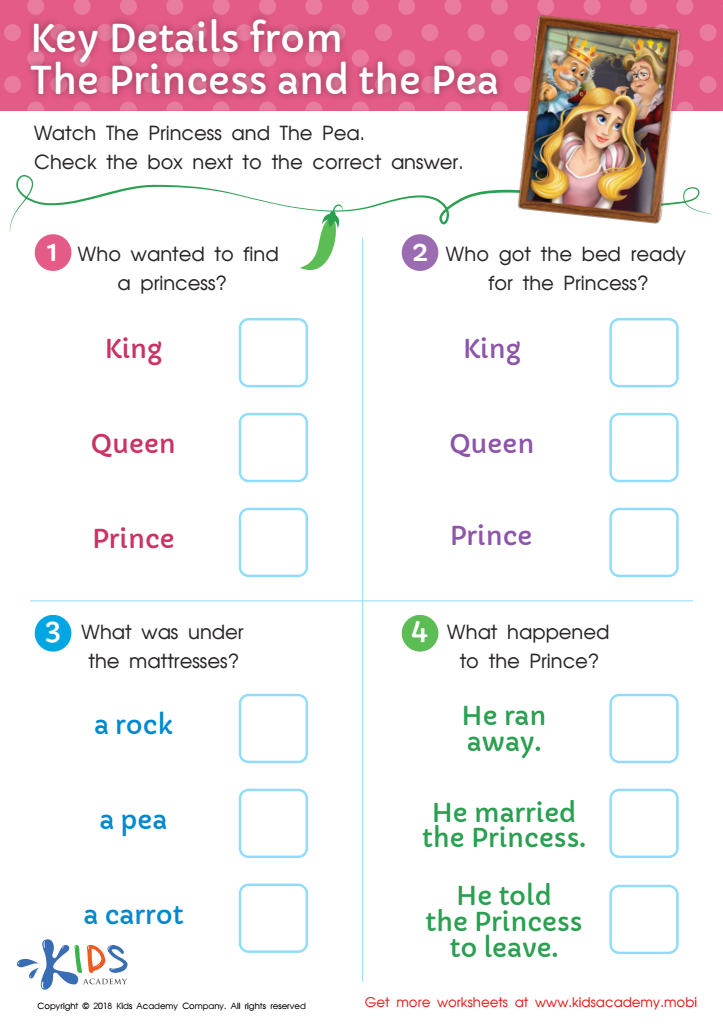
Key Details from the Princess and the Pea Worksheet
 Assign to My Students
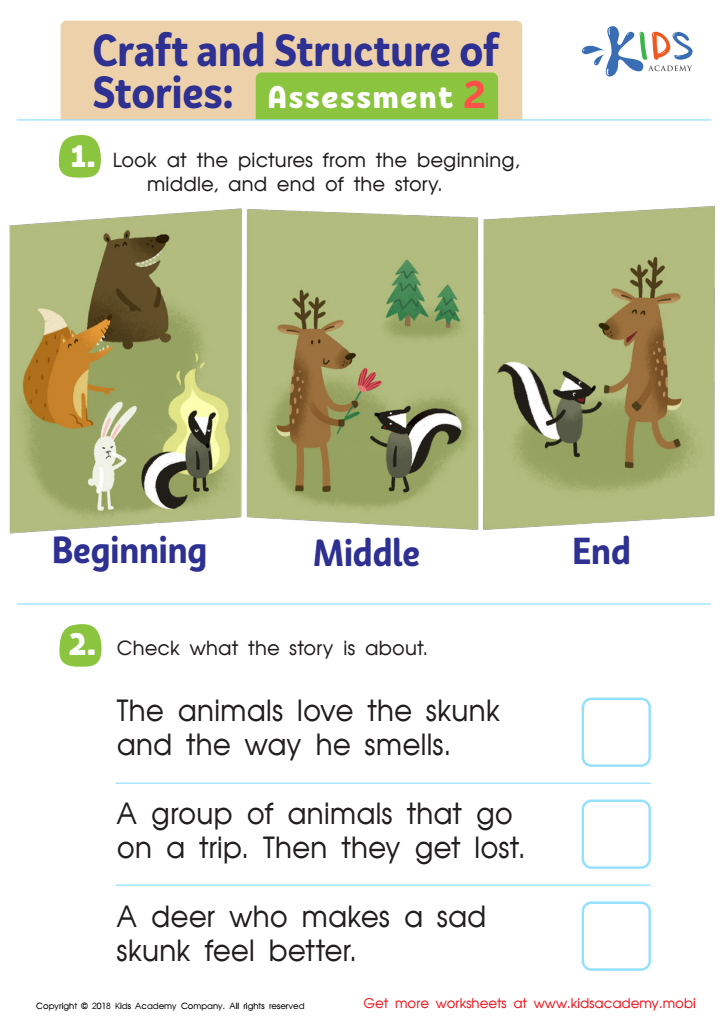
Craft and Structure of Stories: Assessment 2 Worksheet
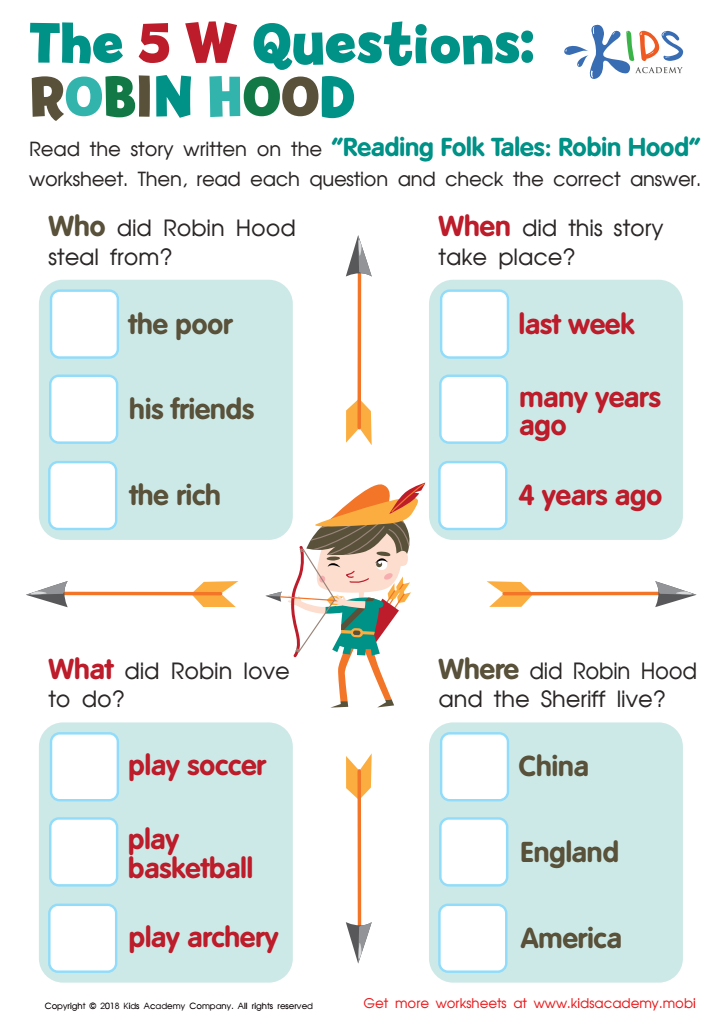
The 5 W Questions: Robin Hood Worksheet
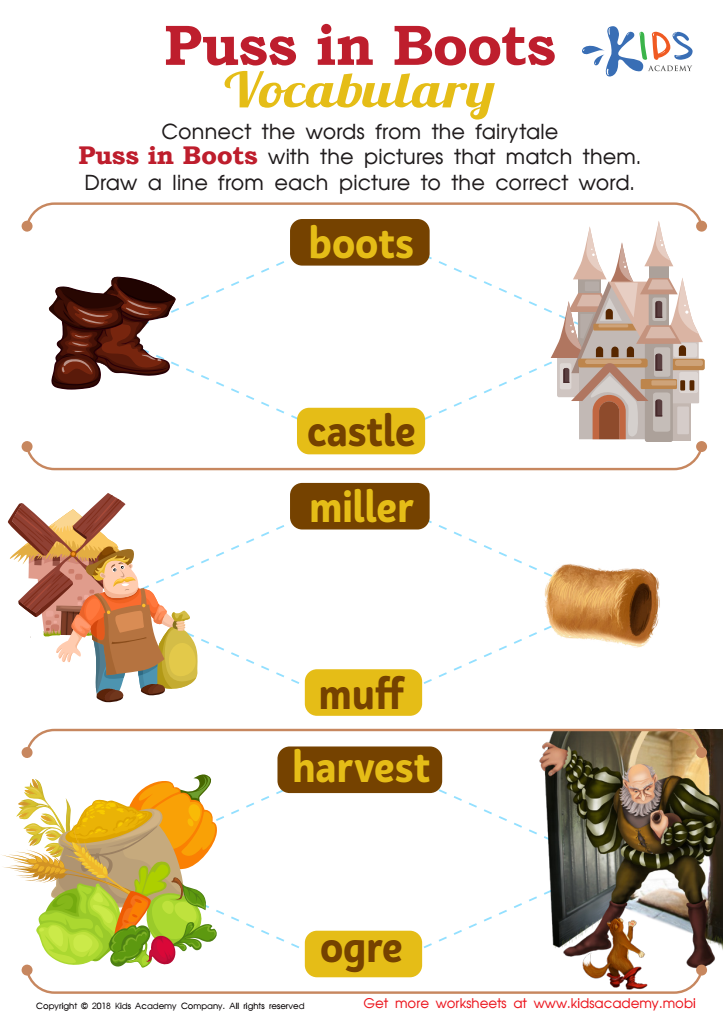
Puss in Boots Vocabulary Worksheet








Story analysis and normal reading comprehension are crucial for children aged 3-8, as they lay the foundation for effective communication, critical thinking, and a lifelong love for learning. At this early stage, children are naturally curious, and engaging with stories helps them expand their vocabulary, enhance their understanding of language structure, and develop their narrative skills.
For parents and teachers, fostering reading comprehension through story analysis empowers children to interpret characters, plot developments, and themes, promoting deeper connections with the material. This practice encourages imaginative thinking and emotional intelligence, as children learn to empathize with different perspectives and experiences.
Furthermore, strong reading comprehension skills are linked to academic success across all subjects. By honing these abilities in young learners, caregivers can help ensure they are well-prepared for advanced literacy skills as they progress in their education. Lastly, story analysis can serve as a delightful bonding experience between parents, teachers, and children, creating moments of joy and discussion, thereby enhancing familial and educational relationships. In summary, prioritizing story analysis and reading comprehension is essential for fostering well-rounded, empathetic, and intellectually curious young minds.








