Moral lesson understanding Normal Reading Fiction Worksheets for Ages 3-8
5 filtered results
-
From - To
Discover our engaging Moral Lesson Understanding Normal Reading Fiction Worksheets designed specifically for children ages 3-8! These worksheets help young learners explore important moral lessons found in captivating stories. Through guided reading and interactive activities, kids will develop comprehension skills while recognizing values such as kindness, honesty, and sharing. Our thoughtfully crafted worksheets encourage critical thinking, allowing children to draw connections between the stories and real-life situations. Perfect for parents and educators alike, these resources support literacy development and instill essential life lessons in a fun, accessible way. Foster a love for reading while nurturing empathy and understanding in your little ones today!
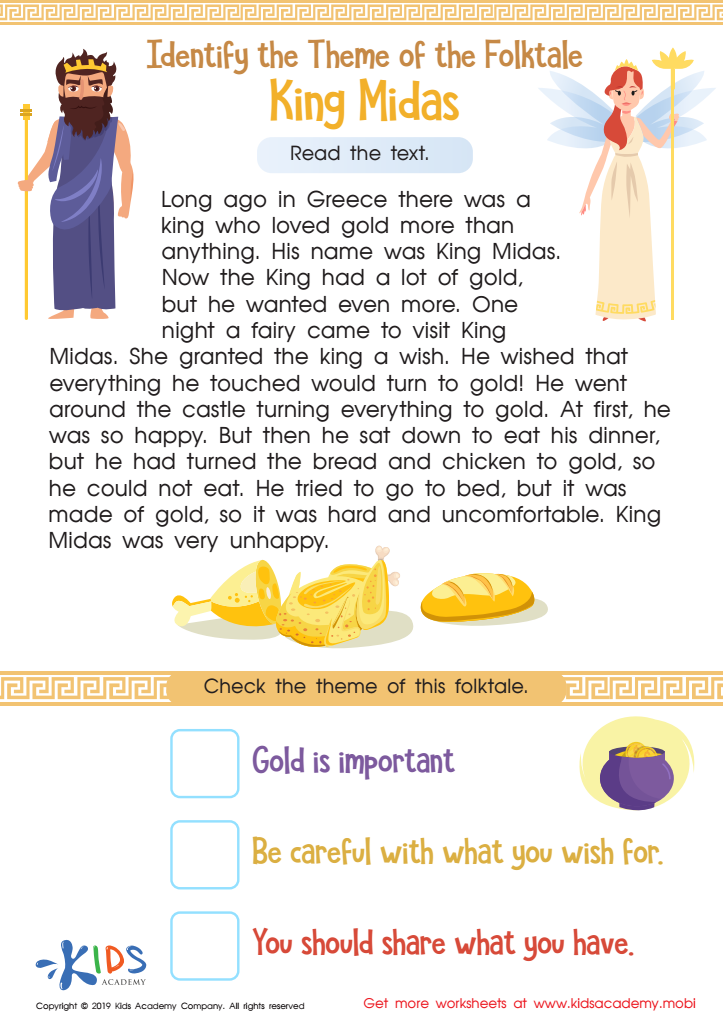
King Midas Worksheet
 Assign to My Students
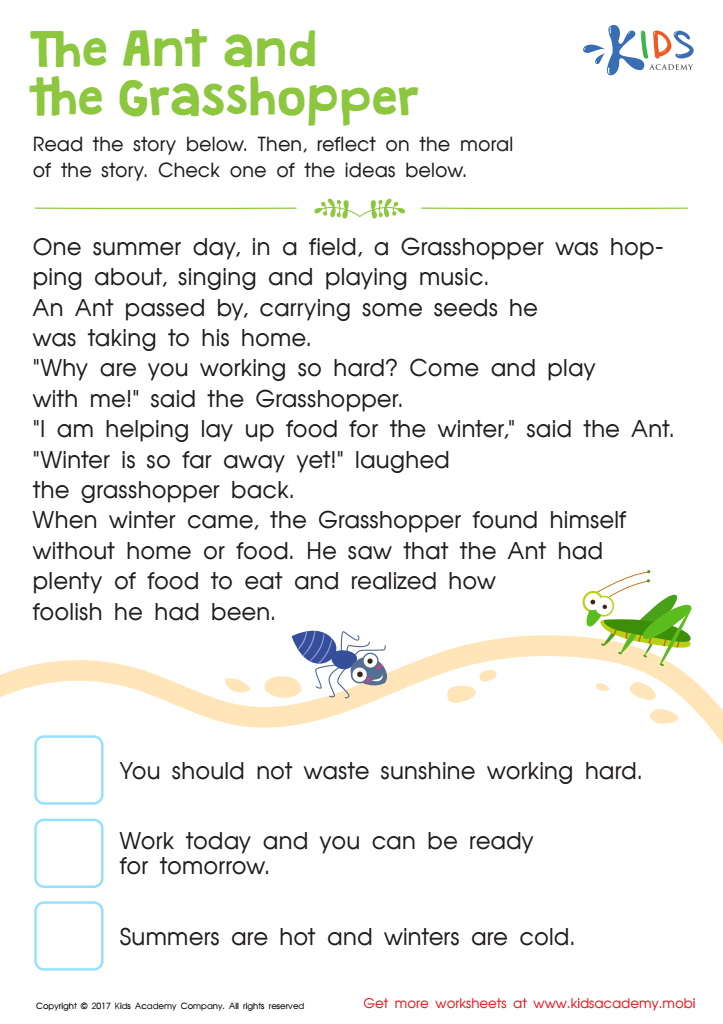
The Ant and The Grasshopper Printable
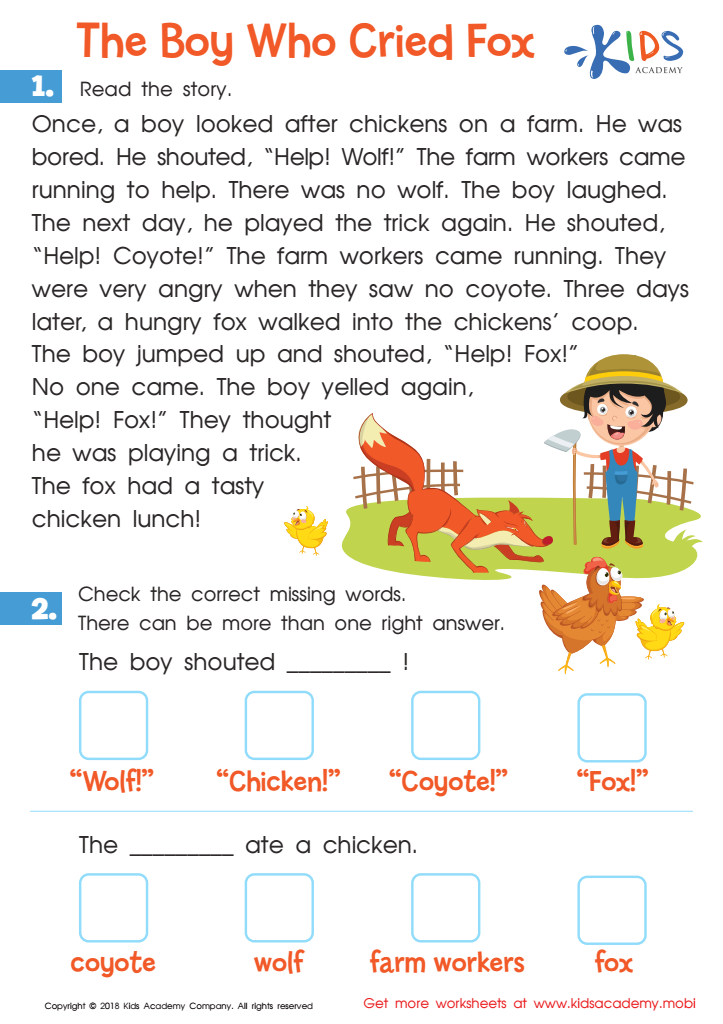
The Boy Who Cried Fox Worksheet
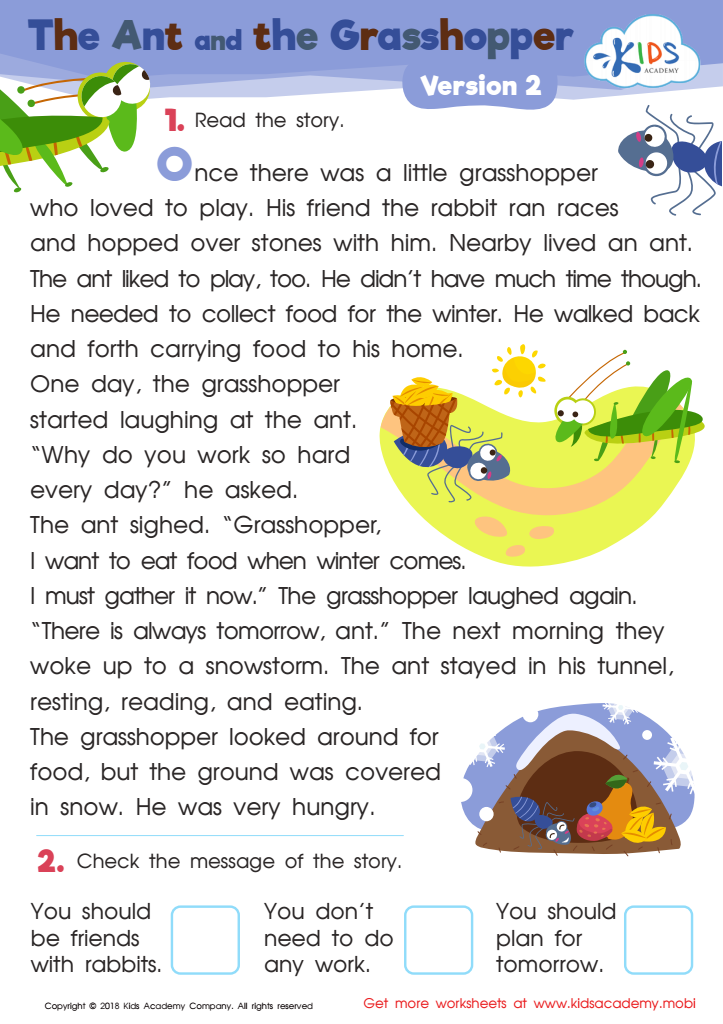
The Ant and The Grasshopper Version 2 Worksheet
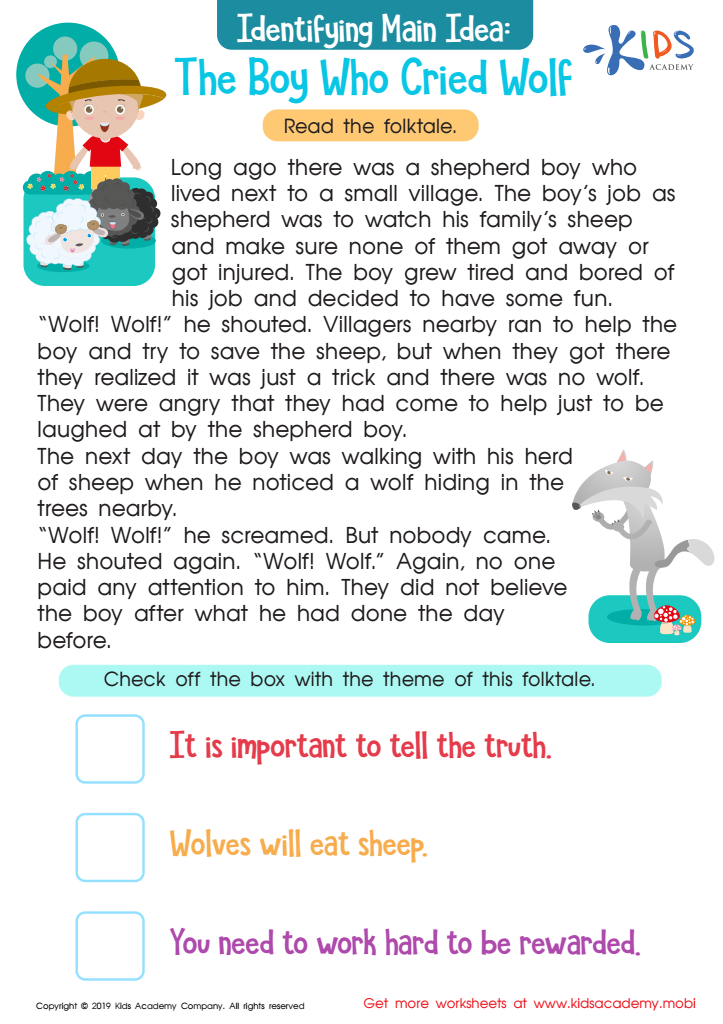
The Boy Who Cried Wolf Part 2 Worksheet


.jpg)




.jpg)
Moral lessons in fiction are crucial for children aged 3-8, as they play a significant role in personal development and social skills. At this early stage, children are keen observers and often emulate behaviors they see in stories. Through normal reading fiction, children encounter diverse characters and situations that present ethical dilemmas, allowing them to grapple with concepts of right and wrong, empathy, honesty, and kindness in a safe context.
Parents and teachers should care about the inclusion of moral lessons in literature because these narratives help to cultivate critical thinking. When children discuss the actions of characters, they learn to analyze choices and consequences, fostering an understanding of how their actions affect others. This critical engagement enhances their emotional intelligence and social awareness, vital components for building healthy relationships as they grow.
Moreover, stories with moral lessons can create bonding opportunities between adults and children. Discussing a character’s decisions can spark conversations about values and personal experiences, reinforcing what children learn in the stories. In sum, fostering an understanding of moral lessons through reading not only enriches children’s literary experiences but also equips them with the foundational values necessary for responsible citizenship and personal integrity.







