Animal identification Normal Reading Non-Fiction Worksheets for Ages 3-8
3 filtered results
-
From - To
Our "Animal Identification Normal Reading Non-Fiction Worksheets for Ages 3-8" are perfect for young learners eager to discover the animal kingdom! These engaging and educational worksheets seamlessly blend reading practice with fascinating animal facts, fostering both literacy and a love for nature. Each carefully crafted worksheet captures the curiosity of children through colorful images and fun facts, while promoting essential learning skills such as comprehension, critical thinking, and vocabulary building. Designed for ages 3-8, these worksheets provide a delightful learning experience, ensuring that reading non-fiction becomes an exciting and enriching part of their educational journey. Explore today and inspire young minds!
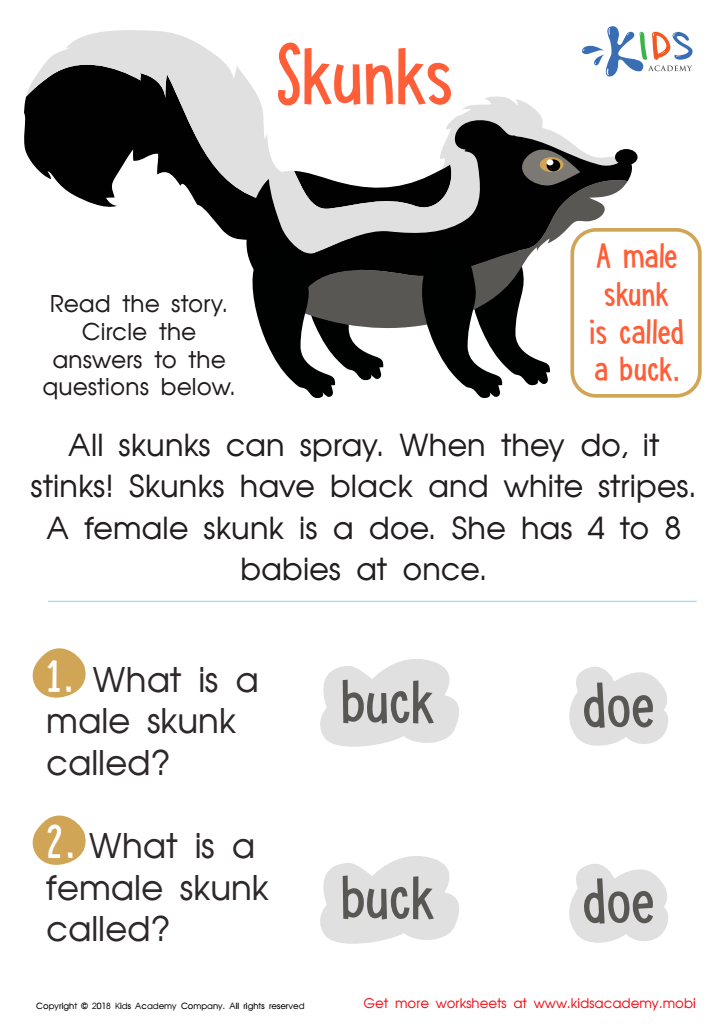
Skunks Worksheet
 Assign to My Students
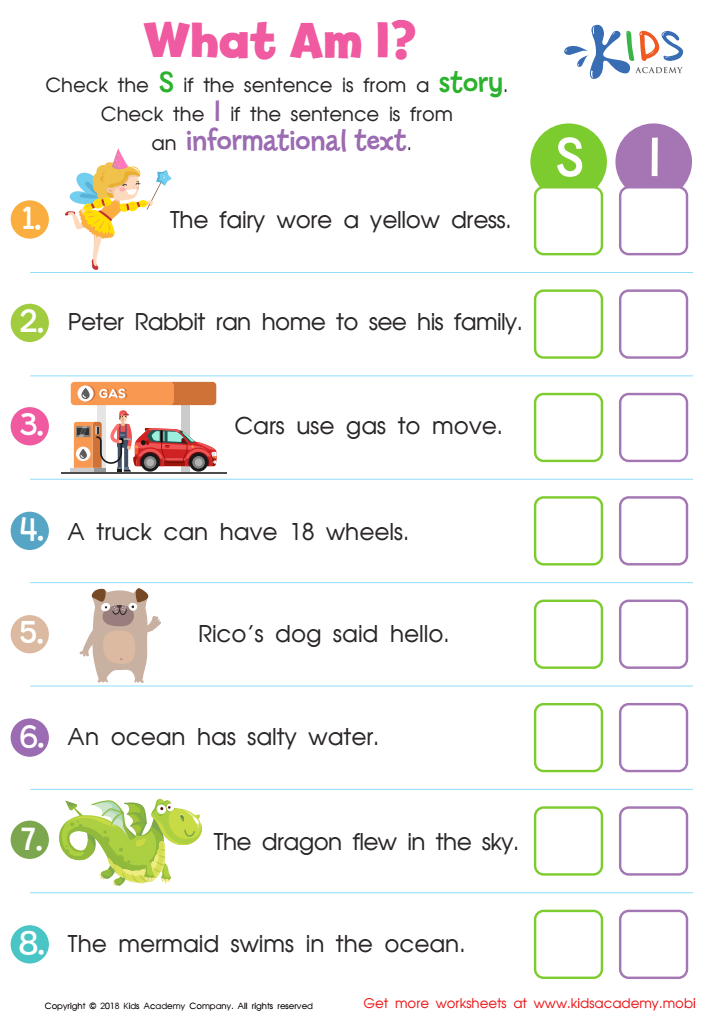
What Am I? Worksheet
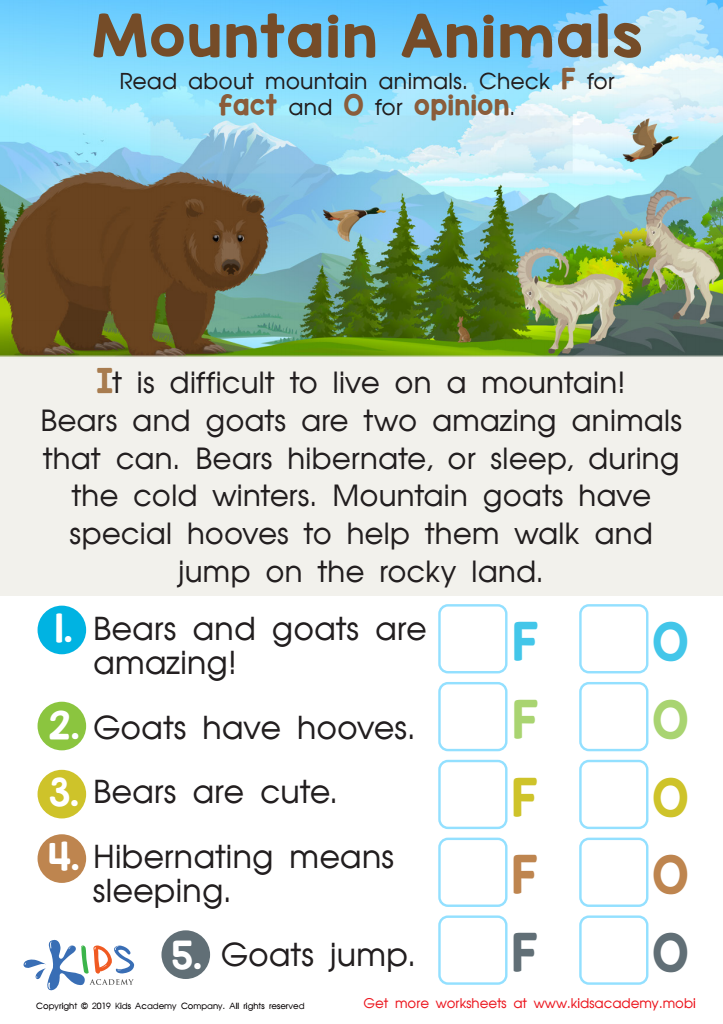
Mountain Animals Worksheet








Parents and teachers should care about animal identification in normal reading non-fiction for ages 3-8 because it is a pivotal tool for a child’s holistic development. Introducing young children to animal identification not only ignites curiosity about the natural world but also facilitates cognitive and language development. Non-fiction books teach children to distinguish between various animals, honing their observational and analytic skills. They learn to categorize and differentiate based on characteristics, fostering critical thinking.
Furthermore, reading non-fiction nurtures a love for learning and builds foundational knowledge that complements their science curriculum. Early exposure to non-fiction texts expands vocabulary, enhances comprehension, and develops an understanding of the environment. This kind of literature also promotes empathy and a sense of stewardship toward nature. Children become more aware of biodiversity and the importance of conserving animal habitats, instilling environmental consciousness from a young age.
Engaging with animal identification texts can also support emotional and social development. Discussing animals' characteristics and behaviors during reading activities fosters communication skills and encourages bonding between children and adults. Thus, integrating animal identification into early reading encourages a well-rounded educational experience, poised to benefit young minds significantly.