Comprehension skills Normal Science Worksheets for Ages 3-8
6 filtered results
-
From - To
Boost your child's understanding of the world with our Comprehension Skills Normal Science Worksheets for Ages 3-8. These interactive worksheets are meticulously designed to enhance young learners' grasp of basic scientific concepts. With age-appropriate activities and engaging exercises, children will explore topics like weather, the human body, animals, and plants. Our worksheets promote critical thinking and reading comprehension, making science both fun and educational. Created by educational experts, these resources are perfect for classroom and home use, ensuring children build a strong foundation in science while developing essential comprehension skills. Give your child the gift of knowledge today!
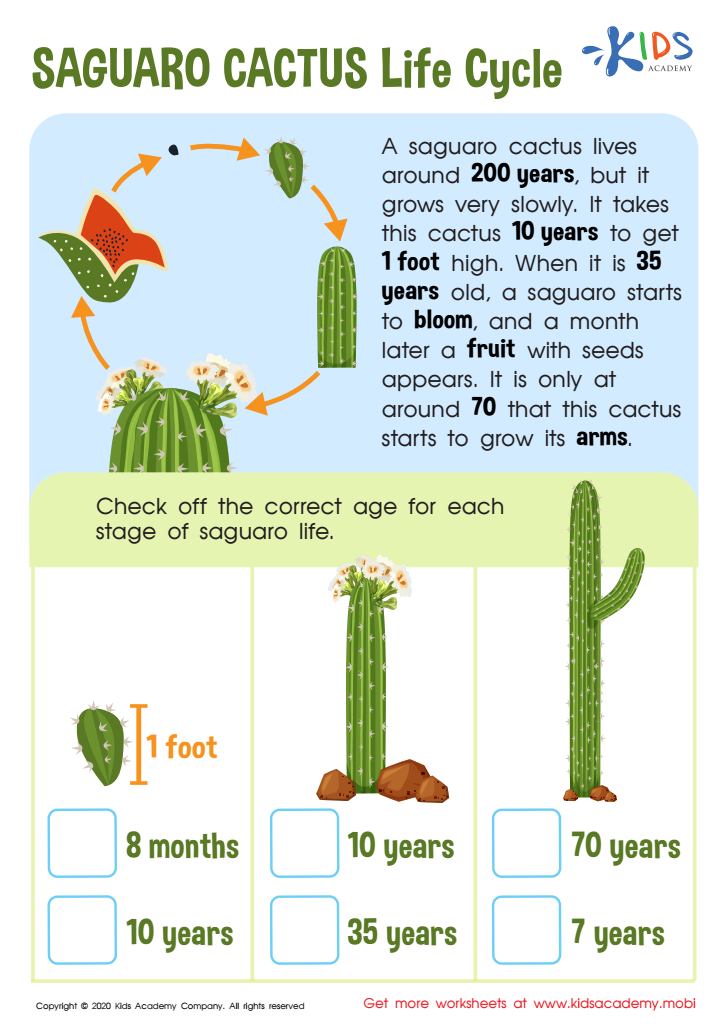
Saguaro Cactus Life Cycle Worksheet
 Assign to My Students
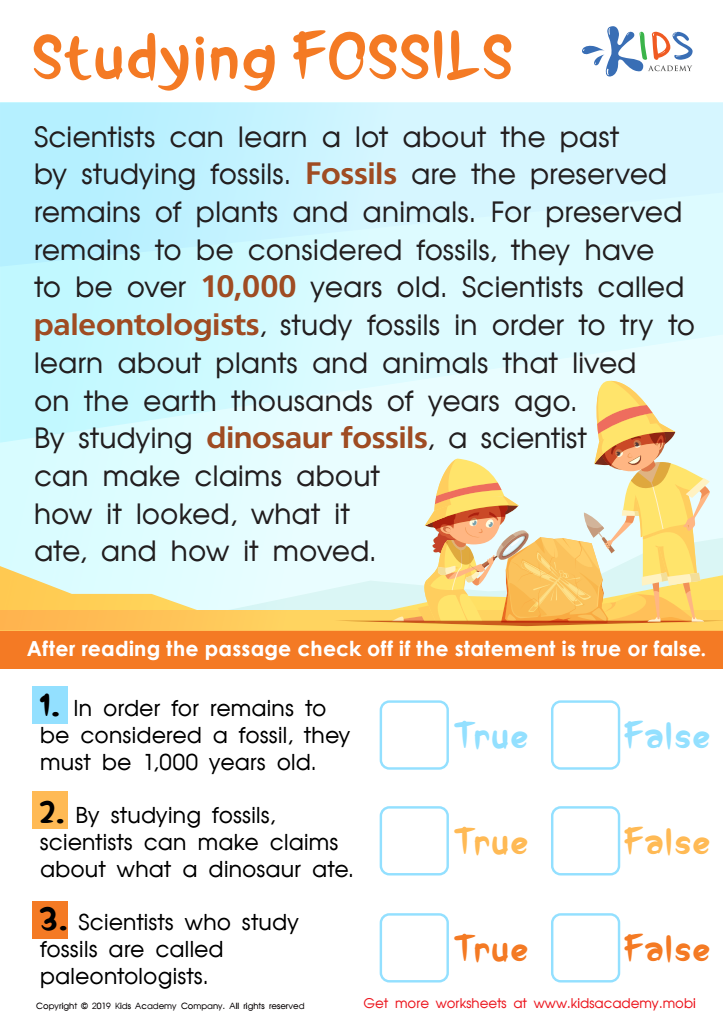
Studying Fossils Worksheet
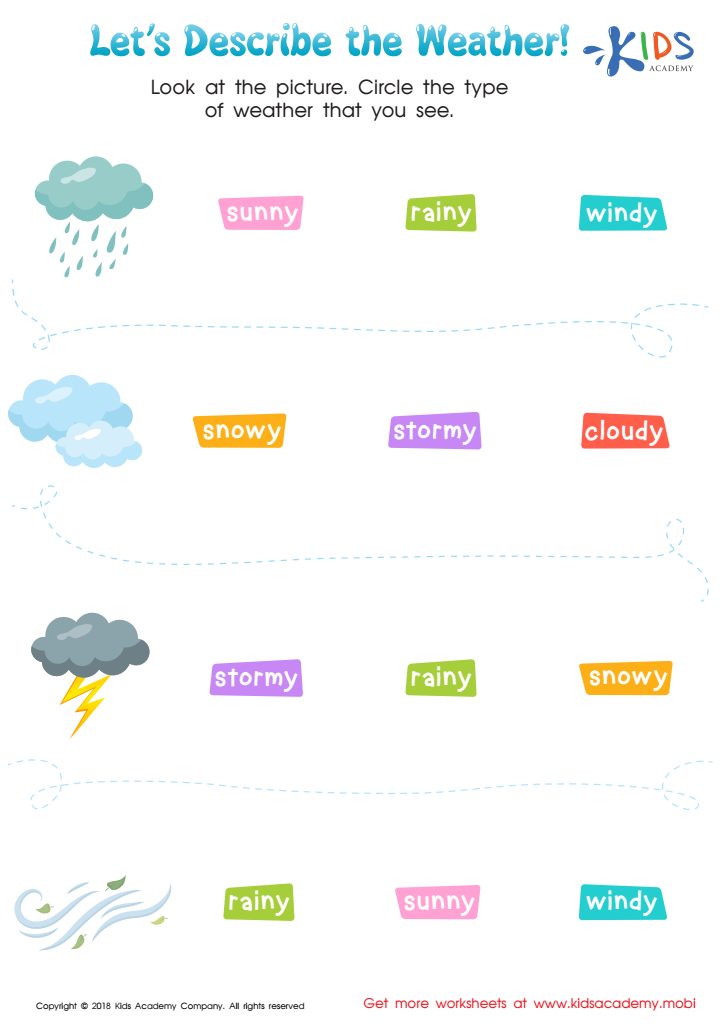
Let's Describe the Weather! Worksheet
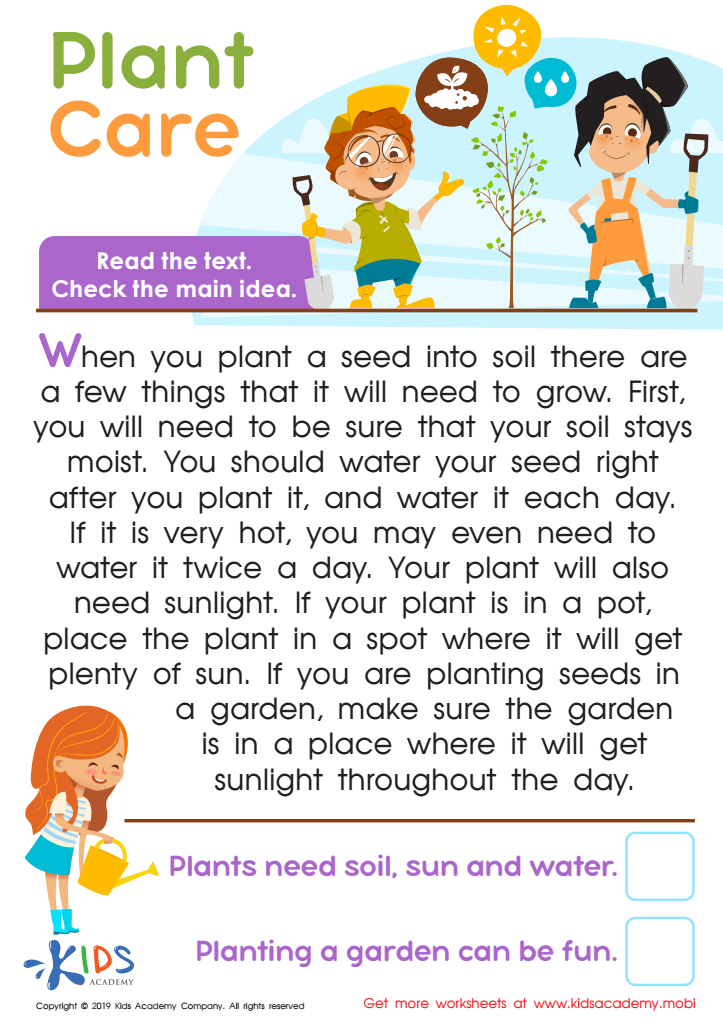
Plant Care Worksheet
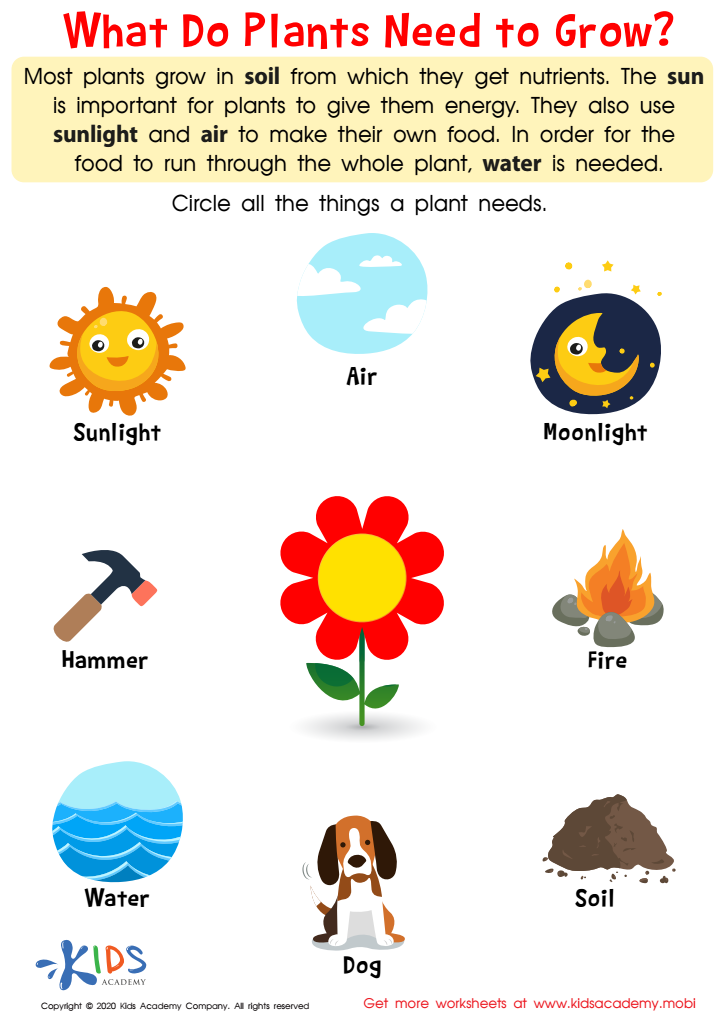
What Do Plants Need to Grow Worksheet
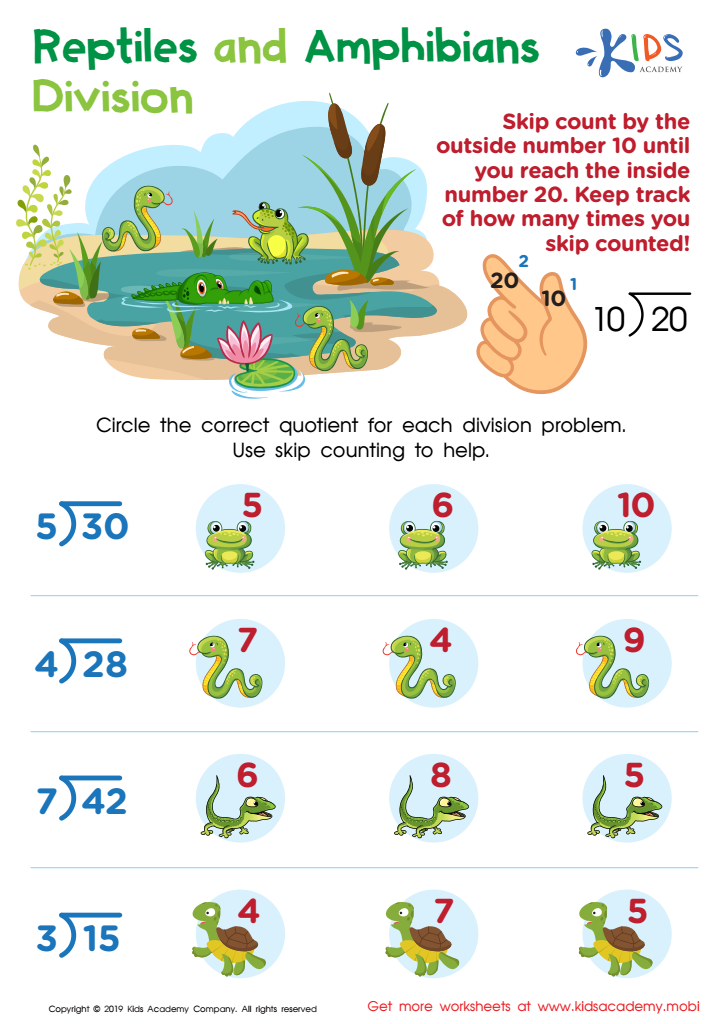
Reptile and Amphibians Division Worksheet




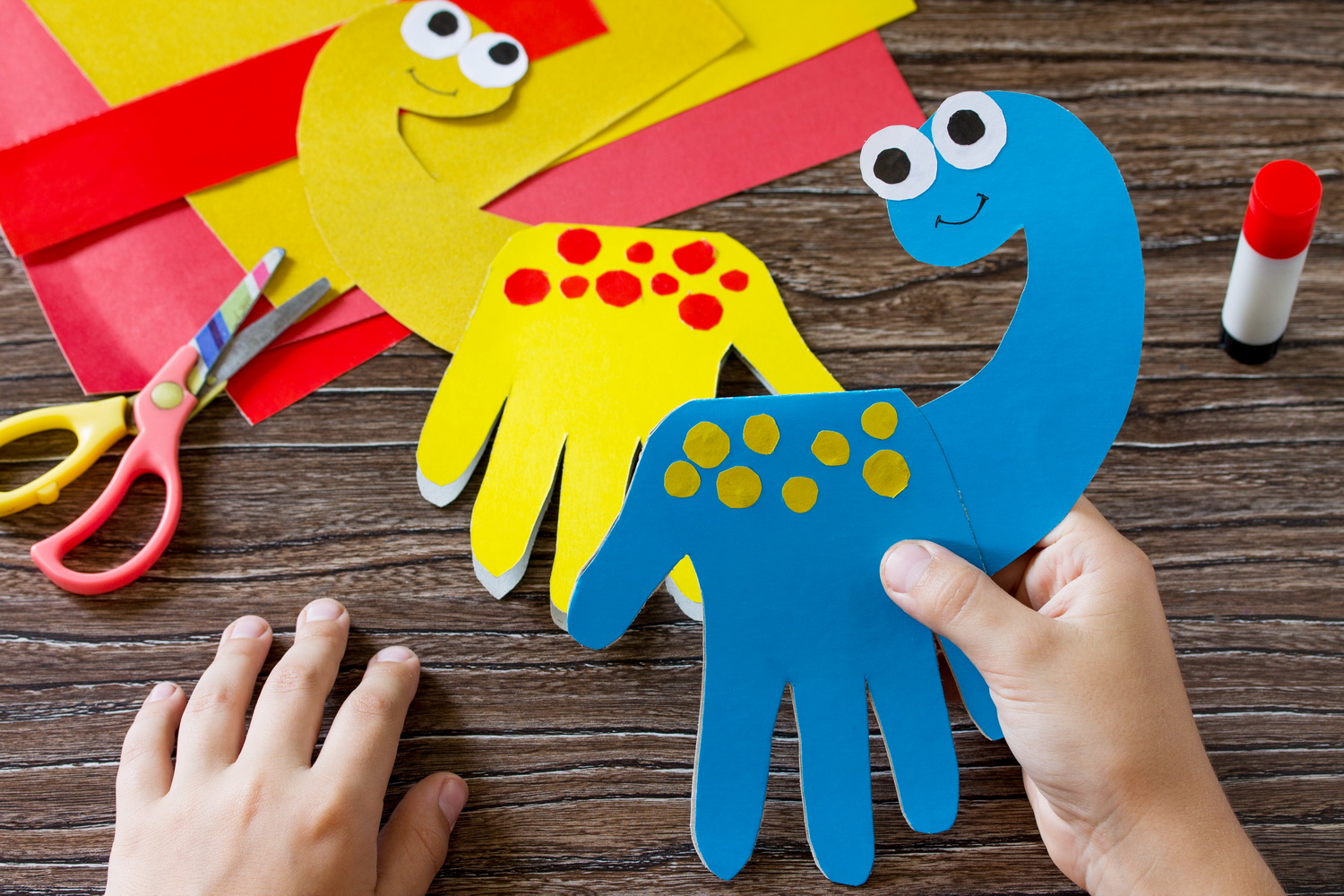

Parents and teachers should prioritize teaching comprehension skills in normal science to children aged 3-8 because it forms the foundational step for lifelong learning. At this critical stage, young minds are highly receptive and build connections through exploration and inquiry. Comprehension skills enable children to understand basic scientific concepts, promoting curiosity about their environment. These skills foster critical thinking and enhance a child’s ability to ask questions, analyze information, and draw conclusions.
By engaging in simple scientific activities, children develop problem-solving skills and can better absorb and retain information. Interactive lessons in normal science can also improve vocabulary and language development as children learn to describe observations and express their thoughts clearly. Moreover, strengthening comprehension skills in science at an early age builds confidence, encouraging children to tackle more complex subjects in the future.
Engaging parents and teachers in fostering these skills creates a collaborative environment that supports a child’s educational journey. When children see adults enthusiastic about science, it increases their interest and engagement. This shared learning can establish a lasting love for science, ultimately inspiring future innovators and informed citizens who understand and appreciate the world around them.







