
Geography knowledge Normal Science Worksheets for Ages 3-8
3 filtered results
Difficulty Level
Grade
Age
-
From - To
Subject
Activity
Standards
Discover engaging Geography Knowledge Normal Science Worksheets designed for ages 3-8! Packed with fun activities and colorful illustrations, these worksheets introduce young learners to the wonders of our world. From continents and oceans to habitats and landforms, kids will explore geography concepts while developing critical thinking and fine motor skills. Perfect for preschool to early elementary students, each printable sheet is created by education experts to ensure age-appropriate learning. Stimulate your child’s curiosity and foster a love for geography with our interactive, easy-to-follow resources. Unlock your young explorer’s potential at Kids Academy today!
Favorites
With answer key
Interactive
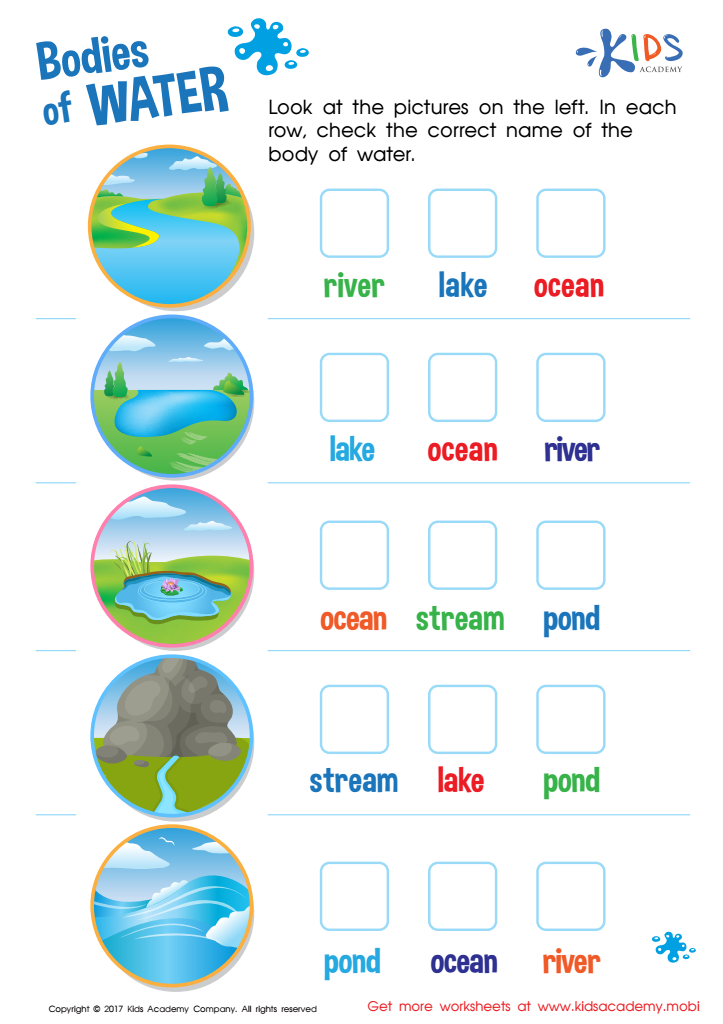
Bodies of Water Worksheet
From oceans to streams, our planet is filled with different types of waterways. Show your child how to recognize them using this bodies of water worksheet PDF. It has vivid illustrations to help your kid learn without leaving home.
 Assign to My Students
Bodies of Water Worksheet
Worksheet
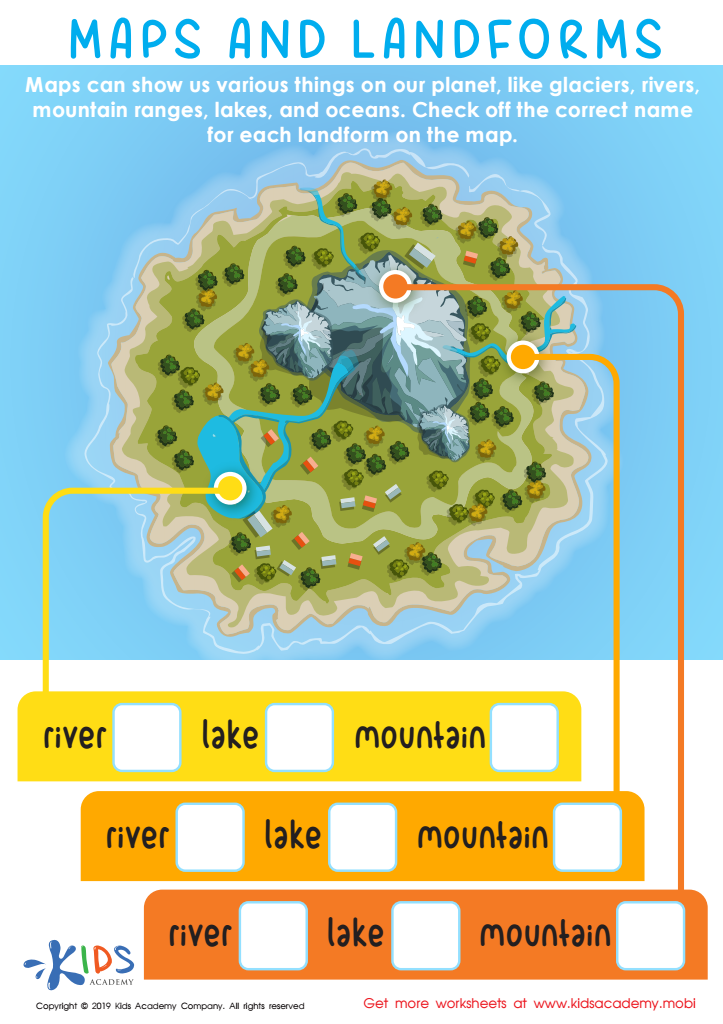
Maps and Landforms Worksheet
We can educate our kids on the world and its landforms by showing them a map. Point out mountains, rivers, and oceans, and help them identify each correctly. With this knowledge, they will better understand our planet.
Maps and Landforms Worksheet
Worksheet
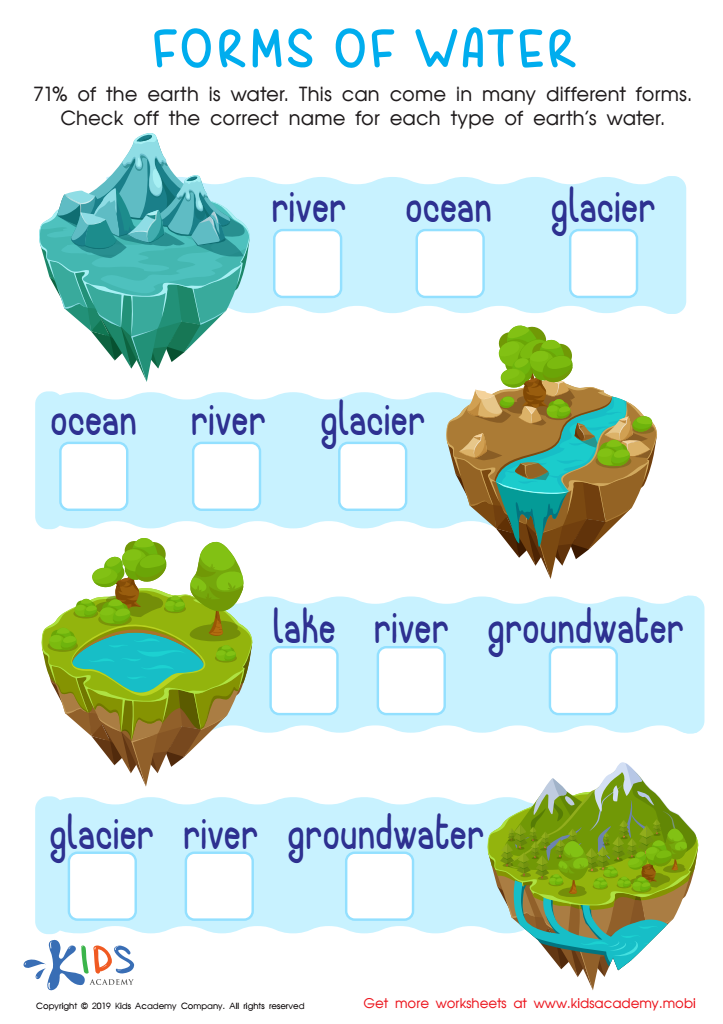
Forms of Water Worksheet
Life on Earth needs water to survive. Luckily, water makes up 75% of the Earth's surface and comes in various forms such as rivers, oceans and lakes. Ask your kids to name other forms and use this worksheet to help them identify each type.
Forms of Water Worksheet
Worksheet
Join Kids Academy for Free
Who is primarily going to use this learning content?


.jpg)



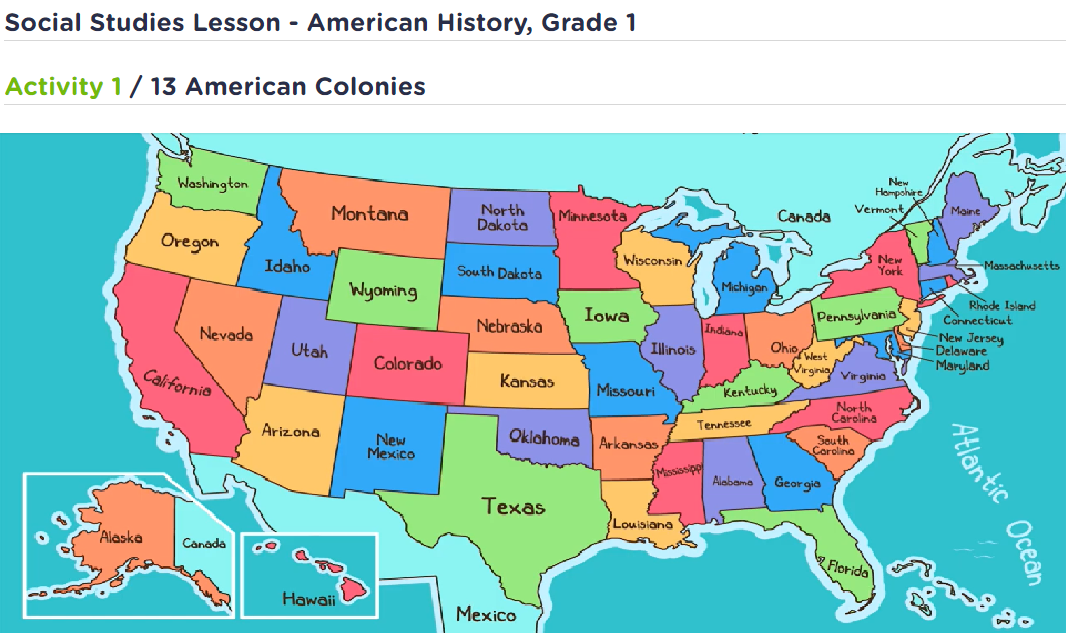

Understanding geography from an early age establishes a foundation for a child’s lifelong learning and cognitive development. For children aged 3-8, geography knowledge expands their comprehension of the world around them, promoting curiosity and broadening their perspective. Parents and teachers should prioritize geography because it enhances spatial thinking — a crucial skill that assists in problem-solving and orientation in both simple daily activities and more complex concepts like maps and globe comprehension.
Furthermore, geography intertwines with a multitude of subjects, including science, history, culture, and environmental awareness. By recognizing different lands and climates, children can better appreciate Earth’s diversity, fostering a sense of global citizenship and empathy towards various cultures and peoples.
Exposure to geography promotes language development as children learn new place names and related vocabulary. Practical skills, such as measuring distances and understanding time zones, are cultivated alongside finer traits like patience and attention.
In essence, guarding and nurturing geographic knowledge doesn’t just grooming well-rounded individuals, but also encouraging them to become informed, responsible citizens of the world. Bridging academic knowledge with real-world experiences, geography equips young learners with the tools to make meaningful connections and informed decisions, essential for their personal growth and contribution to society.







