Mathematical reasoning Normal Science Worksheets for Ages 3-8
3 filtered results
-
From - To
Discover engaging Mathematical Reasoning worksheets tailored for children ages 3-8! Our carefully crafted resources help young learners develop critical thinking and problem-solving skills through fun activities. From shape recognition and basic addition to pattern identification, these worksheets make math enjoyable and accessible. Designed to align with early learning standards, our exercises encourage exploration and creativity, fostering a solid foundation in mathematics. Perfect for classroom or home use, these resources cater to various learning styles, ensuring every child can thrive. Boost your little one's confidence and mathematical abilities with our vibrant, interactive worksheets that promote a love for learning science and math.
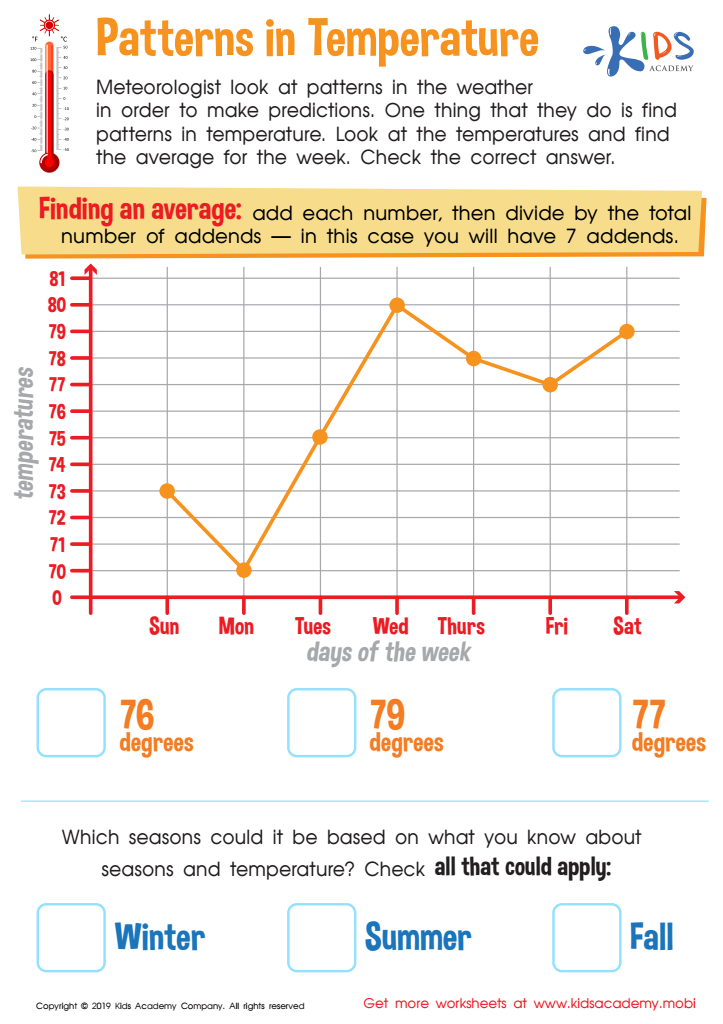
Patterns in Temperature Worksheet
 Assign to My Students
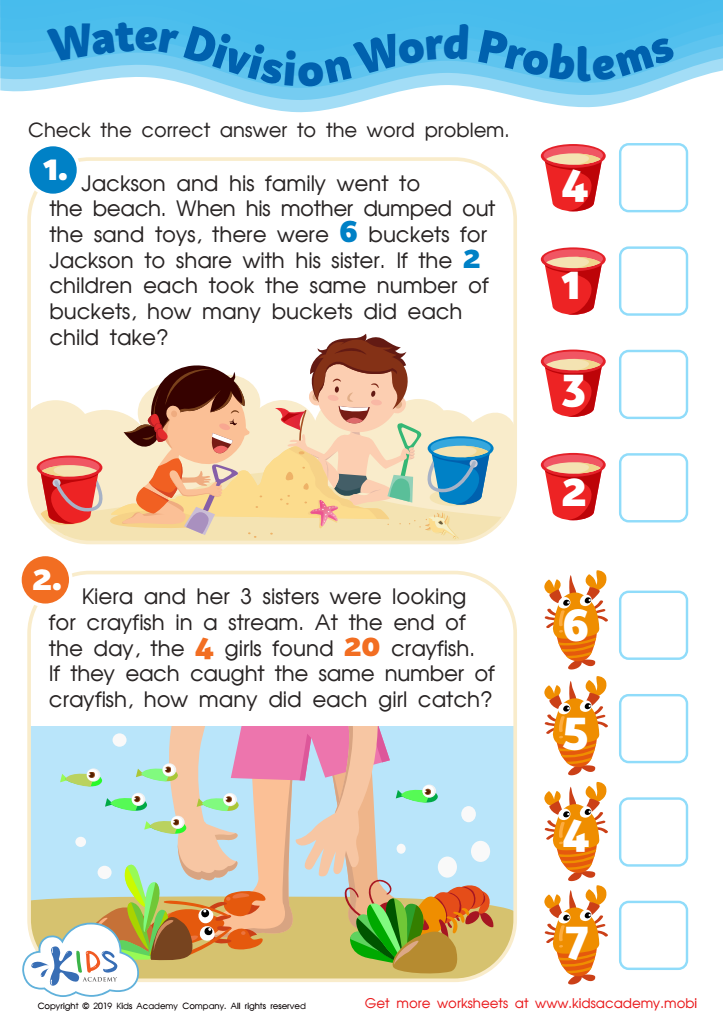
Water Division Word Problems Worksheet
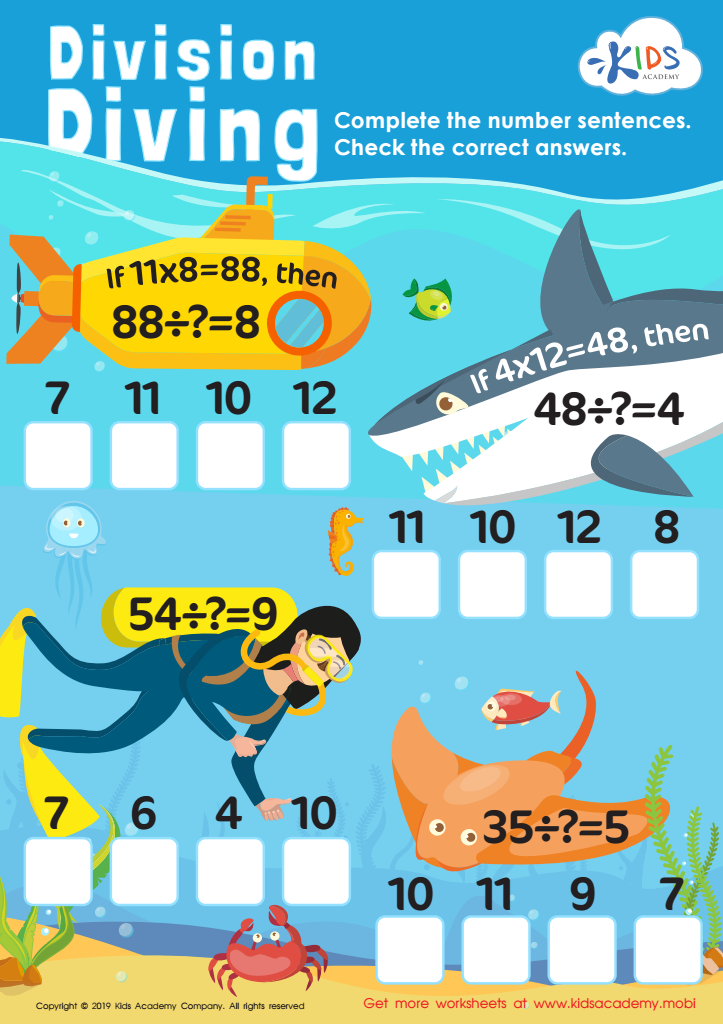
Division Diving Worksheet





Mathematical reasoning is a crucial skill for children aged 3-8 as it lays the foundation for their future learning and cognitive development. During these formative years, children are naturally curious and eager to make sense of the world around them. Engaging in mathematical reasoning helps them develop critical thinking skills, problem-solving abilities, and logical understanding, which extend beyond math into all areas of learning.
For parents and teachers, fostering mathematical reasoning through normal science—like observing patterns in nature, measuring objects, or categorizing living things—makes math relevant and meaningful. Children learn best through play and exploration, and integrating mathematical concepts into everyday science activities can enhance their engagement and understanding.
Moreover, developing these skills early can instill confidence and a positive attitude toward math, crucial for their academic journey. When children grasp mathematical concepts, they build the ability to analyze, predict outcomes, and understand relationships—skills foundational for success across subjects and in life.
By actively participating in their child's mathematical reasoning development, parents and teachers can not only enrich their learning experience but also prepare them for the complexities of the modern world, fostering lifelong learners and thinkers.







