Observational skills development Normal Science Worksheets for Ages 3-8
3 filtered results
-
From - To
Enhance your child's observational skills with our engaging Normal Science Worksheets, designed for ages 3-8. These worksheets are tailored to spark curiosity and encourage exploration of the world around them. Through fun activities and interactive exercises, children will develop critical observation abilities, helping them to notice details, make comparisons, and draw conclusions. Each worksheet aligns with fundamental science concepts, ensuring a solid foundation for future learning. Ideal for home or classroom use, our resources provide an enriching experience that boosts cognitive skills and fosters a love for discovery. Download our worksheets today and watch your young learners thrive!
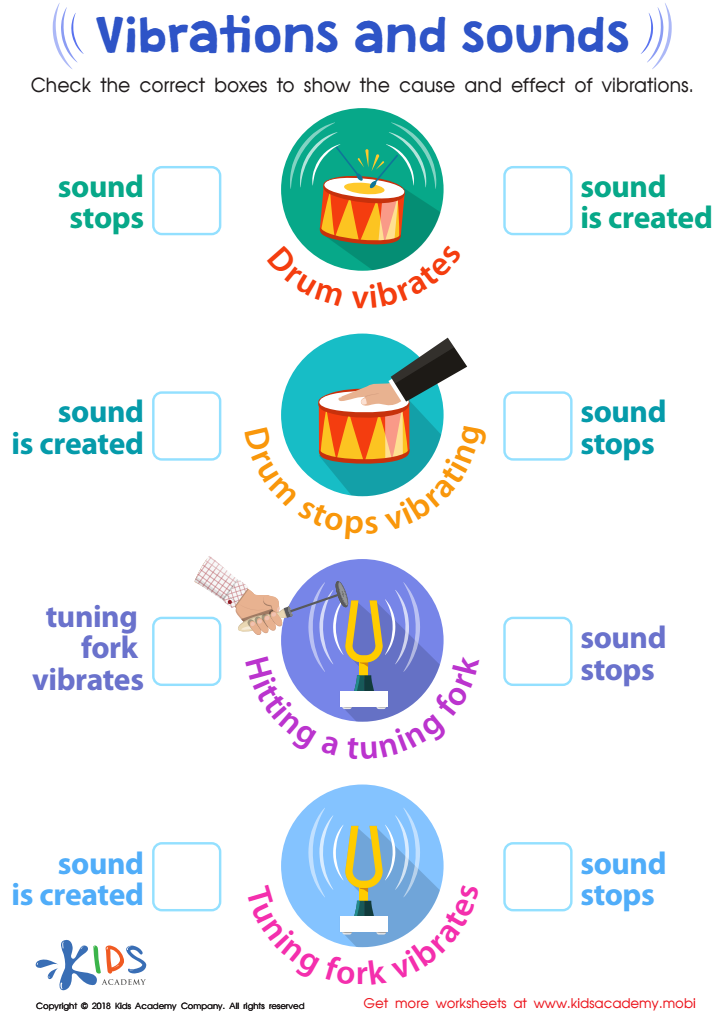
Vibrations and Sounds Worksheet
 Assign to My Students
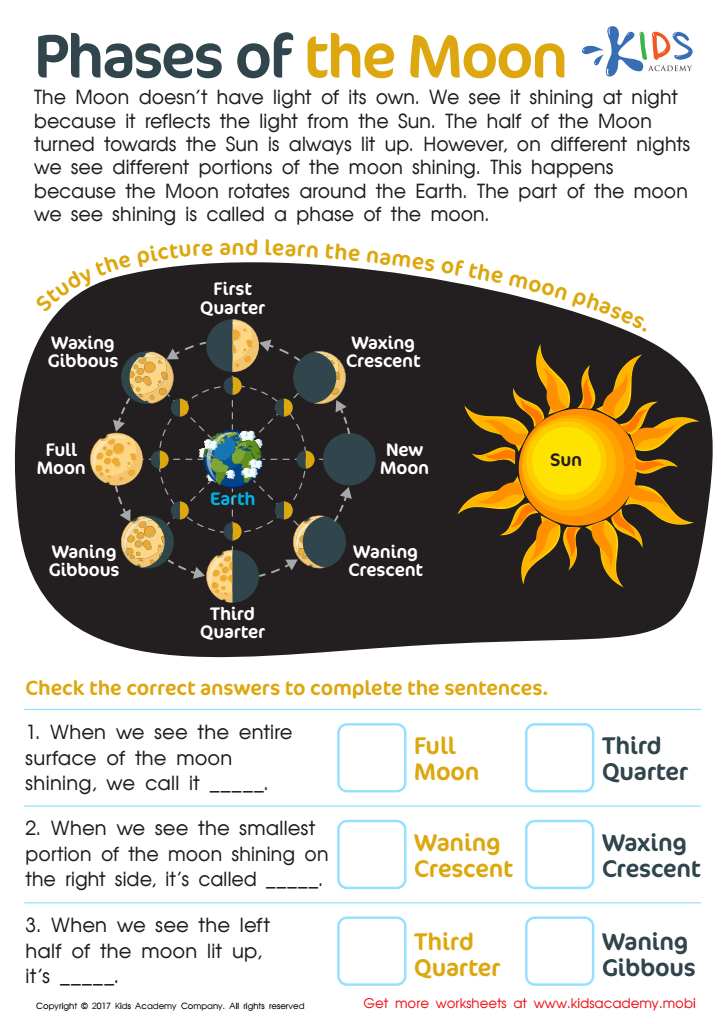
Phases of The Moon Worksheet
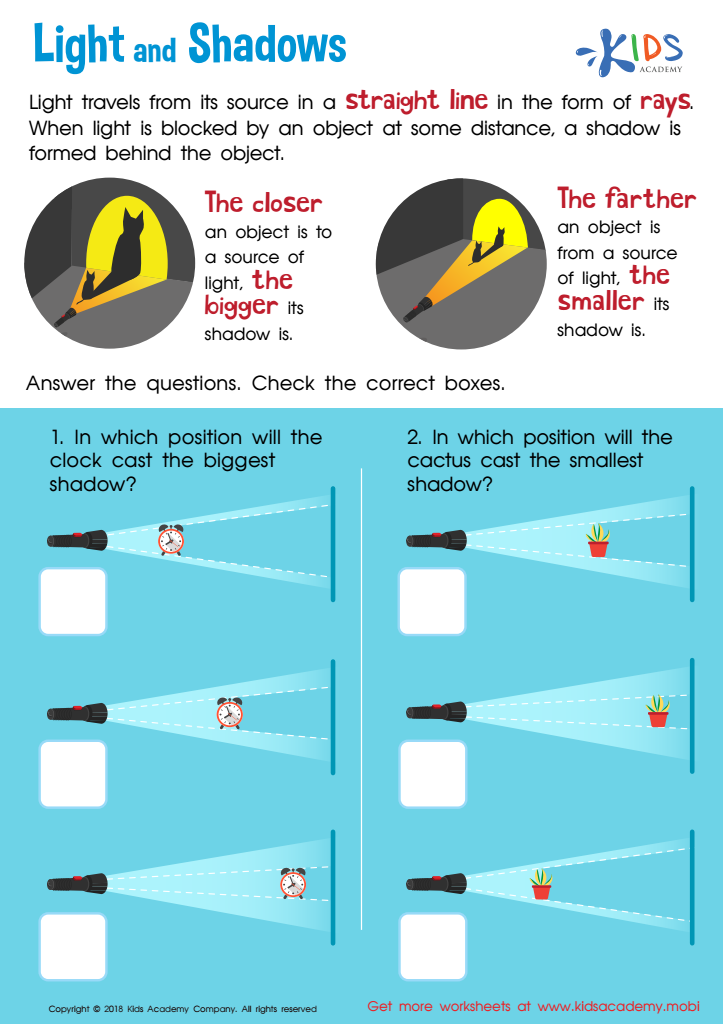
Light and Shadow Worksheet for Grade 3


.jpg)

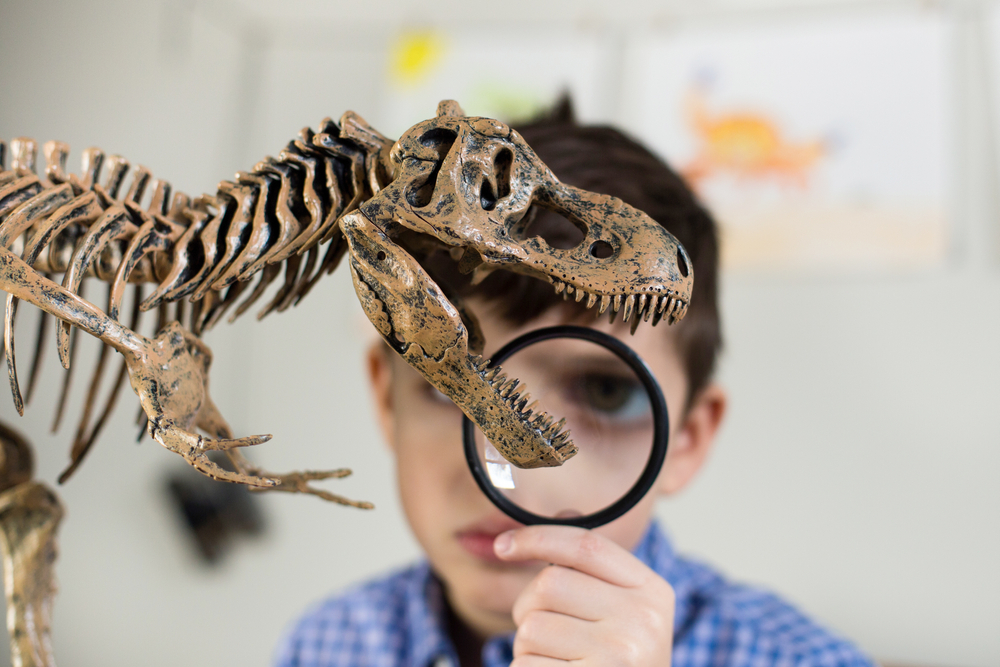

Observational skills development in children ages 3-8 is crucial for their cognitive and social growth, making it a key focus for both parents and teachers. At this age, children are naturally curious about their environment, and honing these skills helps enhance their ability to notice details, ask questions, and make connections. Observational skills form the foundation of critical thinking, essential for later academic success, especially in science.
By encouraging children to observe their surroundings, parents and teachers foster a sense of wonder and promote exploratory behaviors. When children learn to describe what they see, they also practice language skills and increase vocabulary, which acts as a springboard for effective communication. Additionally, observational skills contribute to emotional and social development, enabling children to read social cues better and understand diverse perspectives.
Moreover, in today’s rapidly changing world, strong observational abilities empower children to analyze information critically, resist misinformation, and cultivate independent thought. Involving parents and educators in facilitating opportunities for observation, like nature walks, classroom experiments, or interactive play, shapes children into confident learners ready to engage with their surroundings and succeed academically and socially. Thus, nurturing these skills is a vital investment in a child's overall development and future opportunities.







