
Science knowledge Normal Science Worksheets for Ages 3-8
3 filtered results
Difficulty Level
Grade
Age
-
From - To
Subject
Activity
Standards
Unlock the wonders of the natural world with our expertly crafted "Science Knowledge Normal Science Worksheets for Ages 3-8"! Specially designed for young learners, these worksheets explore fundamental science concepts through engaging and interactive activities. Each sheet aims to ignite curiosity and foster a love for science, covering topics like plants, animals, space, and more. Ideal for both classrooms and at-home learning, our printable worksheets provide an excellent foundation for future scientific understanding. Equip your child with the essential knowledge they need to explore and understand the world around them joyfully and confidently.
Favorites
With answer key
Interactive
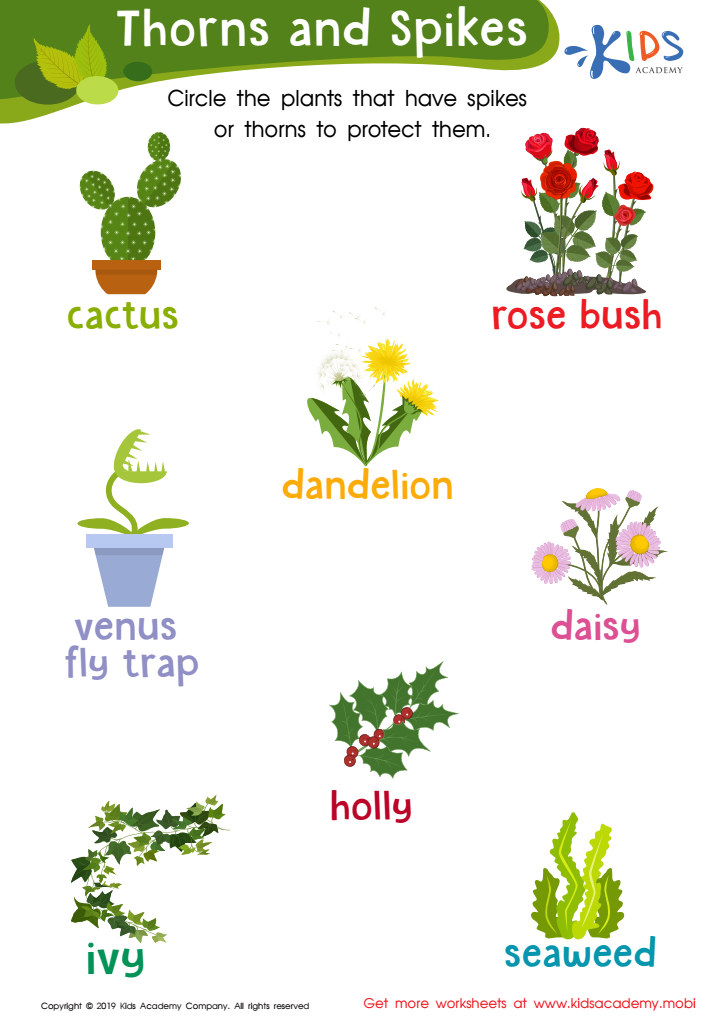
Thorns and Spikes Worksheet
Can your students name and identify the plants and flowers in this worksheet? Ask them to read out the names and circle the ones with spikes or thorns. Help them appreciate nature's beauty and understand how plants protect themselves.
 Assign to My Students
Thorns and Spikes Worksheet
Worksheet
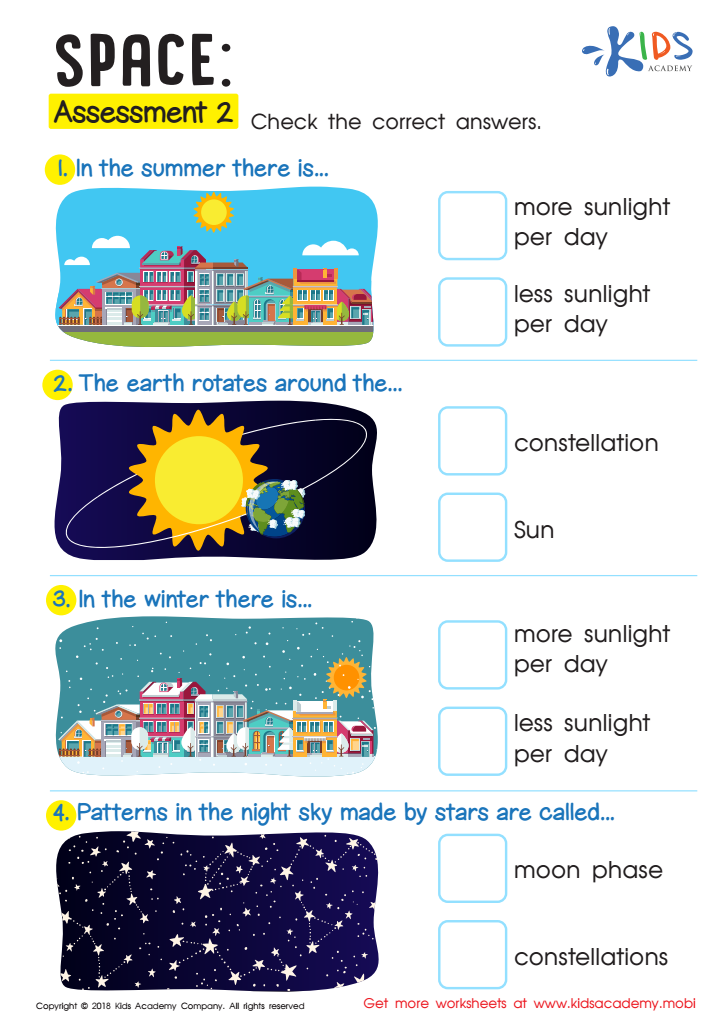
Space: Assessment 2 Worksheet
Test your kids' knowledge of the weather, constellations and Earth with this worksheet. Show them the 4 images and ask what's happening; then read the questions and options and help them pick the right answers. This printout is a helpful and fun way to learn!
Space: Assessment 2 Worksheet
Worksheet
Join Kids Academy for Free
Who is primarily going to use this learning content?





.jpg)

Science knowledge is fundamental for young children because it cultivates curiosity, critical thinking, and a lifelong love of learning. During the ages of 3-8, children are remarkably inquisitive, naturally asking questions about the world around them—why is the sky blue, how do plants grow, where do animals live? Introducing science at this stage taps into their innate curiosity and helps shape their analytical and problem-solving skills.
Normal science concepts, like basic biology, simple physics, and introductory earth science, provide relatable contexts that help children understand their environment. For example, growing a small plant teaches them about life cycles and responsibility. Such activities foster not just cognitive skills but also social and emotional development, as children learn about collaboration and communication through group experiments.
Additionally, early exposure to science can level the playing field, particularly for underrepresented groups in scientific fields, by fostering diversity and inclusion from a young age. It lays a crucial foundation for STEM education, preparing children for more complex scientific studies in the future. Parents and teachers play a key role in inspiring a positive attitude toward science, helping children become informed and logical adults who can make sensible decisions and understand the impact of science on daily life.
Thus, engaging children in normal science concepts from an early age empowers them with knowledge, setting them on a path of continuous exploration and discovery.







