Understanding moon phases Normal Science Worksheets for Ages 3-8
3 filtered results
-
From - To
Explore our engaging "Understanding Moon Phases" worksheets designed for children ages 3-8! These printable activity sheets simplify complex concepts, allowing young learners to discover the beauty and mystery of the moon's different phases. Through colorful illustrations and interactive exercises, children will grasp essential science skills while having fun. They can identify, trace, and even create their own moon phases, fostering creativity and critical thinking. Perfect for use at home or in the classroom, these worksheets will ignite curiosity about astronomy and nature. Start your child's journey into the wonders of the universe today with our thoughtfully designed science worksheets!
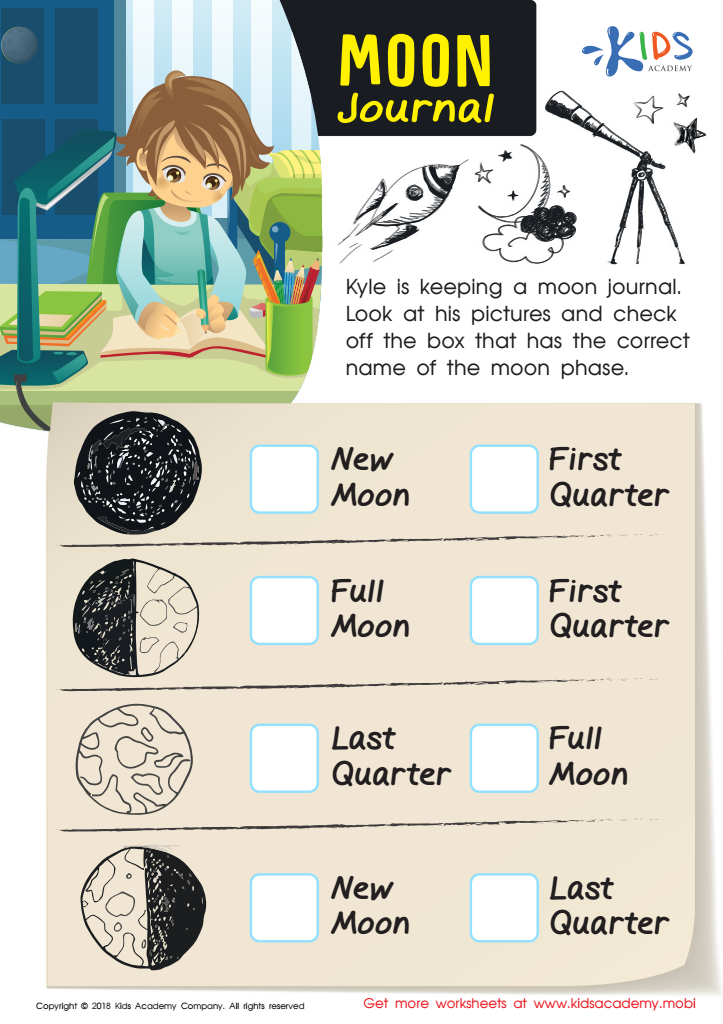
Moon Journal Worksheet
 Assign to My Students
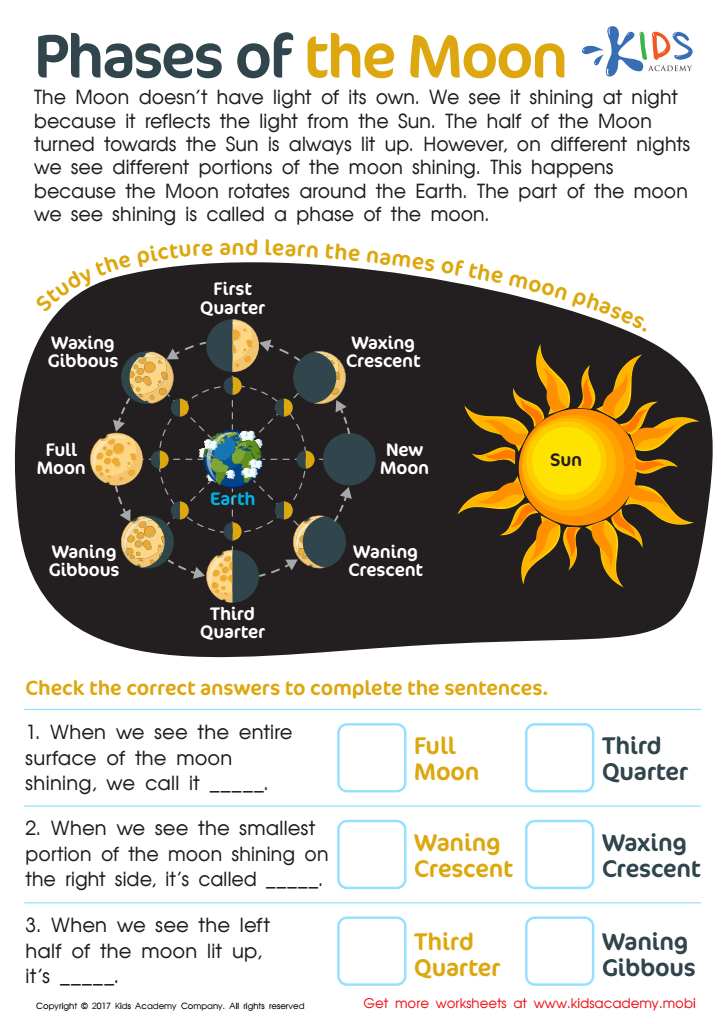
Phases of The Moon Worksheet
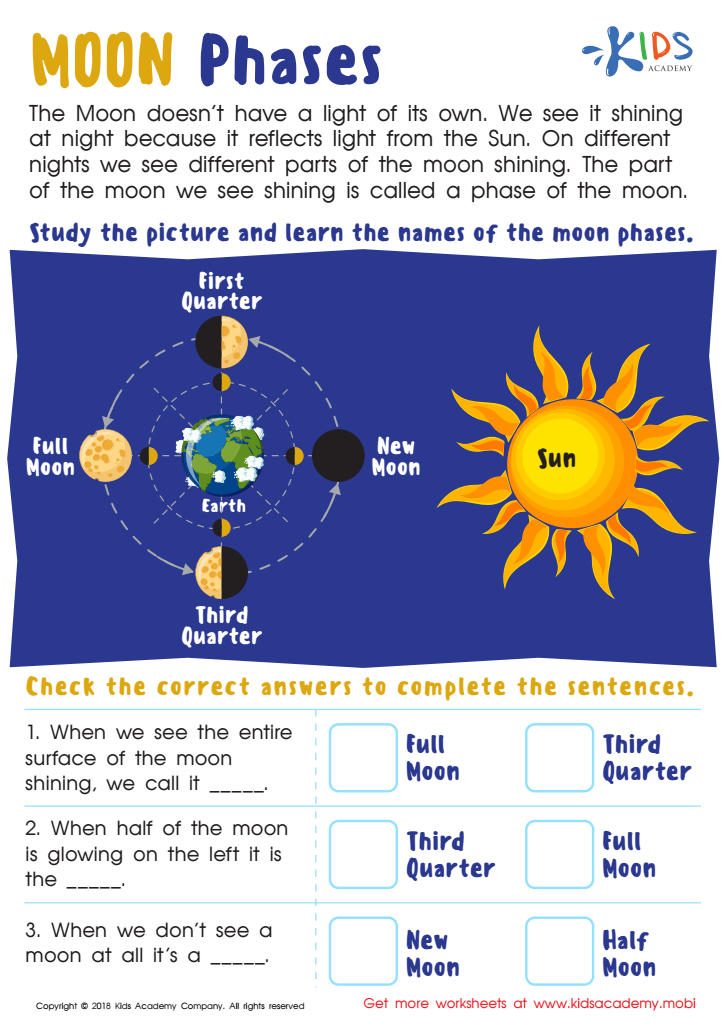
Moon Phases Worksheet





Understanding moon phases is an important topic for young children, as it fosters curiosity and expands their knowledge of the natural world. For ages 3-8, learning about the moon can stimulate a child’s imagination and encourage observation of their environment. Engaging children with concepts like the moon’s phases can also enhance their cognitive and language development, providing opportunities to learn new vocabulary, explore scientific thinking, and strengthen critical reasoning skills.
Parents and teachers who prioritize understanding moon phases can create rich educational experiences around storytelling, crafts, and observations of the night sky, making learning both fun and memorable. These activities introduce fundamental concepts of science, such as cycles, gravity, and light, in a manner that is accessible to young learners.
Furthermore, fostering an appreciation for scientific inquiry at this early age builds a foundation for lifelong learning. Children learn to ask questions, investigate, and understand patterns in their world, developing a sense of inquiry and discovery. Ultimately, awareness of moon phases connects children not only to science but also to cultural traditions and myths, providing a holistic educational experience that nurtures imagination, curiosity, and a love of learning about the universe they inhabit.







