Observational skills Normal Physical Science Worksheets for Ages 3-8
4 filtered results
-
From - To
Enhance your child's curiosity with our Observational Skills Normal Physical Science Worksheets designed for ages 3-8. These engaging and interactive worksheets encourage young learners to explore, observe, and understand the world around them through hands-on activities. By developing keen observational skills, children can document their findings, decipher patterns, and build a solid foundation in physical science concepts. Our expertly crafted worksheets align with early education standards, fostering critical thinking and a love for science from an early age. Perfect for parents and educators, these resources are ideal for making learning fun and effective. Unlock your child's potential today!
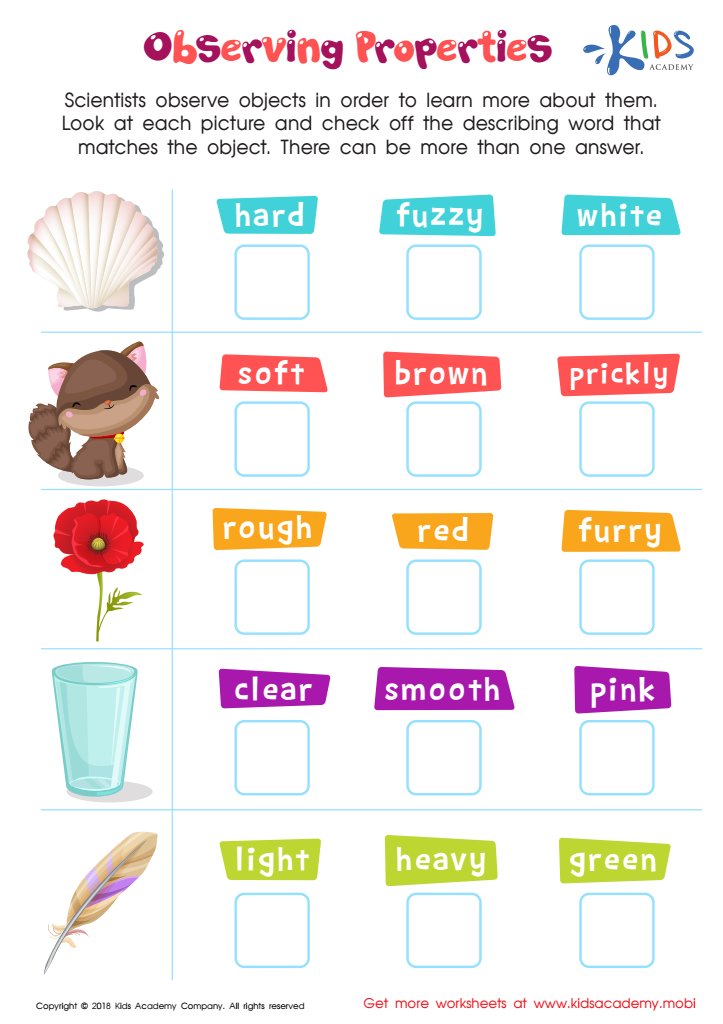
Observing Properties Worksheet
 Assign to My Students
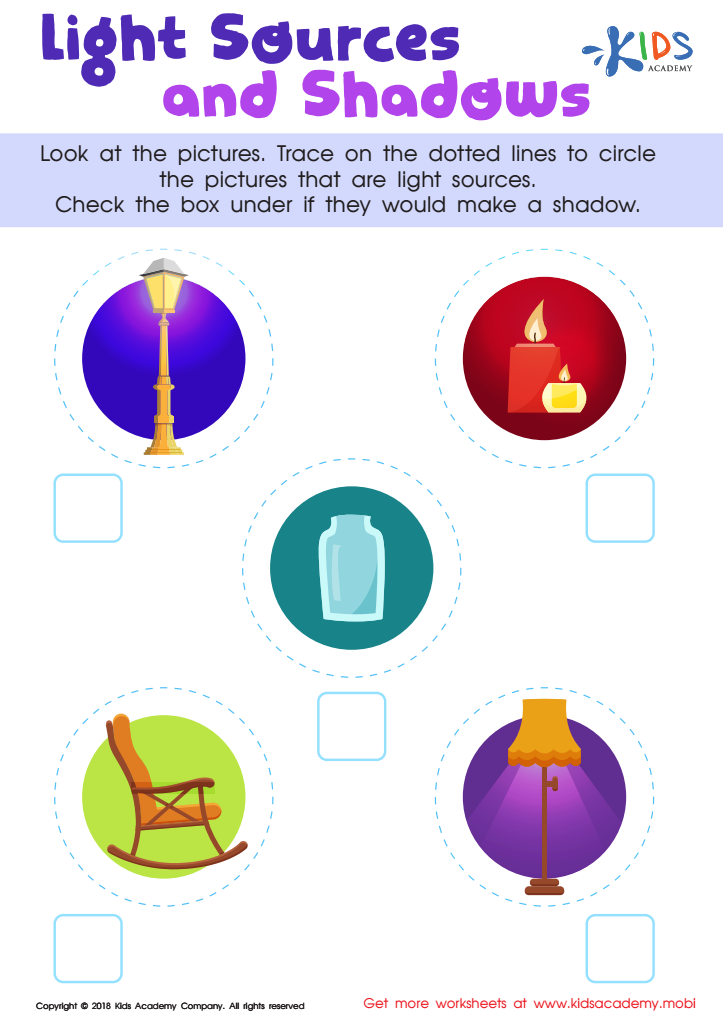
Light Sources and Shadows Worksheet
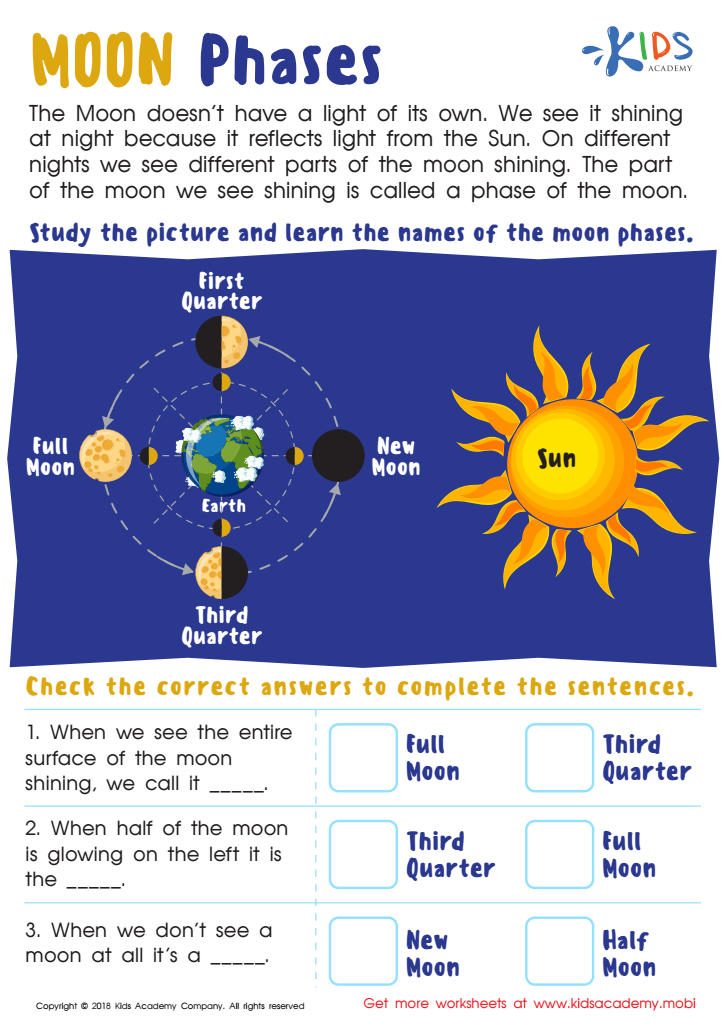
Moon Phases Worksheet
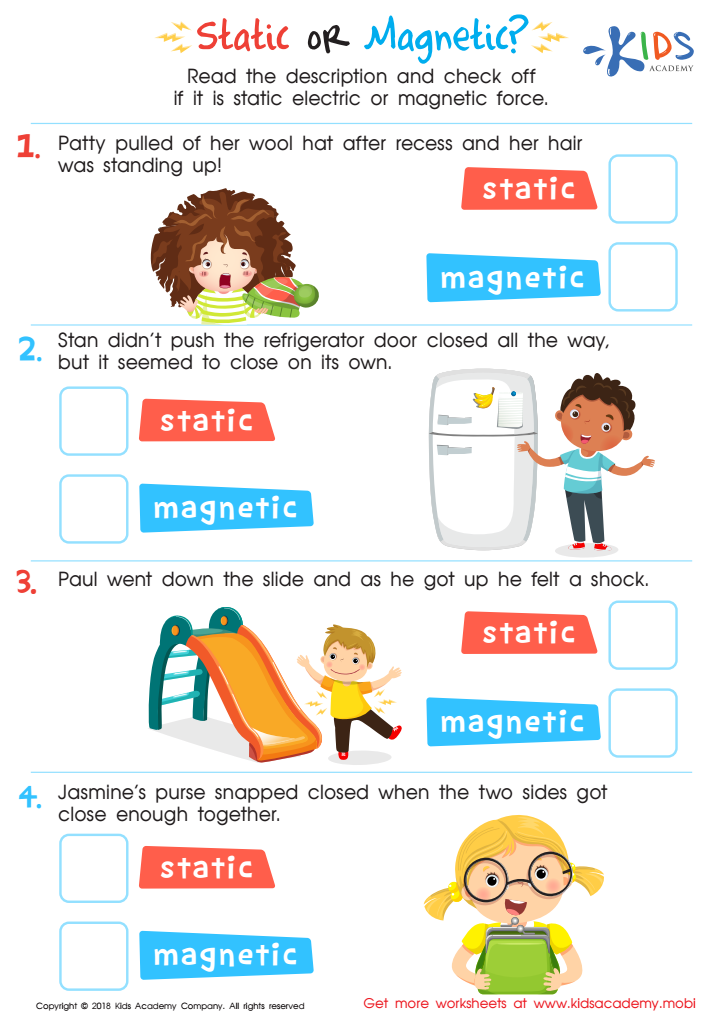
Static or Magnetic Printable Worksheet







Observational skills in early childhood, particularly within the realm of Normal Physical Science, are crucial for young learners aged 3-8 for several compelling reasons. First, developing these skills lays a foundational understanding of the world around them. By encouraging children to observe everyday phenomena, such as weather changes, plant growth, or the movement of objects, they learn to notice patterns and cause-and-effect relationships, which are core scientific principles.
Second, enhancing observational skills fosters critical thinking and curiosity. When children are guided to observe thoughtfully, they begin to ask questions and seek explanations, driving a deeper engagement with learning. This innate curiosity, if nurtured, can lead to a lifelong love of science and exploration.
Third, observational skills are closely linked to sensory development. Young children learn best through hands-on experiences, and observing the natural world encourages them to use all their senses. This immersive learning process strengthens their cognitive abilities and aids in their overall development.
Lastly, these skills support effective communication. Describing what they see helps children expand their vocabulary, enhances their ability to articulate thoughts, and improves their descriptive and analytical language skills. By valuing and developing observational skills, parents and teachers can create a rich learning environment that stimulates growth in multiple developmental domains, ideally fitting ages 3-8.







