Categorization skills Normal Plants and Animals Worksheets for Ages 3-8
4 filtered results
-
From - To
Enhance your child's learning journey with our engaging Categorization Skills Worksheets focused on normal plants and animals, tailored for ages 3-8. These interactive activities are designed to foster critical thinking as children explore the natural world around them. By sorting and classifying images of various plants and animals, kids develop essential cognitive abilities while having fun. Our worksheets combine vivid illustrations and simple instructions to encourage independent learning and kinesthetic interaction. Perfect for both classroom settings and home education, our resources promote curiosity and enhance observational skills. Empower your child with the tools they need to categorize and understand their environment better!
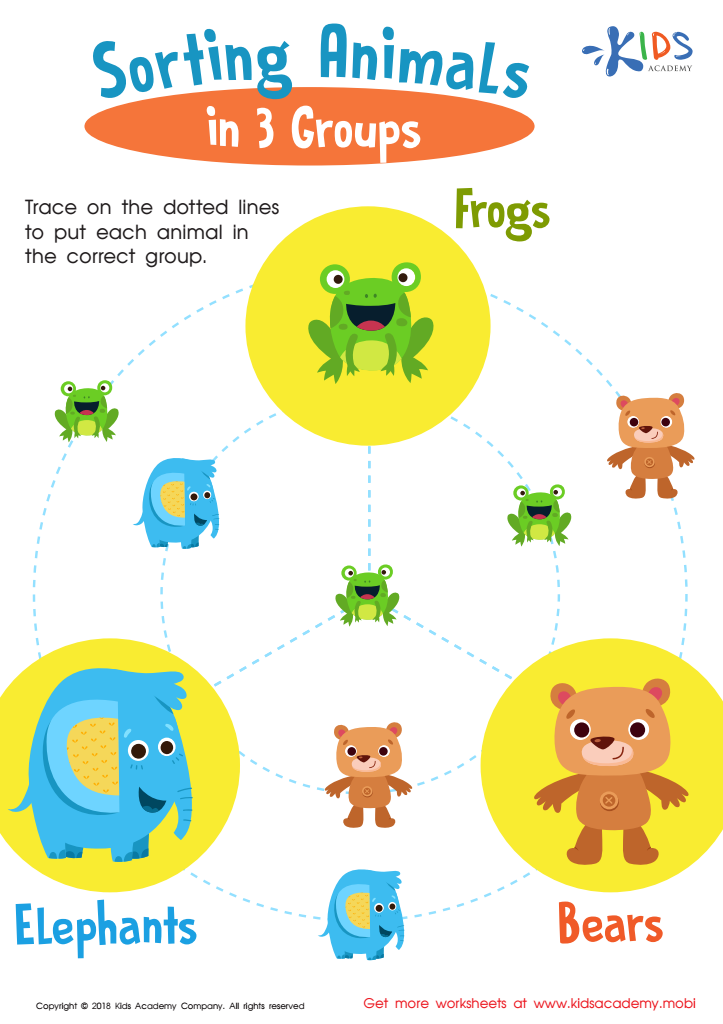
Sorting Animals in 3 Groups Worksheet
 Assign to My Students











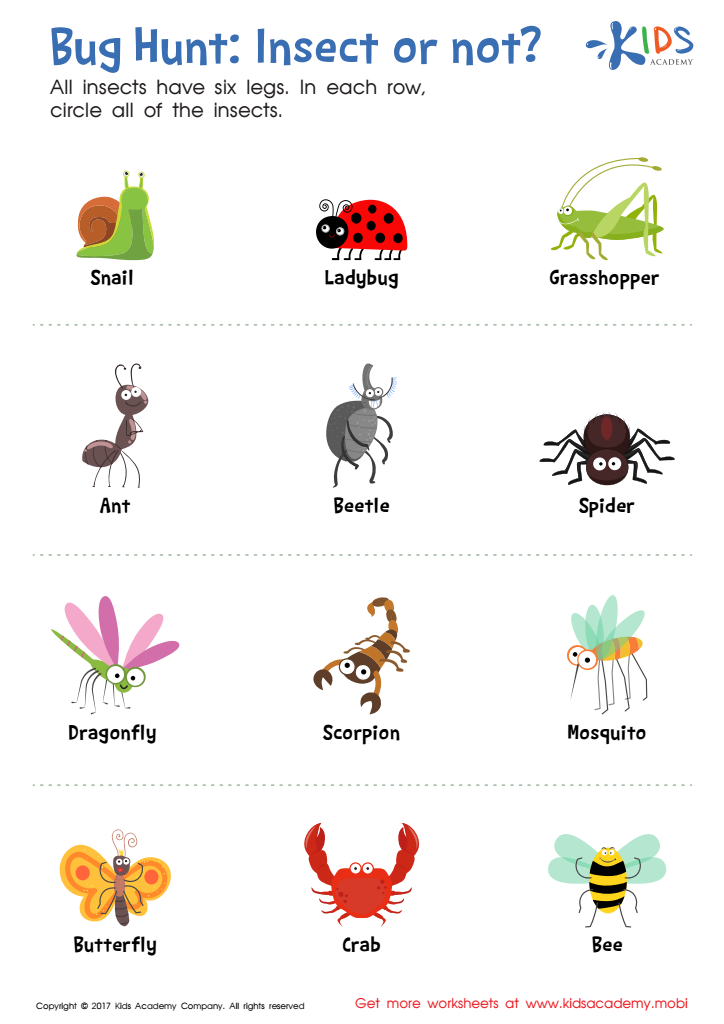
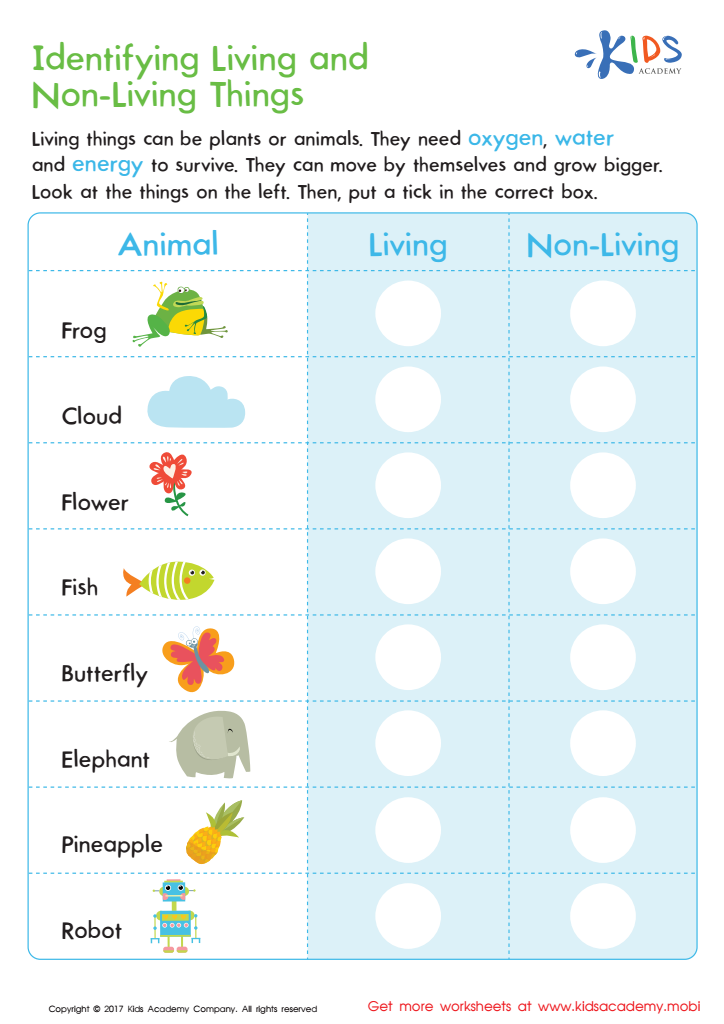
Identifying Living or Non–living Worksheet
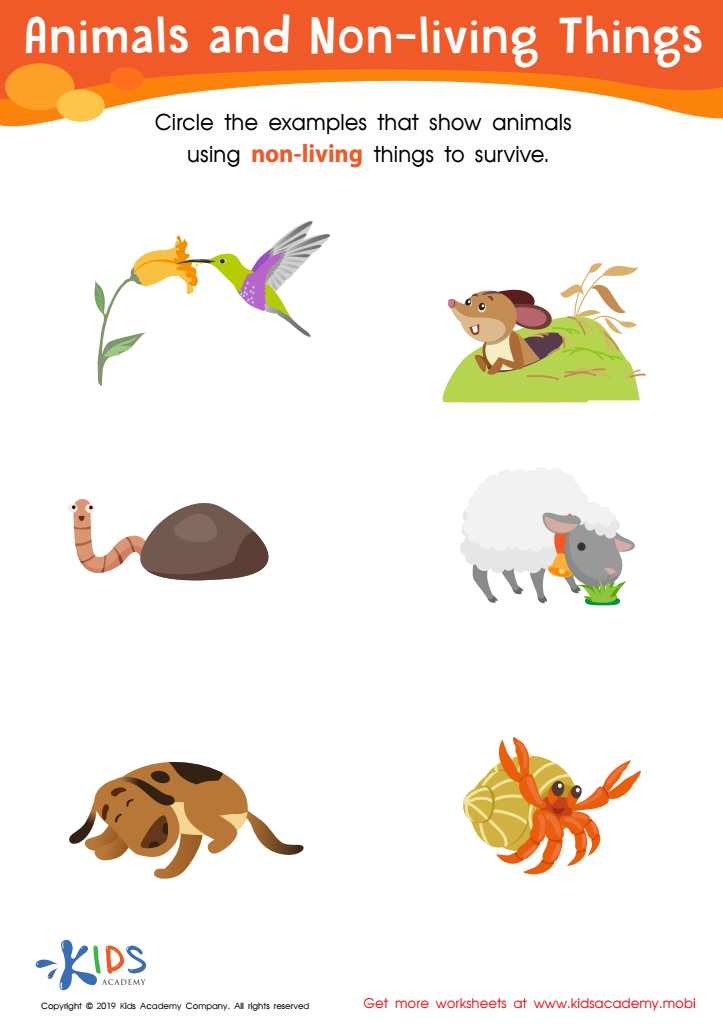
Animals and Non-Living Things Worksheet








Categorization skills are essential for young learners, particularly in the context of normal plants and animals, as they develop critical cognitive skills during ages 3-8. At this stage, children naturally explore their environment, and understanding the differences and similarities between various plants and animals fosters their observational skills and enhances their ability to make connections.
When parents and teachers focus on categorizing plants and animals, they are helping children learn to classify based on attributes such as size, color, shape, habitat, and function. This foundation in categorization supports higher-level thinking and problem-solving skills as they grow. It promotes scientific literacy, as children learn to distinguish living organisms, understand ecosystems, and appreciate biodiversity.
Additionally, categorizing encourages language development; as children label and describe the characteristics of different natural items, they expand their vocabulary. It also sparks curiosity and a sense of wonder about the world, encouraging exploration and inquiry.
Furthermore, these skills lay the groundwork for academic success in nature-related subjects such as biology, geography, and environmental science. Overall, nurturing categorization skills in early childhood helps in building confident, knowledgeable individuals who respect and understand the natural world around them.







