Critical thinking development Normal Plants and Animals Worksheets for Ages 3-8
3 filtered results
-
From - To
Nurture your child's cognitive skills with our "Normal Plants and Animals Worksheets" designed for kids aged 3-8. These worksheets from Kids Academy emphasize critical thinking development, helping young learners explore the fascinating world of flora and fauna. Each activity encourages kids to observe, analyze, and draw conclusions about the environment around them. Perfect for preschool and early elementary students, these engaging exercises promote curiosity and scientific reasoning in a fun and interactive way. Enhance your child's understanding of nature while building essential thinking skills. Visit Kids Academy today and start your little one's journey towards becoming a critical thinker!
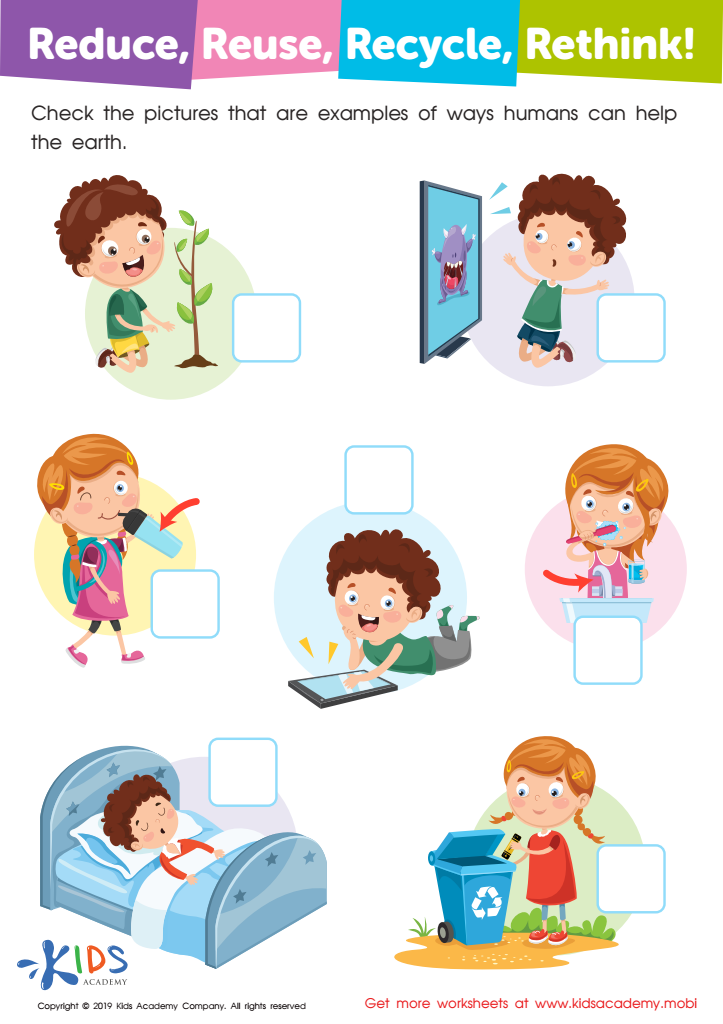
Reduce, Reuse, Recycle, Rethink Worksheet
 Assign to My Students











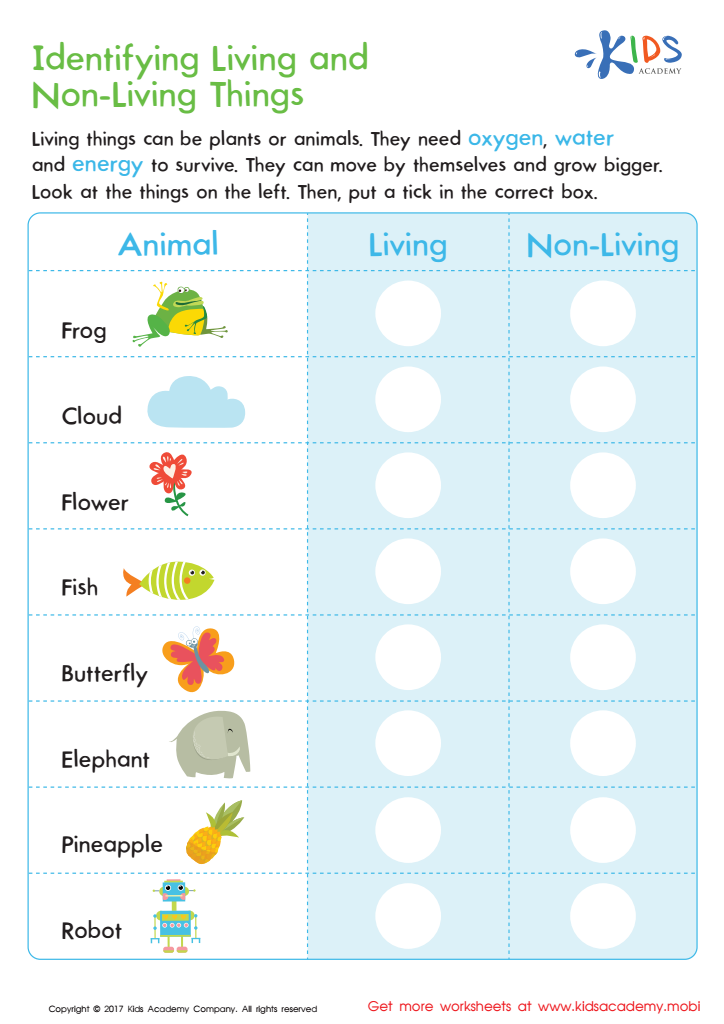
Identifying Living or Non–living Worksheet
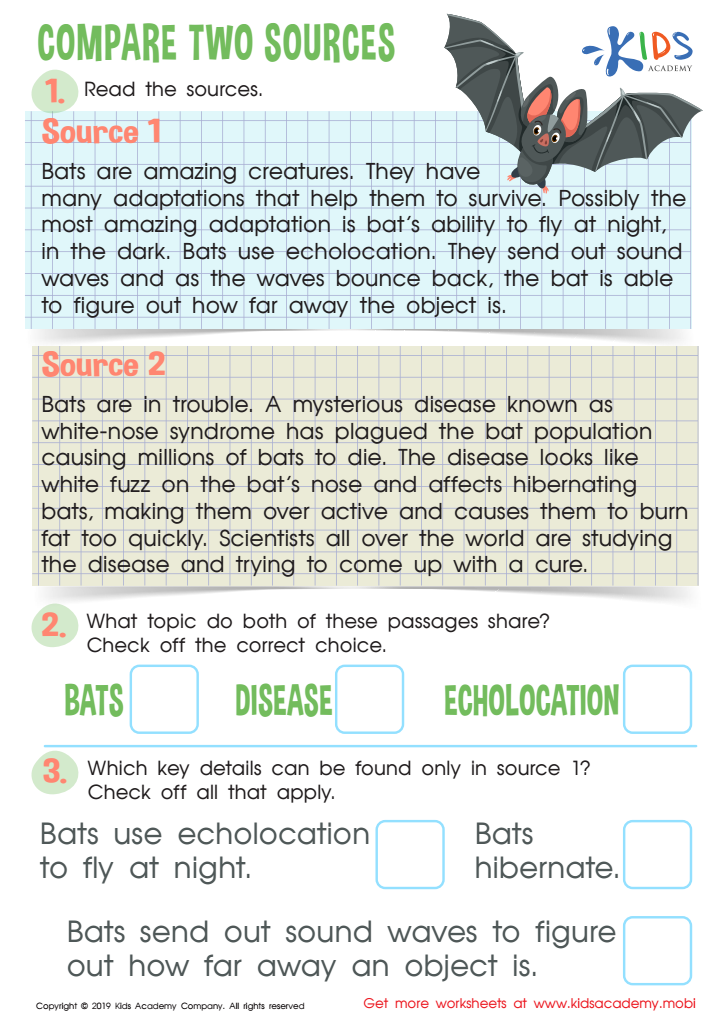
Compare Two Sources Worksheet








Encouraging critical thinking and an appreciation for normal plants and animals in children aged 3-8 is essential for holistic development. Critical thinking is key to cultivating problem-solving abilities and decision-making skills from an early age. It empowers children to analyze situations, ask thoughtful questions, and consider different perspectives, fostering logical and independent thought processes as they grow. By instilling these abilities during early childhood, we equip them with tools for academic success and personal development throughout their lives.
Teaching children about plants and animals ignites a sense of wonder and curiosity about the natural world. This foundational knowledge in biological sciences contributes to their understanding of life sciences as they progress through their education. Observing and interacting with plants and animals also promotes empathy, as children learn to appreciate the importance of different life forms and interdependence among living beings.
Moreover, integrating critical thinking with environmental education encourages stewardship of nature. As children learn to care for plants and animals, they develop environmentally-friendly habits and respect for the planet. Parents and teachers thereby help nurture responsible, informed, and caring individuals who are not only capable thinkers but also conscientious contributors to society. Combining these educational ends fosters a balanced and enriched learning environment during crucial formative years.







