
Understanding life cycles Normal Plants and Animals Worksheets for Ages 3-8
3 filtered results
Difficulty Level
Grade
Age
-
From - To
Subject
Activity
Standards
Explore the fascinating world of life cycles with our engaging "Understanding Life Cycles: Normal Plants and Animals Worksheets" designed for children ages 3-8. These educational worksheets provide a fun and interactive way for young learners to discover the stages of growth in plants and animals. Through hands-on activities and colorful illustrations, children will learn about the transformations from seeds to flowering plants and the life cycle of various animals. Perfect for early grade classrooms or at-home learning, these resources enhance science skills while fostering curiosity about nature. Ignite your child's love for learning with our thoughtfully crafted worksheets today!
Favorites
With answer key
Interactive
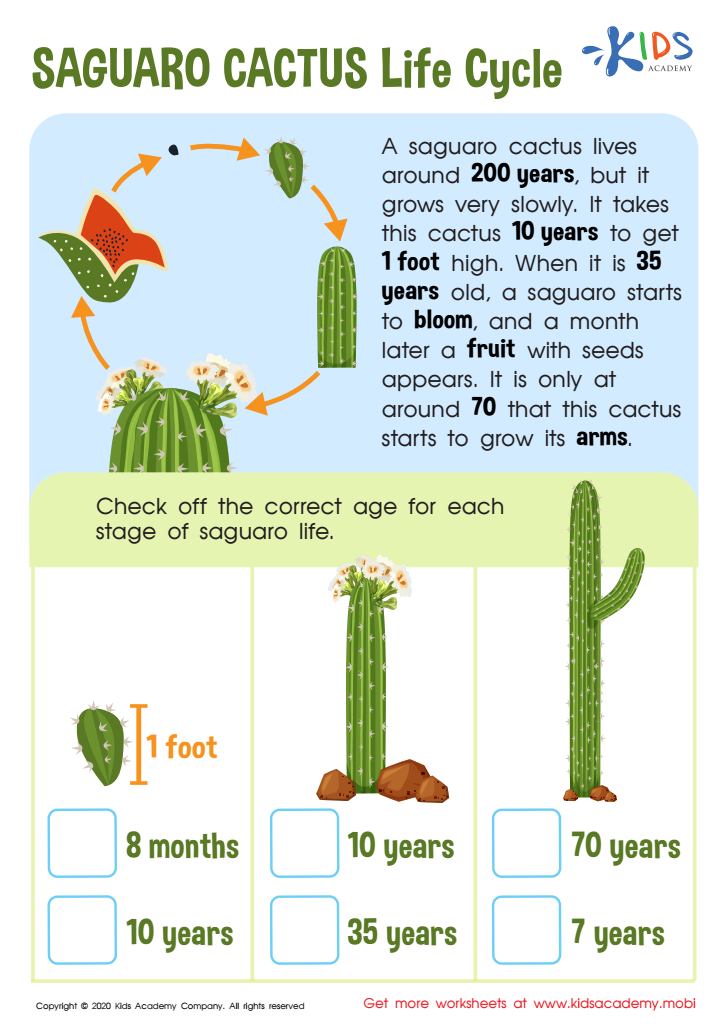
Saguaro Cactus Life Cycle Worksheet
Teach your child about the saguaro cactus, which takes 35 years to bloom and can live up to twice the lifespan of a human! Print this free PDF worksheet to engage learners with an interesting passage. Check off the correct answers to reflect their learning!
 Assign to My Students
Saguaro Cactus Life Cycle Worksheet
Worksheet


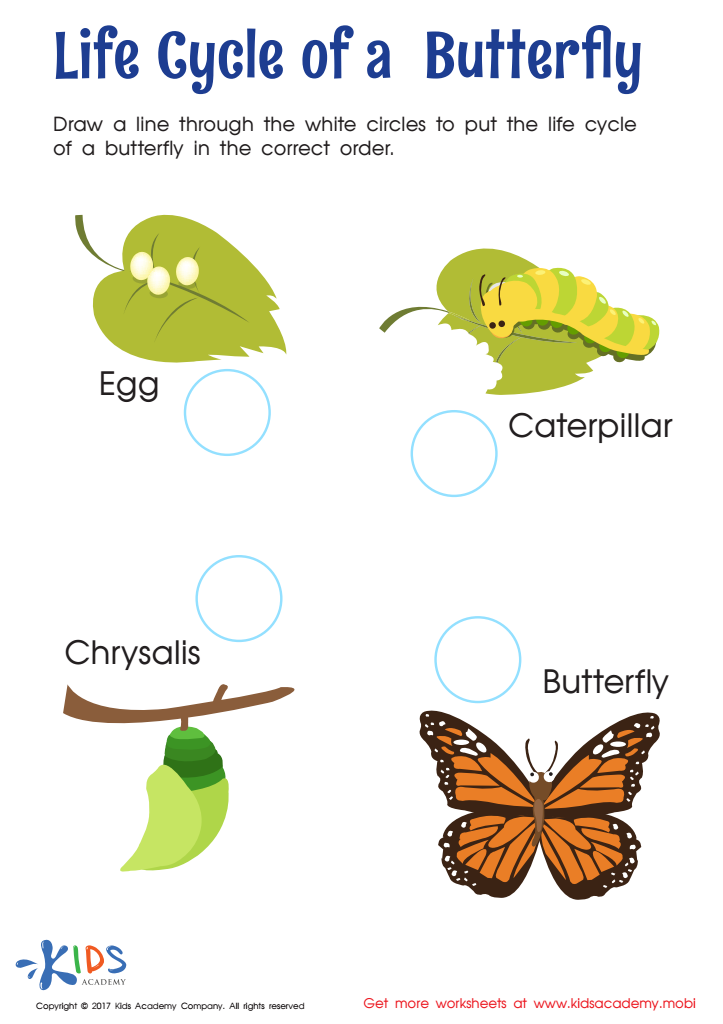
Life Cycle of Butterfly Worksheet
Kids Academy offers an exciting activity – a Life Cycle of a Butterfly Worksheet PDF. It shows four stages in the lifecycle of a butterfly with vivid pictures. Kids put the stages in the correct order to study the lifecycle.
Life Cycle of Butterfly Worksheet
Worksheet
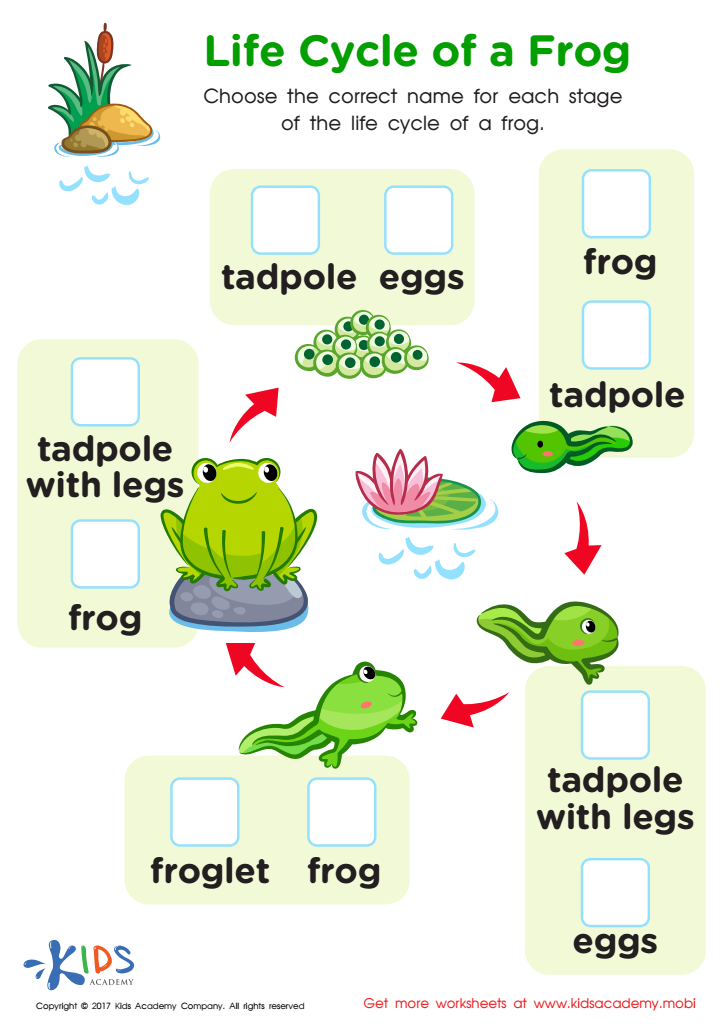
Life Cycle Frog Printable
Kids can explore the life cycle of frog with this fun worksheet! Draw lines from one stage to the next to follow the transformation from tadpole to frog and learn about the cycle of life.
Life Cycle Frog Printable
Worksheet
Join Kids Academy for Free
Who is primarily going to use this learning content?








Understanding the life cycles of plants and animals is vital for children aged 3-8 as it lays the foundation for their appreciation of nature and science. This knowledge fosters curiosity about the world around them, encouraging exploratory learning. By observing how plants grow from seeds and how animals develop from eggs or larvae, children can engage in hands-on experiences that promote critical thinking and observation skills.
For teachers and parents, discussing life cycles enhances children’s comprehension of biological concepts, contributing to their overall cognitive development. It also teaches the importance of ecosystems and biodiversity, instilling an awareness of environmental responsibility at a young age.
In addition, integrating lessons on life cycles into everyday activities can boost communication, literacy, and numeracy skills, as children articulate their observations and predictions. This subject matter also reinforces the idea of change and growth, helping children understand their personal development and the changes they will encounter over time.
Ultimately, nurturing an understanding of life cycles in young learners equips them with knowledge that is foundational for scientific inquiry, ecological awareness, and an enduring respect for living organisms, enriching their overall educational experience.







