Understanding pollination Normal Plants and Animals Worksheets for Ages 3-8
3 filtered results
-
From - To
Explore the wonders of pollination with our "Understanding Pollination: Normal Plants and Animals Worksheets" designed for children ages 3-8. These engaging, educational worksheets introduce young learners to the vital process of pollination, showcasing how plants and animals work together in nature. Fun, age-appropriate activities include illustrations, matching games, and simple explanations that foster a love for science and the environment. Perfect for classrooms or at-home learning, these resources help develop critical thinking and observational skills while promoting an understanding of ecosystems. Delight your little scientists with interactive and visually appealing worksheets that make learning about plants and animals exciting and enjoyable!
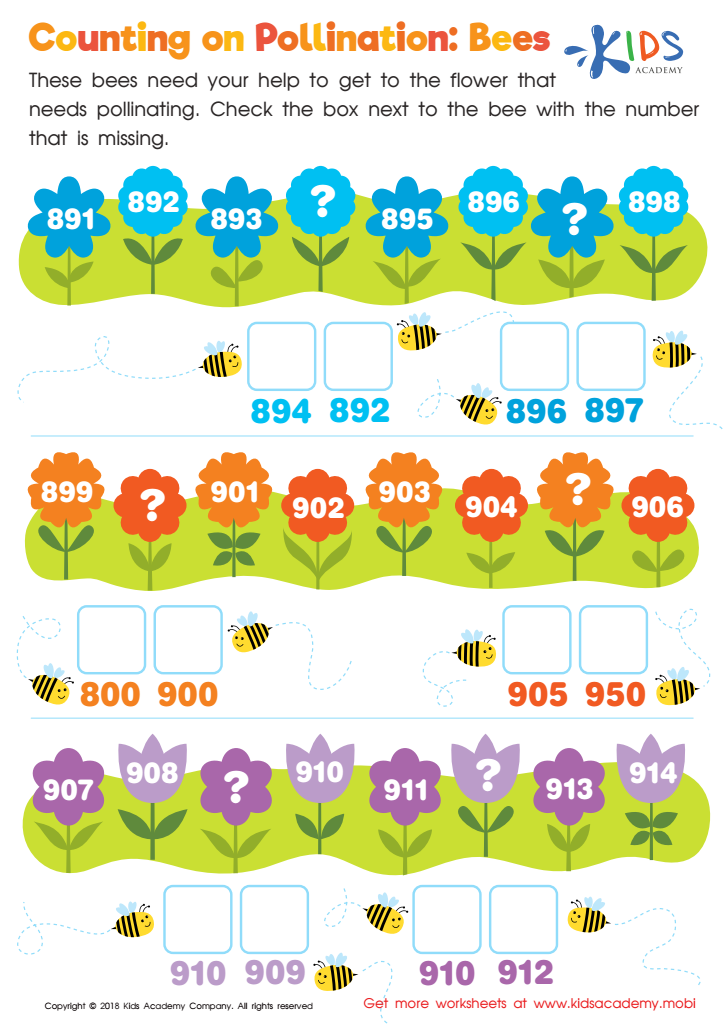
Counting on Pollination: Bees Worksheet
 Assign to My Students











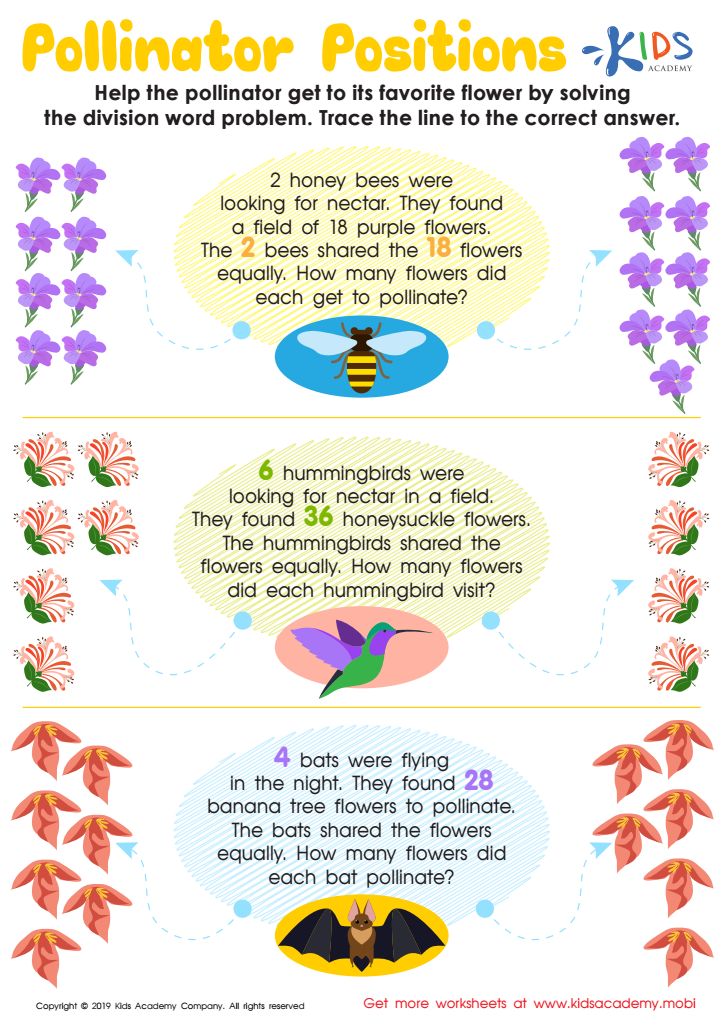
Pollinator Positions Worksheet
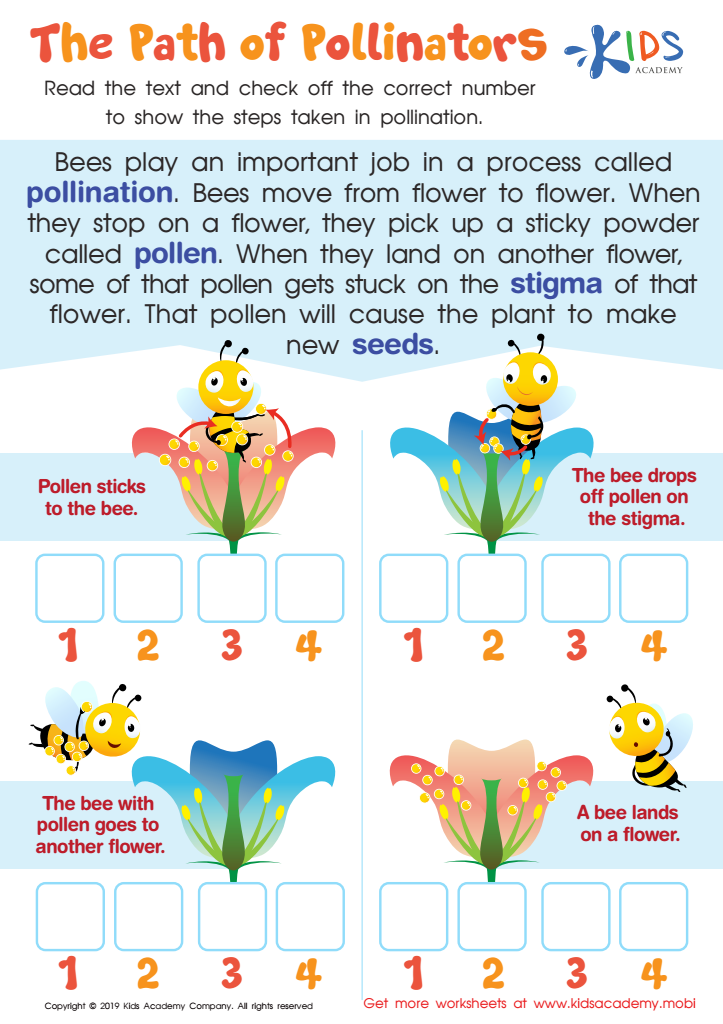
The Path of Pollinators Worksheet








Understanding pollination and the roles of normal plants and animals is crucial for young children aged 3-8 as it fosters a sense of connection to nature and encourages scientific curiosity. At this developmental stage, children are naturally inquisitive about the world around them. Introducing concepts of pollination not only enhances their knowledge about the life cycles of plants and animals, but also instills awareness of the ecosystem's interdependence.
Parents and teachers play a crucial role in facilitating this learning. By explaining how bees, butterflies, and other creatures contribute to the process of pollination, they help children appreciate the importance of biodiversity. This foundational understanding can lead to a lifelong appreciation for and stewardship of the environment.
Educational activities, such as gardening or observing insects, can be integrated to make learning engaging and interactive. Moreover, as children learn about how plants produce food and oxygen, they can develop a sense of responsibility for nature, understanding that their actions can impact the environment. Early exposure to these concepts cultivates an environmentally conscious mindset, essential for fostering future generations that prioritize sustainability and ecological health. Thus, imparting knowledge about pollination is an investment in their education and the planet's future.







