Developing analytical skills Normal Community Worksheets for Ages 3-8
3 filtered results
-
From - To
Enhance your child's analytical skills with our engaging Normal Community Worksheets designed for ages 3-8! These thoughtfully crafted resources introduce young learners to essential social studies concepts while promoting critical thinking. Each worksheet encourages children to observe, question, and draw conclusions about their community, fostering a sense of understanding and curiosity. With a variety of interactive activities, your little ones will explore topics such as roles in the community, collaboration, and problem-solving in fun and creative ways. Ideal for both classroom and home learning, these worksheets aim to develop foundational analytical skills that will benefit your child's educational journey. Download now!
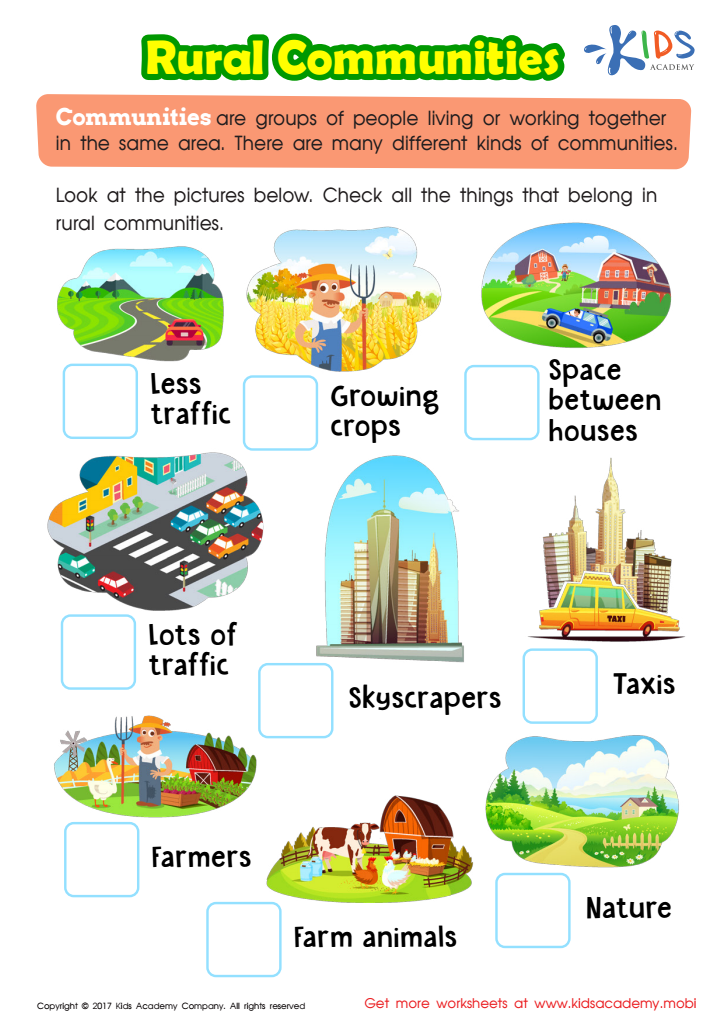
Rural Communities Printable
 Assign to My Students
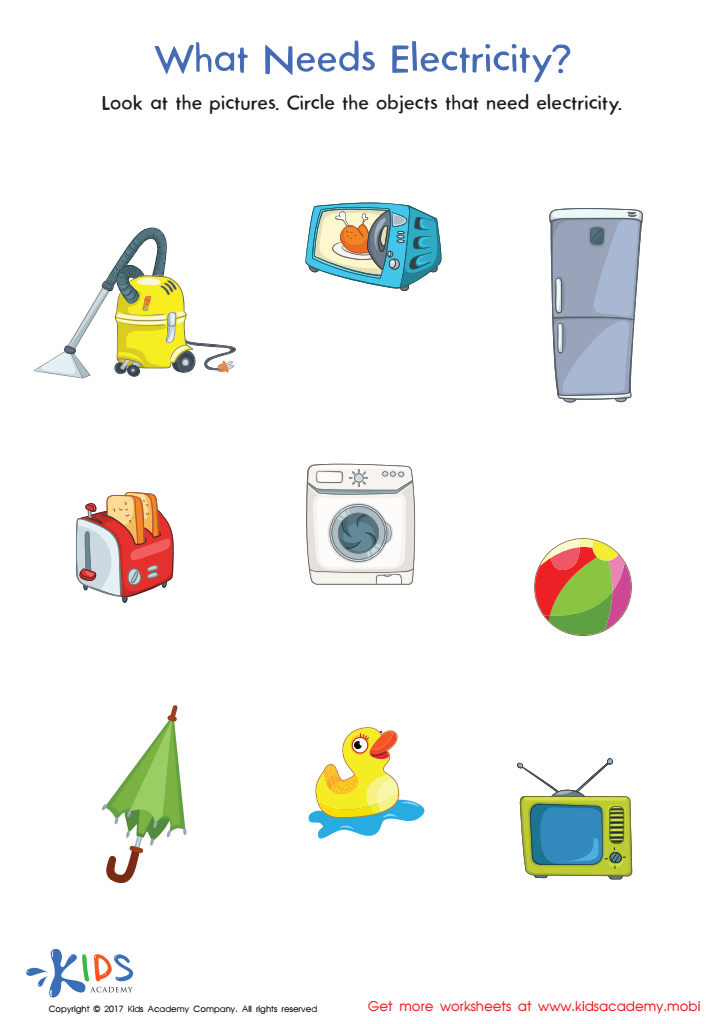
What Needs Electricity Printable
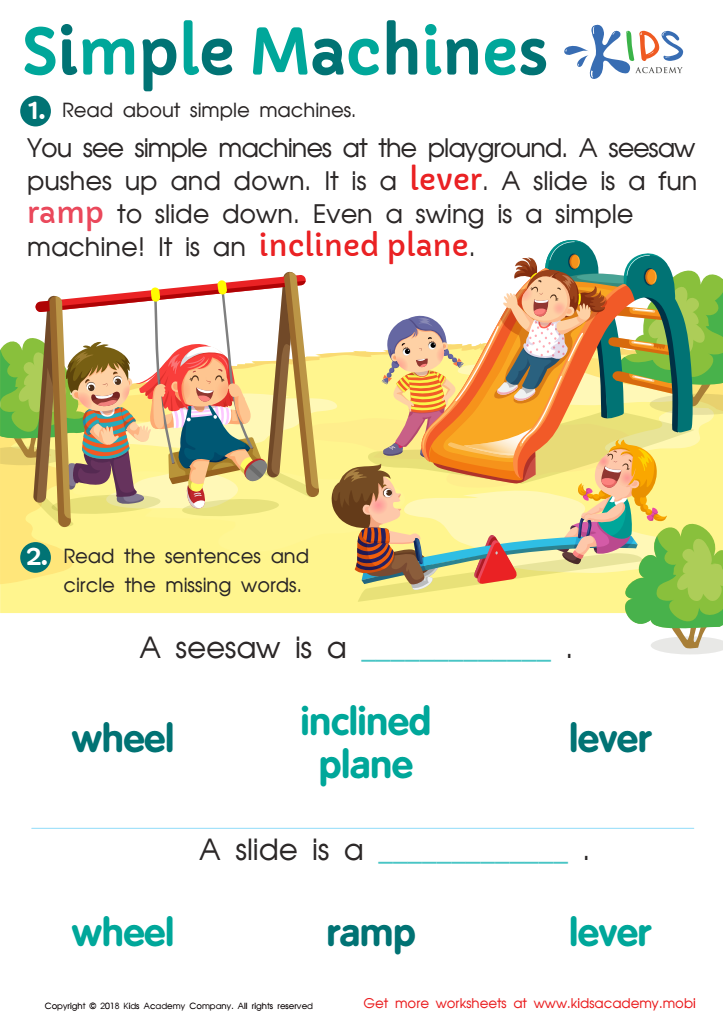
Simple Machines Worksheet








Developing analytical skills in children aged 3-8 is crucial for their overall growth and future success. Early childhood is a formative period when cognitive abilities are rapidly developing, and fostering analytical skills lays the foundation for critical thinking, problem-solving, and decision-making later in life.
Parents and teachers should care because these skills enhance a child's ability to process information effectively. By engaging in activities such as puzzles, Sorting games, and interactive storytelling, children learn to analyze situations, identify patterns, and establish connections between ideas. Encouraging questioning and curiosity helps them become independent thinkers who can evaluate information critically.
Moreover, strong analytical skills contribute to academic achievements. As children progress in their education, they will encounter complex concepts that require a higher level of thinking. Those with a solid base in analytical abilities will find it easier to understand subjects like math, science, and language arts.
Finally, by instilling these skills within a normal community setting, we nurture well-rounded individuals who can contribute positively to society. They will be equipped to navigate the complexities of the world, adapt to challenges, and work collaboratively with others – skills invaluable in the 21st century. Investing in analytical skill development is an investment in their future.








