Multiplication practice Normal History Worksheets for Ages 3-8
3 filtered results
Difficulty Level
Grade
Age
-
From - To
Subject
Activity
Standards
Enhance your little one's learning experience with our engaging multiplication practice worksheets designed for ages 3-8. These normal history-themed worksheets blend skill development with fun, reinforcing multiplication concepts while sparking interest in historical tales and events. Tailored to young learners, our resources encourage familiarity with numbers and boost confidence as they solve multiplication problems through captivating stories. Perfect for home or classroom use, each worksheet not only supports mathematical growth but also enriches understanding of history at an early age. Download now and turn learning into an exciting adventure in multiplication and history! Ideal for families and educators alike.
Favorites
With answer key
Interactive
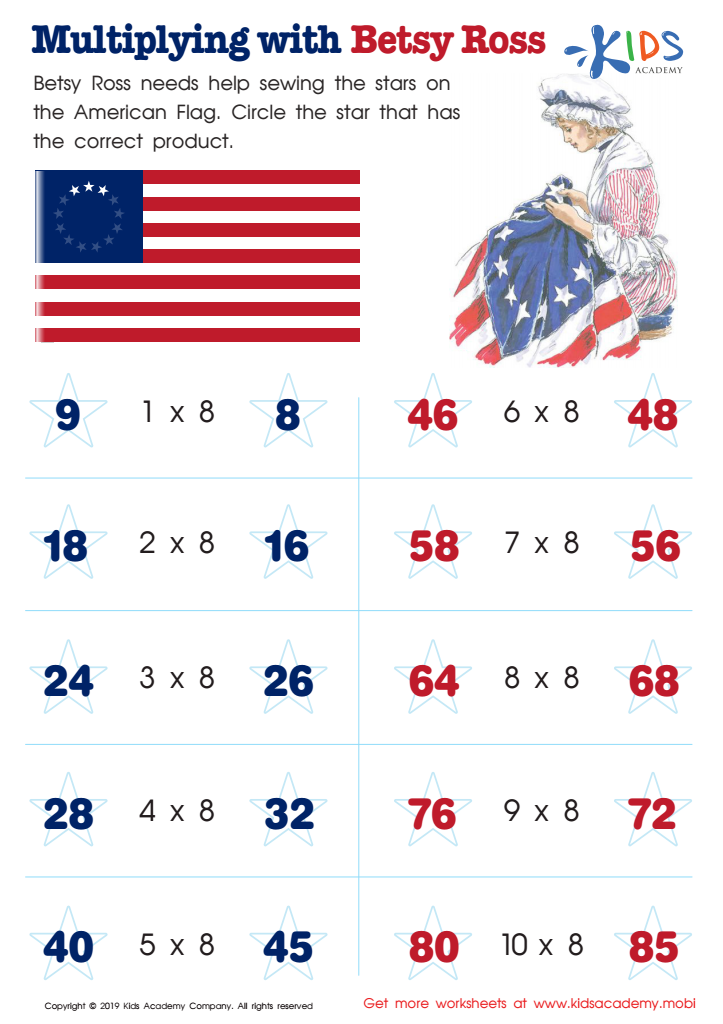
Multiplying with Betsy Ross Worksheet
Before getting into the worksheet, have your students take a quick history lesson on Betsy Ross. Ask them if they know her role in American history. On the printout, ask your kids to identify what Betsy Ross is doing - sewing the stars on the American Flag. Have them circle the star that has the correct pattern.
 Assign to My Students
Multiplying with Betsy Ross Worksheet
Worksheet
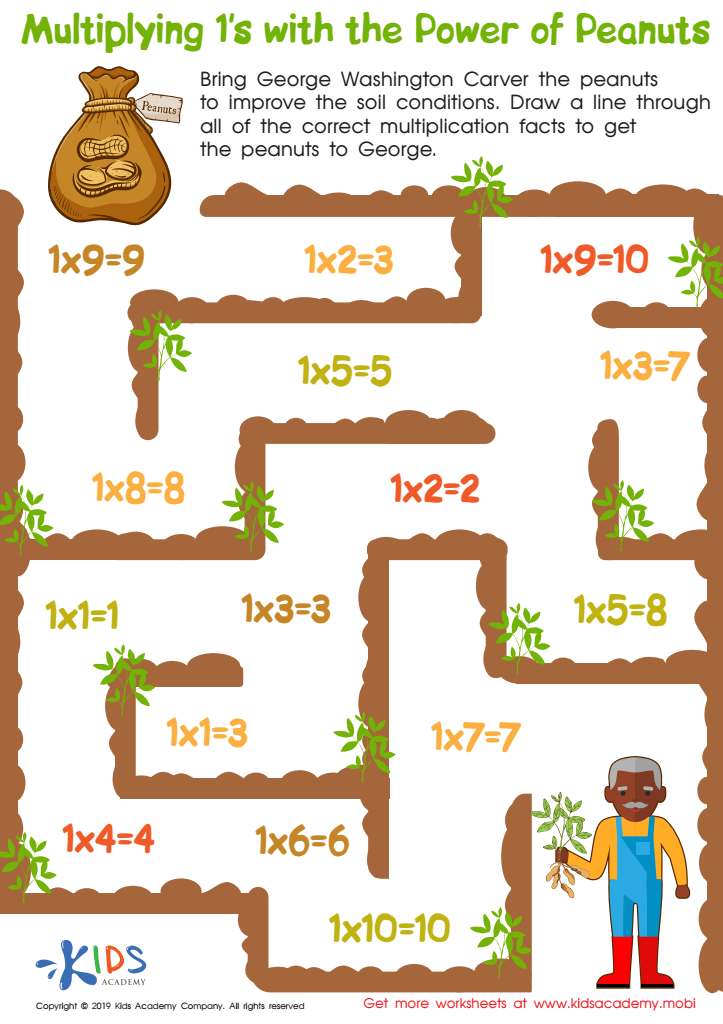
Multiplying 1’s With the Power of Peanuts Worksheet
Help your kids learn about George Washington Carver with this fun worksheet! Assist them in bringing peanuts to Carver by drawing a line through the correct multiplication facts. Introduce them to Carver's genius creations and show them how he used peanuts to improve the soil condition.
Multiplying 1’s With the Power of Peanuts Worksheet
Worksheet
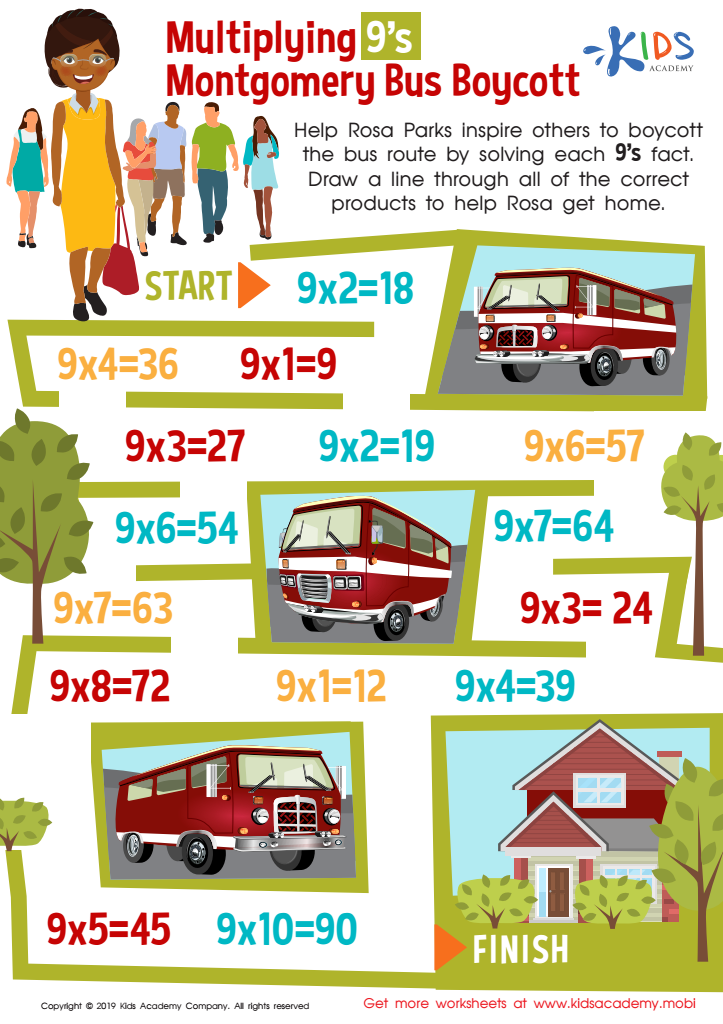
Multiplying 9’s Montgomery Bus Boycott Worksheet
As your students learn math, the numbers get bigger. This worksheet is great for learning the nine times table. Help Rosa Park get home - ask them to solve each multiplication fact, then draw a line through the correct products. Encourage your students to stand up for what's right!
Multiplying 9’s Montgomery Bus Boycott Worksheet
Worksheet
Join Kids Academy for Free
Who is primarily going to use this learning content?








Multiplication practice is vital for children aged 3 to 8 as it lays the foundation for their mathematical understanding and problem-solving skills. Early exposure to multiplication concepts fosters number sense, enabling children to recognize patterns and relationships within numbers. Parents and teachers should care because mastering multiplication supports cognitive development, promoting critical thinking and number fluency.
Additionally, incorporating multiplication practice into early learning can be engaging and fun. Through games, interactive activities, and real-life applications, adults can help children develop a positive attitude toward math, reducing anxiety and enhancing motivation. By using relatable scenarios, such as grouping objects or sharing, children can grasp the concept of multiplication as ‘adding groups’ rather than viewing it as an isolated skill.
Furthermore, early math skills are predictive of future academic success. Research indicates that a strong foundation in early math can significantly impact a child's learning trajectory, influencing performance in later grades. Therefore, investing time in multiplication practice now equips children with the tools they need for ongoing educational achievement. Overall, prioritizing multiplication practice during these formative years cultivates not just competent mathematicians but also confident learners prepared to tackle more advanced challenges in the future.