Understanding timelines Normal History Worksheets for Ages 3-8
3 filtered results
-
From - To
Explore our "Understanding Timelines Normal History Worksheets" designed for ages 3-8, an engaging resource for early learners! These worksheets introduce young children to the concept of timelines, helping them grasp the order of events and the progression of time through visually appealing activities. With age-appropriate content focused on historical milestones and personal storytelling, kids will develop critical thinking and sequencing skills. Our fun, interactive worksheets promote independent learning, making history accessible and enjoyable. Perfect for classrooms or at-home learning, these resources will inspire curiosity about the past. Begin your child's journey into history with our engaging timeline activities today!
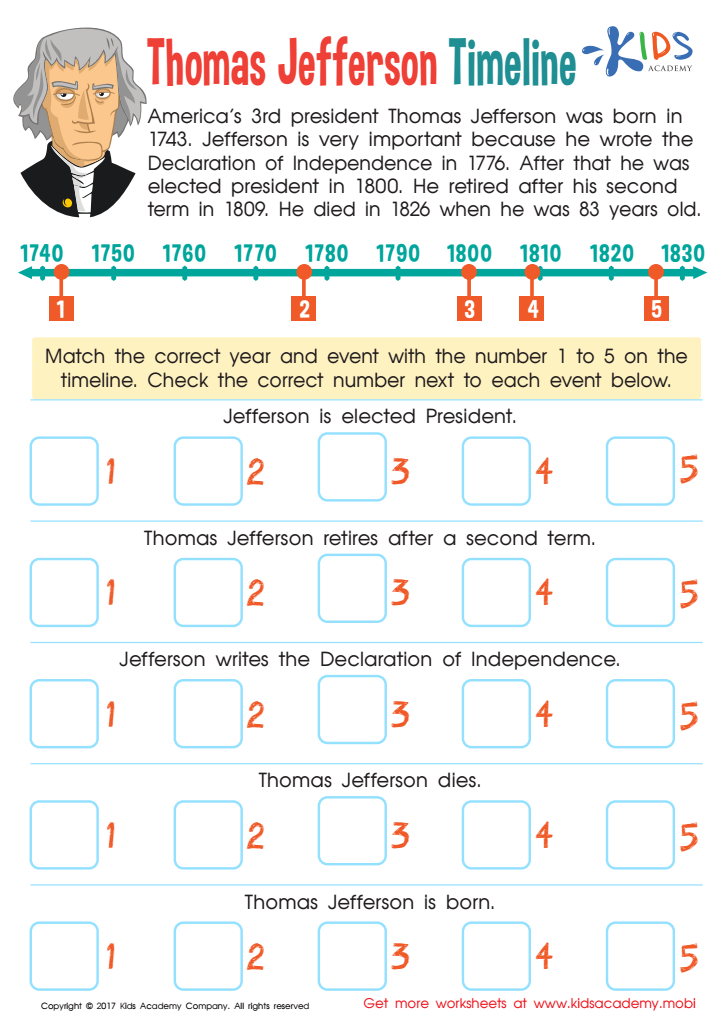
Thomas Jefferson Timeline Worksheet
 Assign to My Students
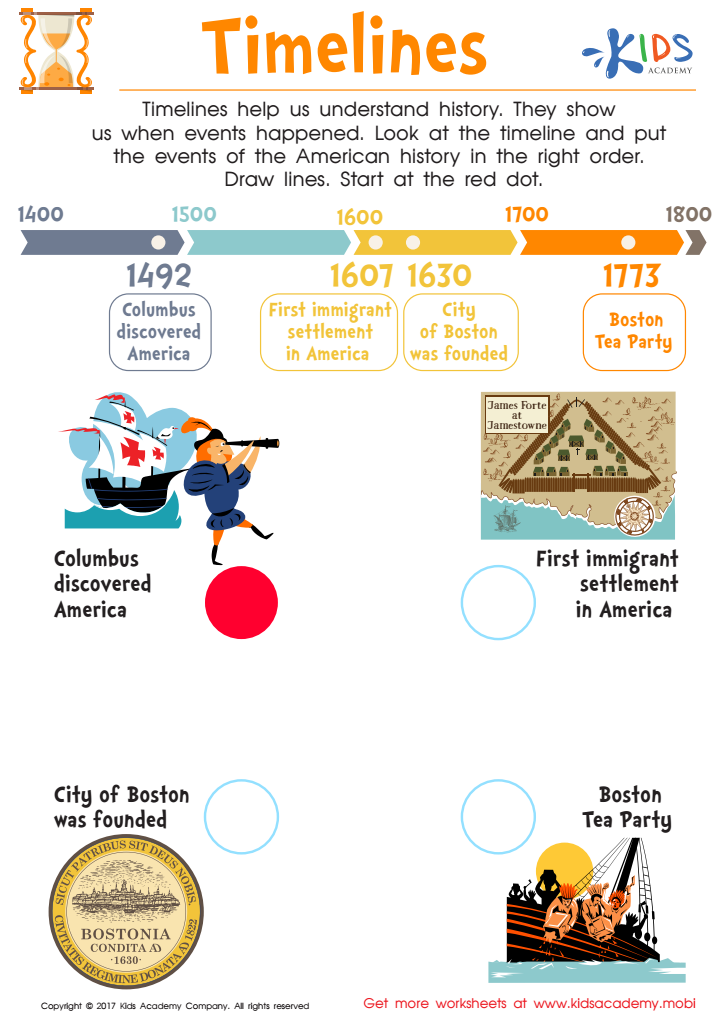
American History Timeline Worksheet
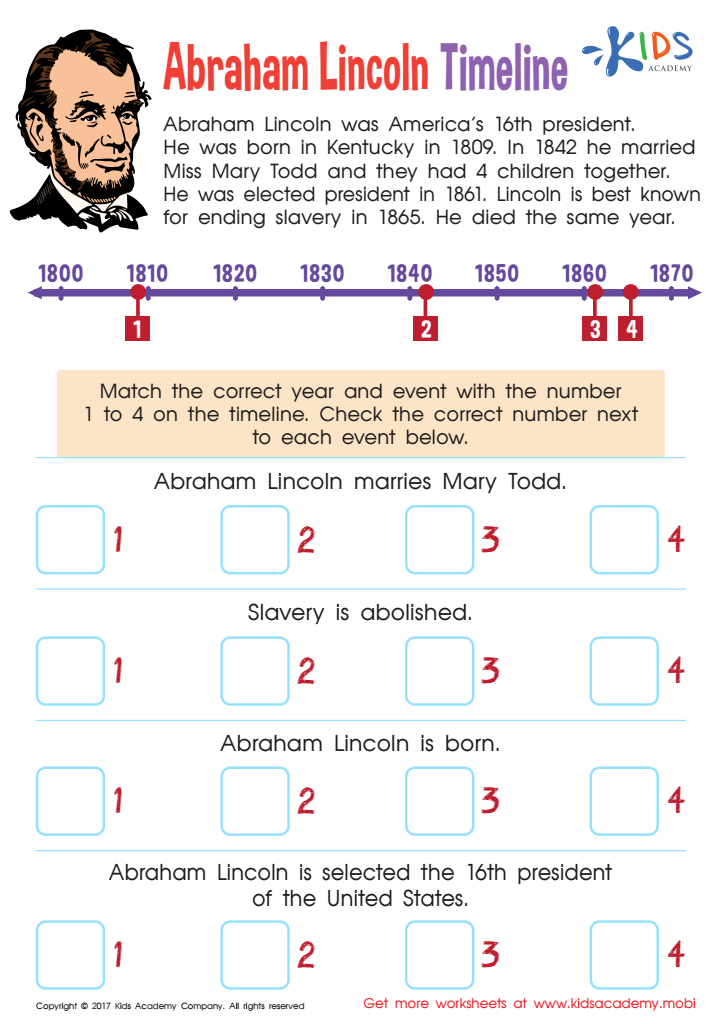
Abraham Lincoln Timeline Worksheet








Understanding timelines in history is crucial for children aged 3-8 as it lays the groundwork for their cognitive development and comprehension of the world around them. At this formative age, children are beginning to grasp the concept of time, distinguishing between past, present, and future. By exploring timelines, they learn to place events in chronological order, fostering skills in sequencing and critical thinking.
Parents and teachers should care about integrating timelines into early education because it helps children make connections between events and the larger historical narrative. This contextual understanding can aid in developing a sense of identity and belonging, as children learn about their own culture and others. Timelines also encourage storytelling, allowing children to engage with history creatively and critically.
Moreover, a solid grasp of history promotes empathy, as children come to understand the experiences of others across different times and circumstances. Learning history through timelines can be made engaging with interactive materials and activities, making it easier for young learners to absorb complex information. Ultimately, fostering an early interest in history through timelines sets the stage for informed, engaged, and empathetic citizens as they grow.