Critical Thinking Normal Social Studies Worksheets for Ages 3-8 - Page 2
25 filtered results
-
From - To
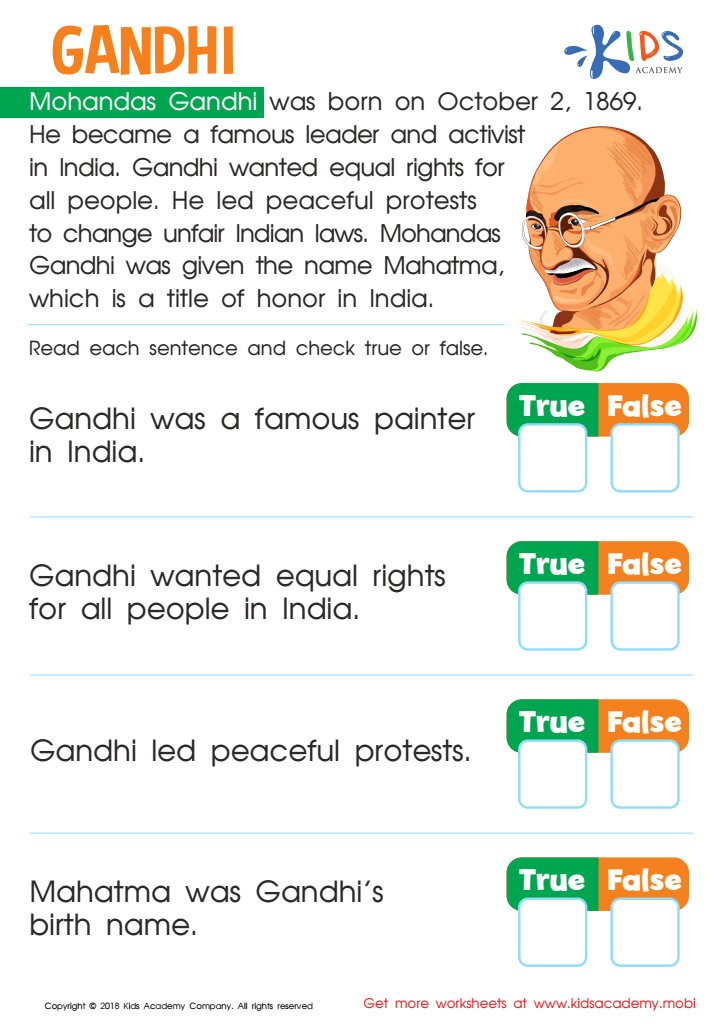
Gandhi Worksheet
 Assign to My Students








Critical thinking skills are essential for children’s overall development, particularly in the context of Social Studies for ages 3-8. During these formative years, children are naturally curious and eager to understand the world around them. Teaching critical thinking within Social Studies empowers them to analyze information, ask meaningful questions, and develop a deeper understanding of history, geography, culture, and society.
Parents and teachers should care about this because critical thinking helps children form their perspectives and make informed decisions as they grow. It cultivates empathy by allowing kids to explore different viewpoints, fostering a sense of community and social responsibility. By engaging with social issues, children learn to recognize and respect diversity, which is crucial in our increasingly interconnected world.
Moreover, these skills lay the groundwork for better problem-solving abilities, enhanced literacy, and improved communication skills. When children think critically, they become more confident learners, ready to engage with more complex topics in the future. Investing time in developing these skills prepares them for challenges in academics and in life, ultimately guiding them toward becoming thoughtful, responsible citizens. Therefore, emphasizing critical thinking in Social Studies is essential for nurturing well-rounded individuals in a dynamic society.