Weather identification Normal World Around Us Worksheets for Ages 3-8
3 filtered results
-
From - To
Discover the "Weather Identification Worksheets" for ages 3-8, designed to enhance children's understanding of the world around them. These engaging printable activities help young learners identify various weather conditions, such as sunny, rainy, cloudy, and snowy days. Each worksheet is crafted to promote observational skills and enrich vocabulary, making learning about the environment enjoyable. Perfect for home or classroom use, these resources encourage creativity through fun exercises, including drawing and word association. Spark your child's interest in weather patterns while developing critical thinking skills. Explore our collection and nurture your little one's curiosity about the dynamic world around them!
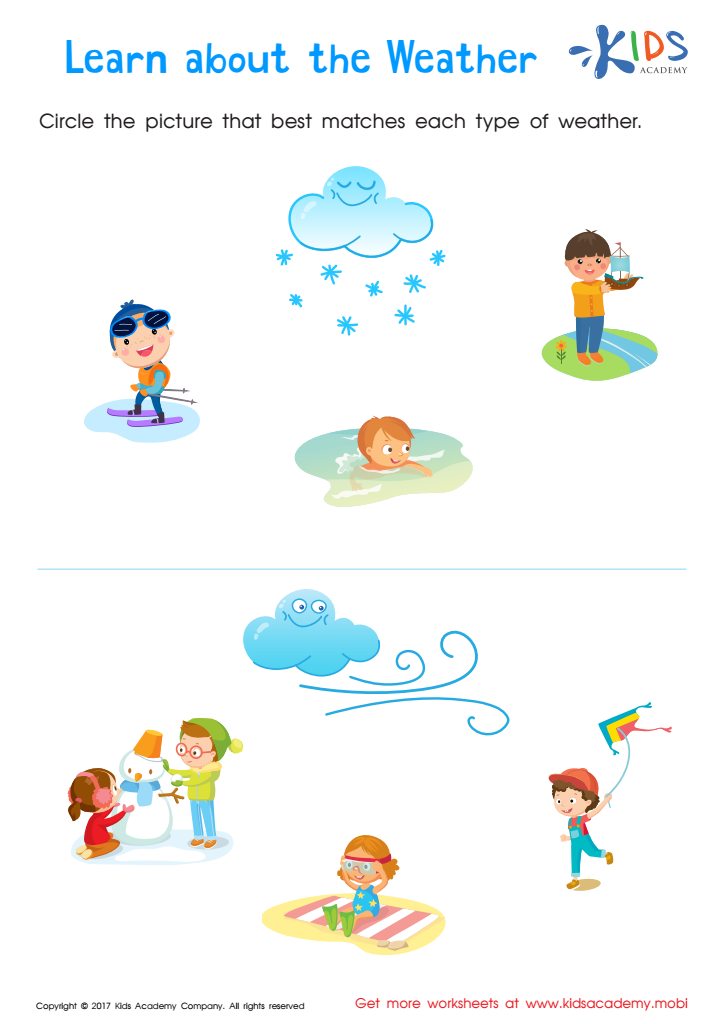
About the Weather Printable
 Assign to My Students
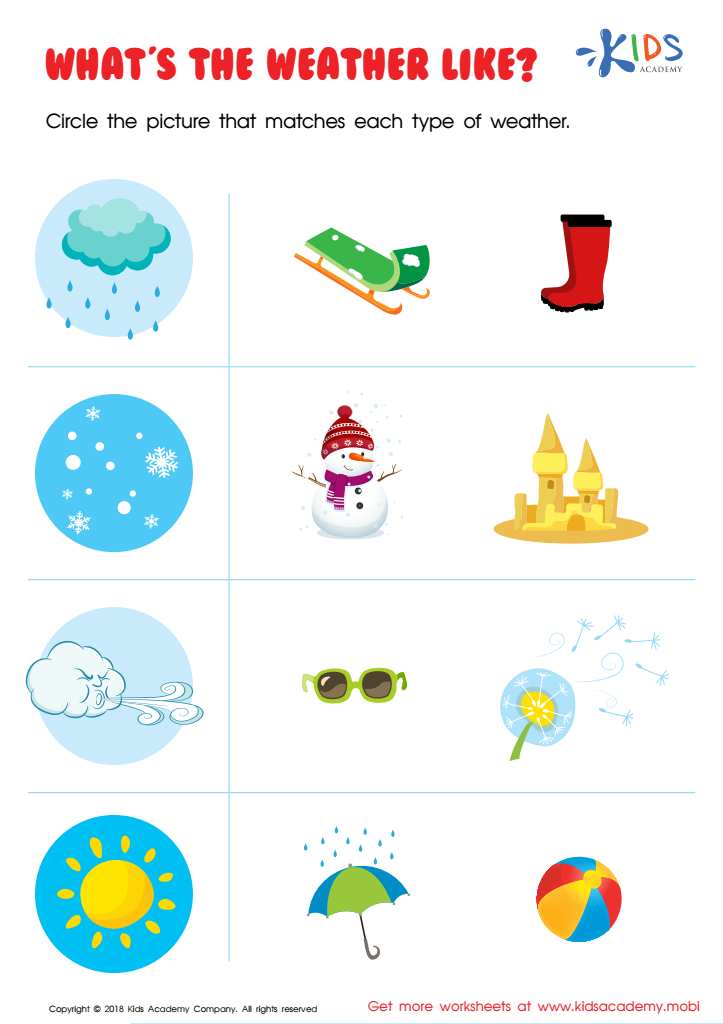
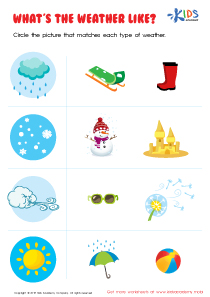
What's the Weather Like? Worksheet







Understanding weather identification is crucial for children aged 3-8, as it nurtures their connection to the world around them. First, it helps develop their observation skills, encouraging curiosity about nature and promoting critical thinking. When children learn to recognize different weather conditions—such as sunny, rainy, or snowy—they start to make sense of their environment and develop cognitive skills that are essential for future learning.
Moreover, weather education fosters an understanding of safety. For example, knowing when it’s windy, stormy, or very hot allows children to make appropriate choices for their outdoor activities and teaches them the importance of wearing suitable clothing. This awareness can help prevent accidents and ensure their well-being.
Additionally, by discussing weather patterns, parents and teachers can introduce basic science concepts, including temperatures, seasons, and climate. This lays the groundwork for early scientific inquiry, inspiring a lifelong passion for learning.
Most importantly, weather is a universal topic that can be connected to storytelling, art, and play, making learning engaging and fun. By integrating weather identification into everyday conversations and activities, adults can cultivate a well-rounded educational experience for children, allowing them to appreciate and interact with their environment meaningfully.