Normal Physical Science Worksheets for Ages 3-8
3 filtered results
-
From - To
Explore our Normal Physical Science Worksheets designed for children ages 3-8! These engaging worksheets introduce young learners to the fascinating world of physical science through fun activities and easy-to-understand concepts. Covering topics such as forces, motion, and the properties of materials, our resources foster curiosity and promote hands-on learning. Each worksheet encourages critical thinking, creativity, and a deeper understanding of the physical world around them. Perfect for home or classroom use, these worksheets help spark an early interest in science. Start your child's scientific journey today by downloading our interactive and comprehensive resources!
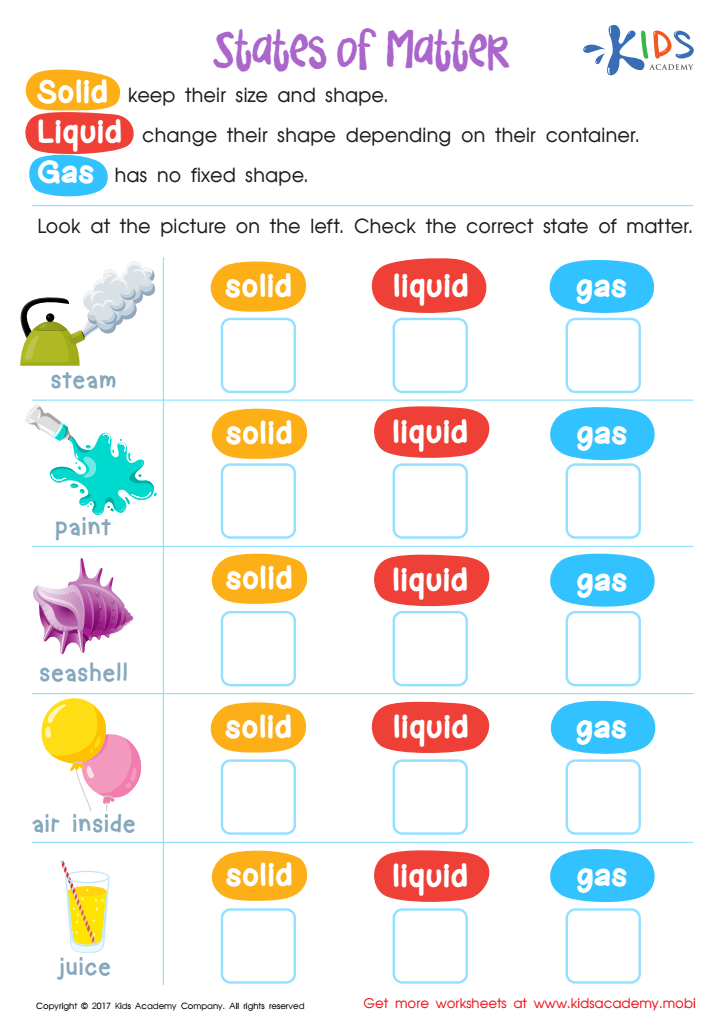
Physical Science: States of Matter Worksheet
 Assign to My Students
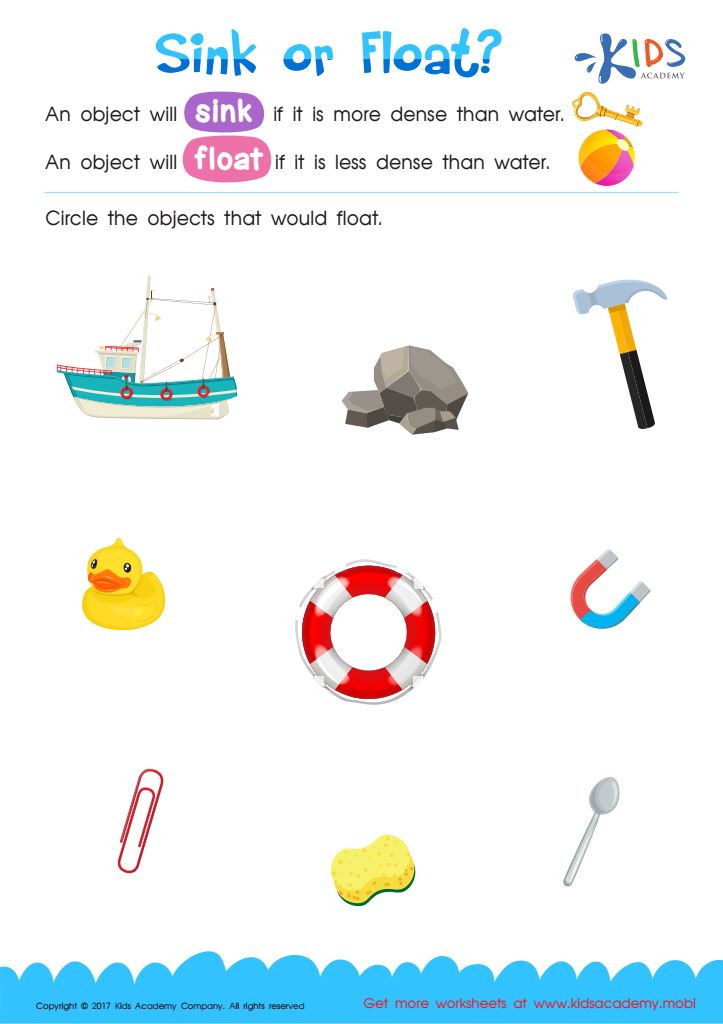
Sink or Float Printable
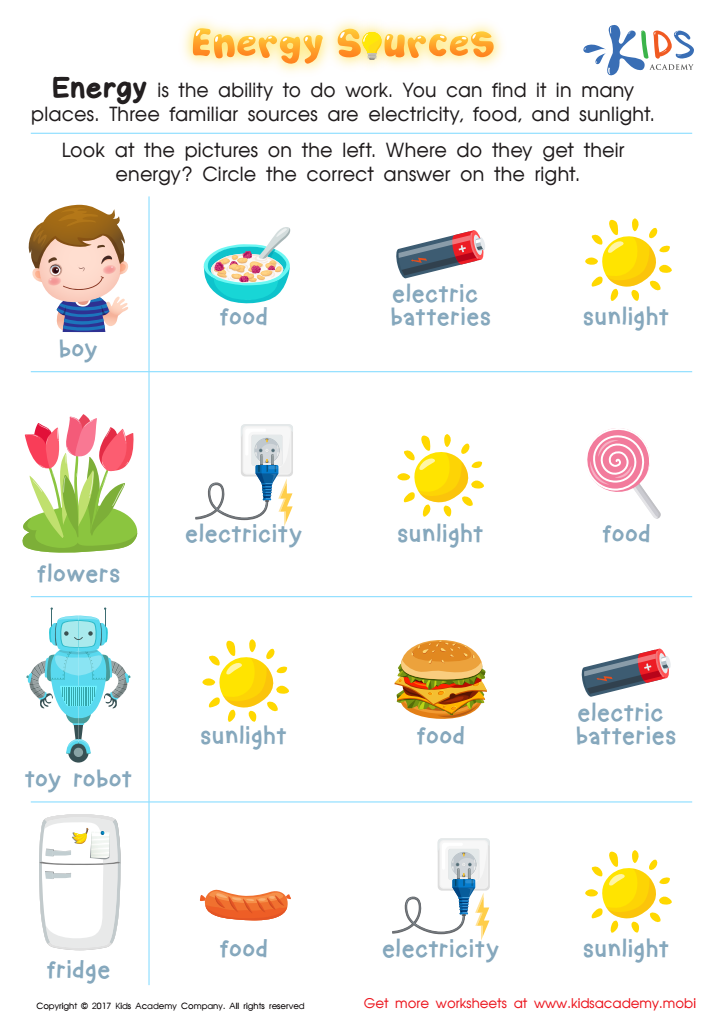
Energy Sources Printable








Normal Physical Science is crucial for children aged 3-8 as it lays the foundational understanding of the world around them. During these formative years, children are naturally curious and enthusiastic about exploring their environment. Engaging them in physical science concepts helps nurture this curiosity, fostering a love for learning and discovery.
Understanding basic principles of physics, chemistry, and earth science, such as gravity, buoyancy, weather patterns, and simple chemical reactions, cultivates critical thinking and problem-solving skills. By introducing hands-on activities and experiments, children develop their observational skills and learn how to ask questions, form hypotheses, and test their ideas.
Moreover, physical science integrates seamlessly with language, math, and social studies, promoting a holistic approach to education. When parents and teachers emphasize these principles, they enable children to make connections across various subjects, enhancing their overall cognitive development.
Additionally, fostering an early interest in science can guide children toward future academic and career paths in STEM (Science, Technology, Engineering, and Mathematics) fields. By prioritizing Normal Physical Science education, parents and teachers play a vital role in shaping inquisitive, informed, and capable future generations.