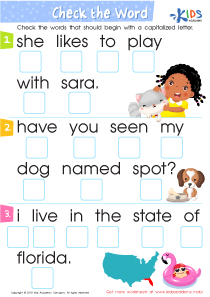
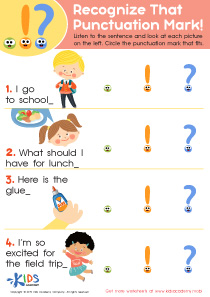
Noun identification Normal Grammar Worksheets for Ages 3-8
3 filtered results
-
From - To
Discover our engaging Noun Identification Normal Grammar Worksheets designed for children aged 3-8! These worksheets provide a fun and interactive way for young learners to explore nouns, enhancing their understanding of language while developing essential writing skills. Through colorful illustrations and exciting activities, children will be encouraged to identify nouns in various contexts, fostering their creativity and critical thinking. Our printable resources are perfect for both classroom settings and at-home learning, making grammar enjoyable and accessible. Give your little learners the tools they need to master noun identification with our thoughtfully crafted worksheets that promote a love for language from an early age!
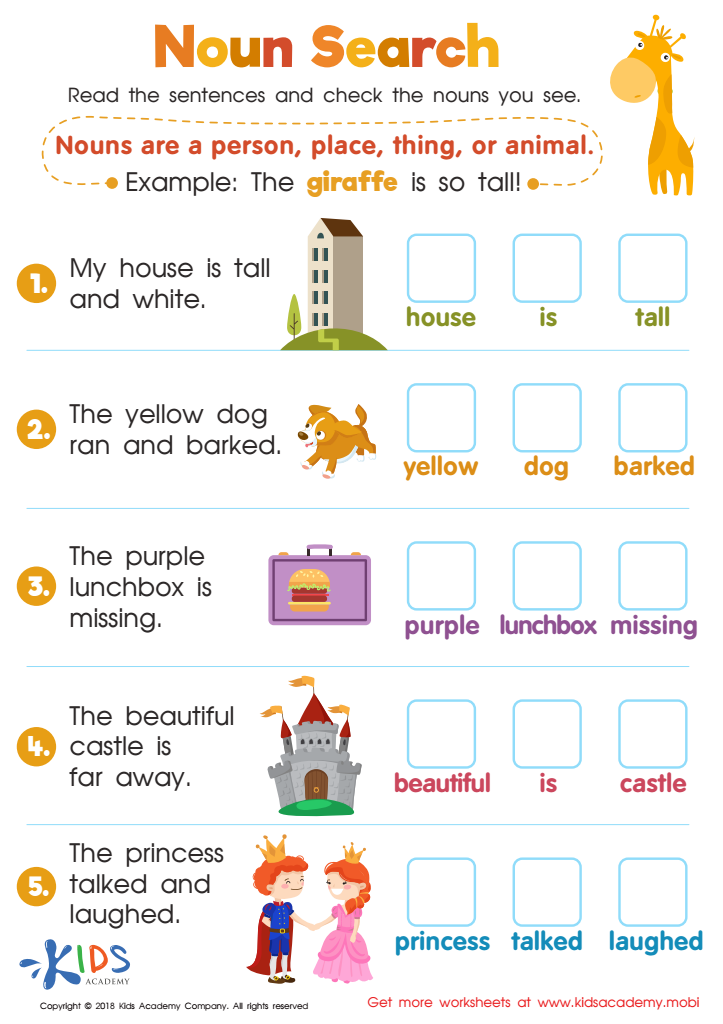
Noun Search Worksheet
 Assign to My Students
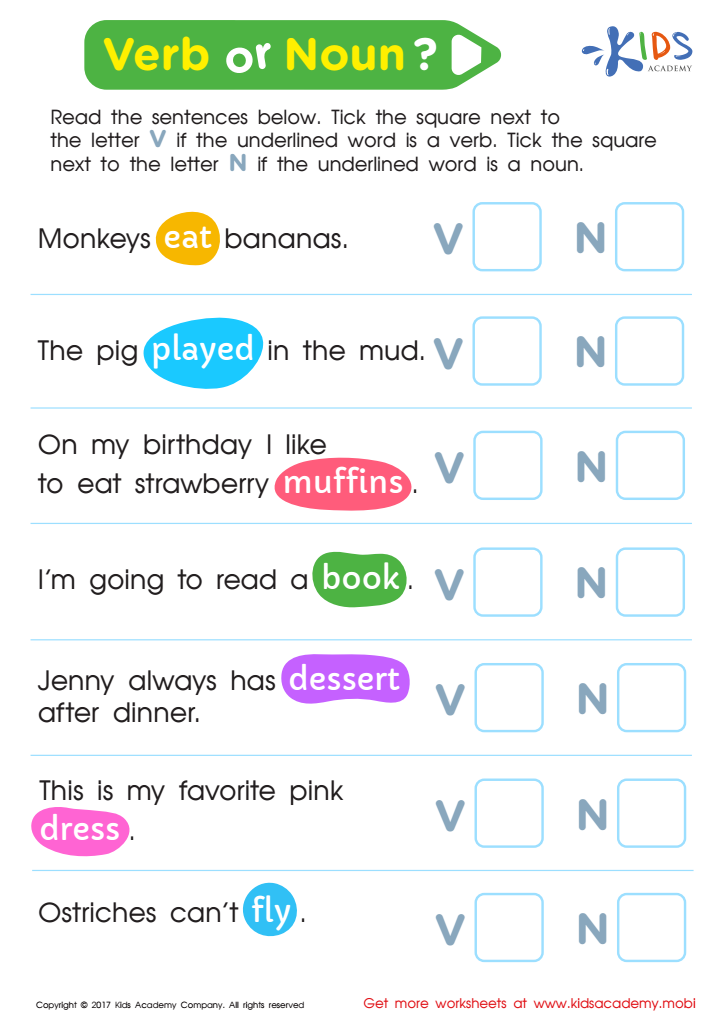
Verb or Noun Worksheet
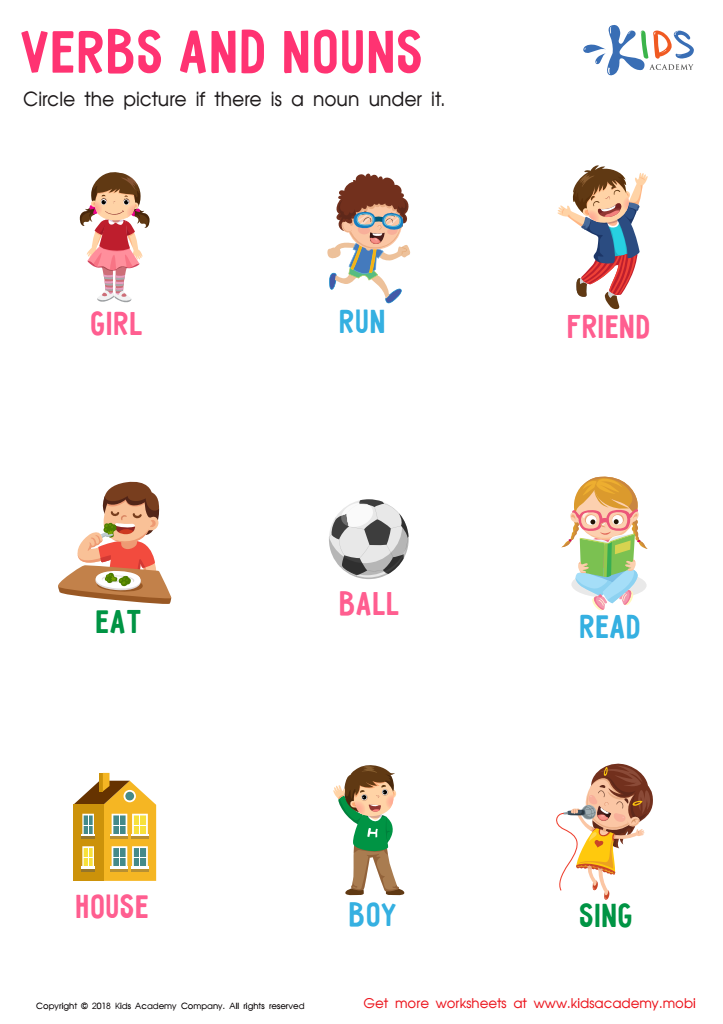
Verbs and Nouns Worksheet







Parents and teachers should prioritize noun identification and normal grammar for children aged 3-8, as these foundational language skills play a crucial role in early literacy development. Nouns, being the building blocks of sentences, help children understand how to label and conceptualize the world around them. Mastering nouns leads to better vocabulary retention and encourages expressive language abilities, allowing children to communicate their thoughts, feelings, and ideas more effectively.
Moreover, early grammar skills cultivate children's cognitive skills, fostering critical thinking and comprehension. Understanding sentence structure and concepts such as noun identification aids in reading comprehension, which is essential as children progress through their education. As they start to read, recognizing nouns will enhance their ability to make sense of texts, thereby improving their reading fluency and enjoyment.
Furthermore, these language skills help build a child’s confidence in social interactions and formal communication, setting a strong foundation for their future academic success. Incorporating noun activities into play, storytelling, and daily conversations makes learning engaging and enjoyable. By caring about and facilitating early noun identification and grammar skills, parents and teachers greatly contribute to the child's overall communication development and lifelong love of language.