Phonics recognition Normal Grammar Worksheets for Ages 3-8
3 filtered results
-
From - To
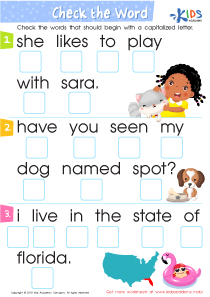
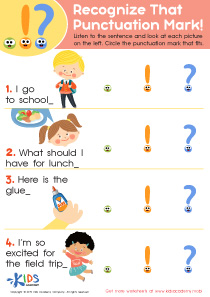
Enhance your child's reading and writing skills with our engaging Phonics Recognition Normal Grammar Worksheets, designed for ages 3-8! These printable worksheets are perfect for young learners, helping them recognize sounds, letters, and basic phonetic patterns. Each worksheet offers a fun and interactive way to build foundational literacy skills while nurturing a love for learning. Featuring colorful illustrations and age-appropriate activities, your child will enjoy mastering phonics concepts through playful exercises. Whether at home or in the classroom, our resources support early education and ensure a smooth transition into reading confidence. Explore our collection and watch your child's skills grow!
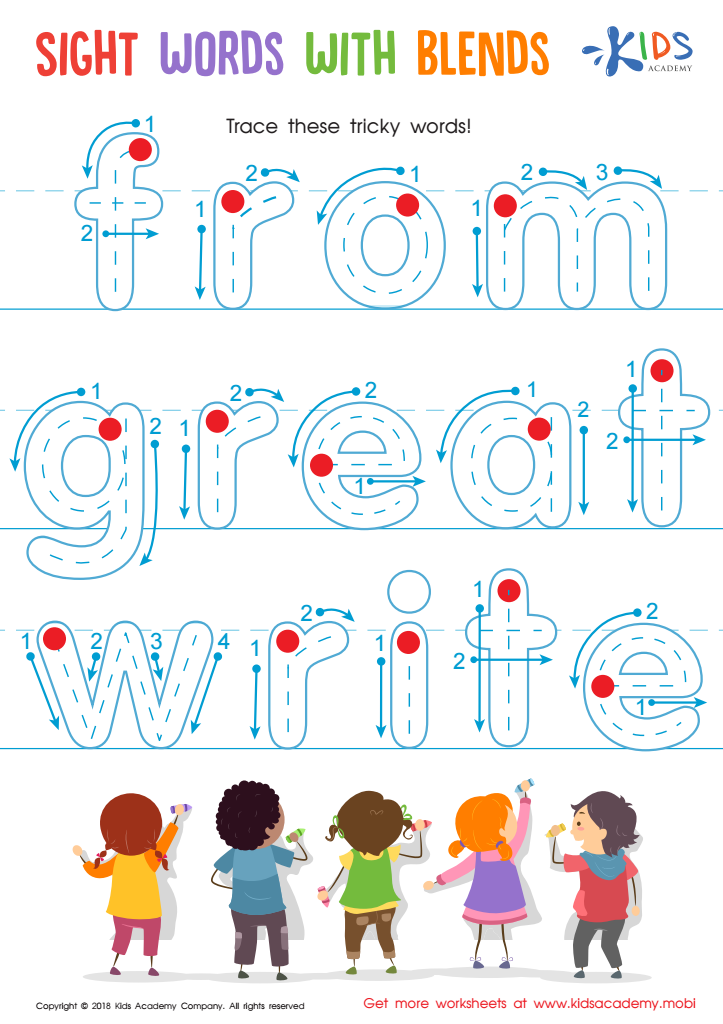
Sight Words with Blends Worksheet
 Assign to My Students
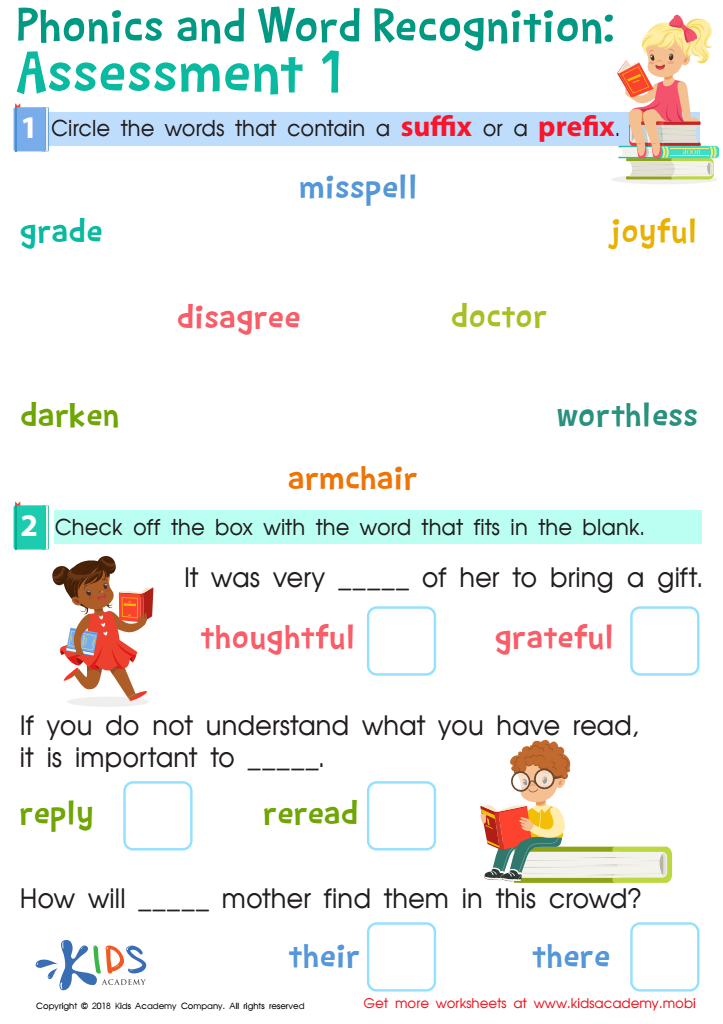
Phonics and Word Recognition: Assessment 1 Worksheet
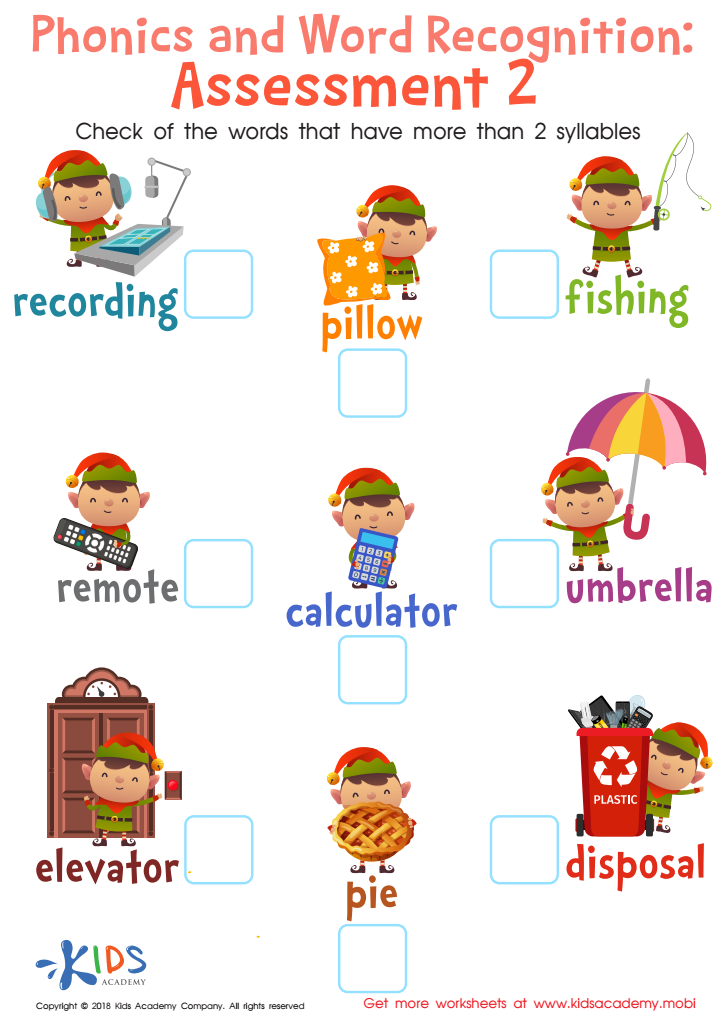
Phonics and Word Recognition: Assessment 2 Worksheet




Phonics recognition is a critical component of early literacy that significantly influences a child's reading and writing abilities. For children aged 3-8, this skill lays the foundation for their overall academic success. Understanding the relationship between letters and sounds helps young learners decode words, making reading less daunting and more enjoyable.
Parents and teachers should prioritize phonics recognition because it fosters confidence and independence in children. When they can sound out words, they are likelier to engage with texts, nurturing a lifelong love for reading. Phonics instruction also enhances vocabulary development; as students learn to recognize words, they can better comprehend spoken and written language.
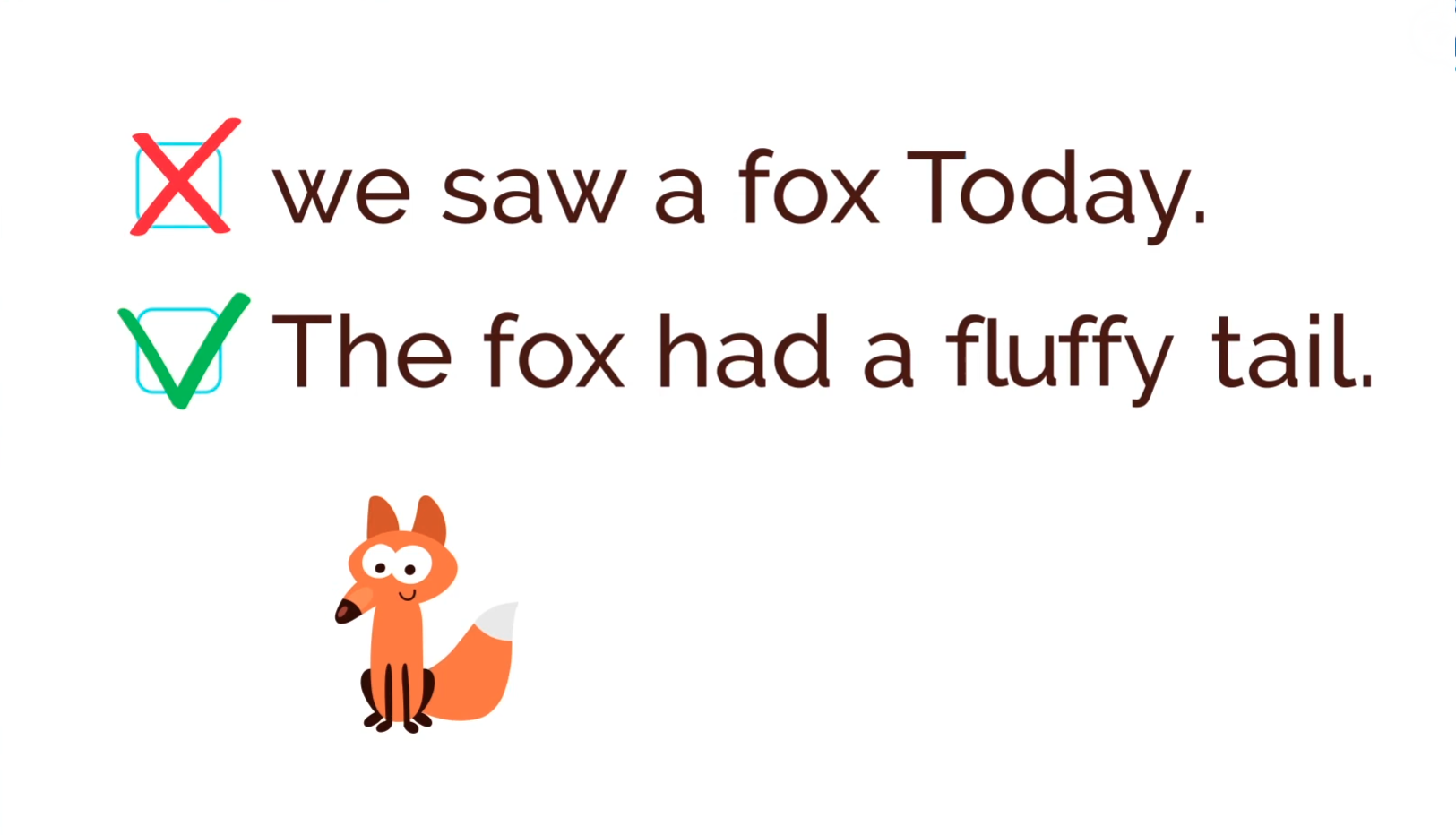
Moreover, phonics recognition aids in normal grammar development. It enhances not just reading skills but also writing, as children learn to construct words and sentences effectively. By supporting phonics education, adults help children develop critical thinking and analytical skills that extend beyond language arts.
Additionally, early intervention can help address reading difficulties before they escalate, ensuring more equitable learning opportunities. In essence, investing time and resources in phonics recognition for young learners is key to fostering essential life skills and promoting academic success in the early years and beyond.