Vowel Recognition Normal Grammar Worksheets for Ages 3-8
3 filtered results
-
From - To
Discover our engaging "Vowel Recognition Normal Grammar Worksheets" designed for children ages 3-8! These user-friendly worksheets will help young learners identify and differentiate vowels in a fun and interactive way. Each activity is thoughtfully crafted to improve reading skills, enhance phonetic awareness, and foster a love for language. With vibrant illustrations and age-appropriate challenges, children will enjoy practicing vowel sounds through tracing, matching, and coloring activities. Perfect for homeschooling or classroom settings, our worksheets support early literacy development while keeping learning enjoyable. Download now to inspire your child's journey to becoming a confident reader with essential vowel recognition skills!
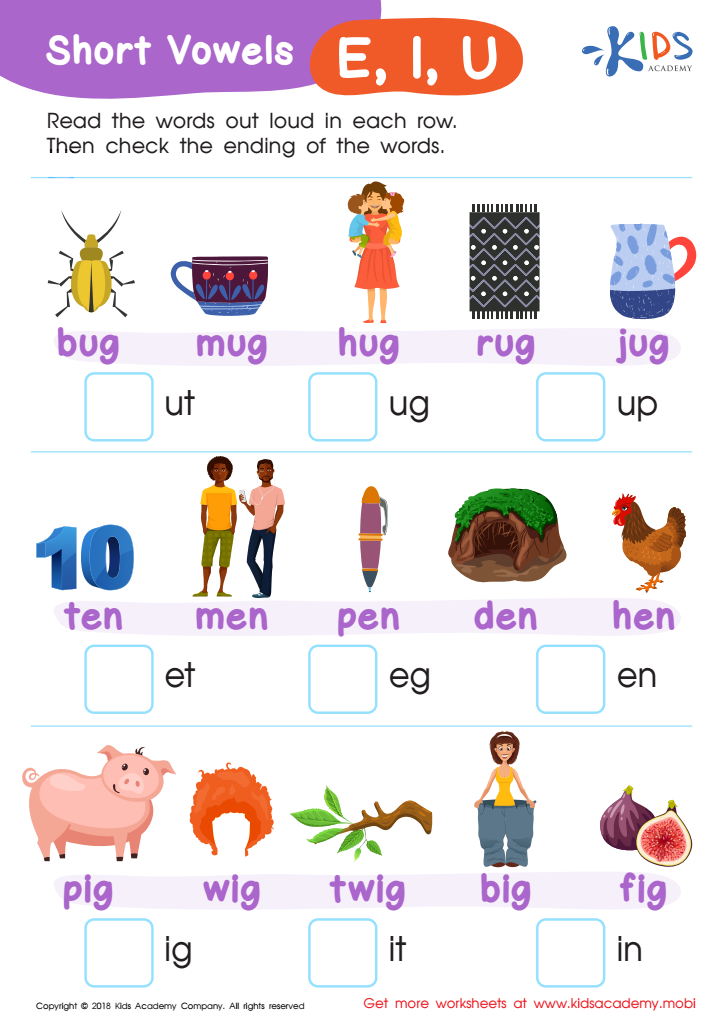
Short Vowels /e/, /i/, and /u/ Worksheet
 Assign to My Students
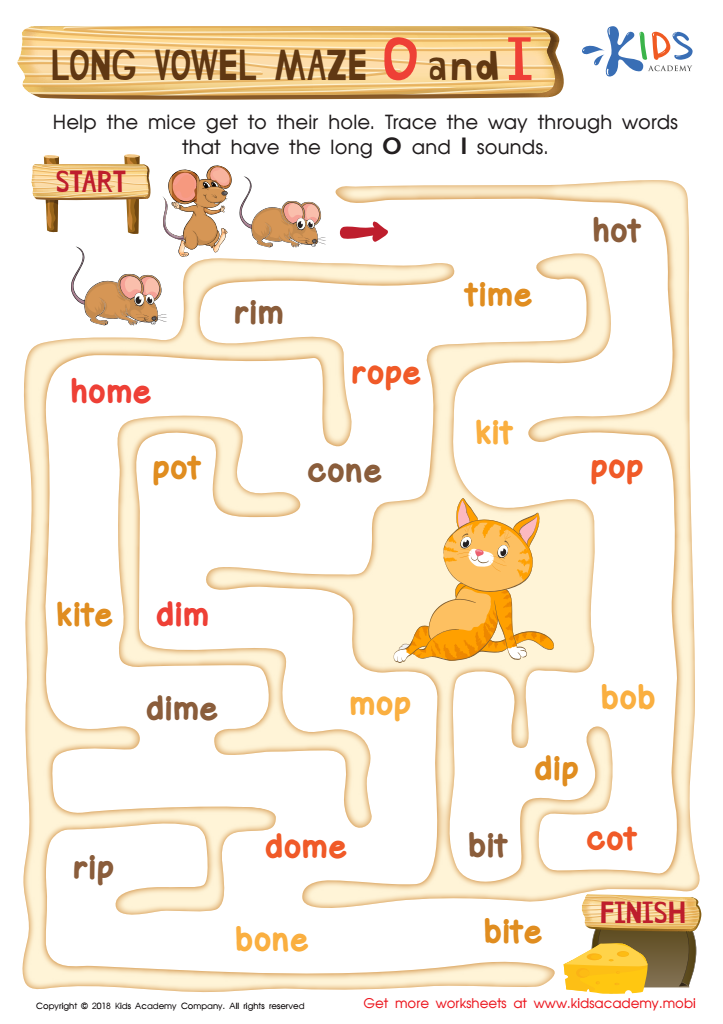
Long Vowel Maze /o/ and /i/ Worksheet
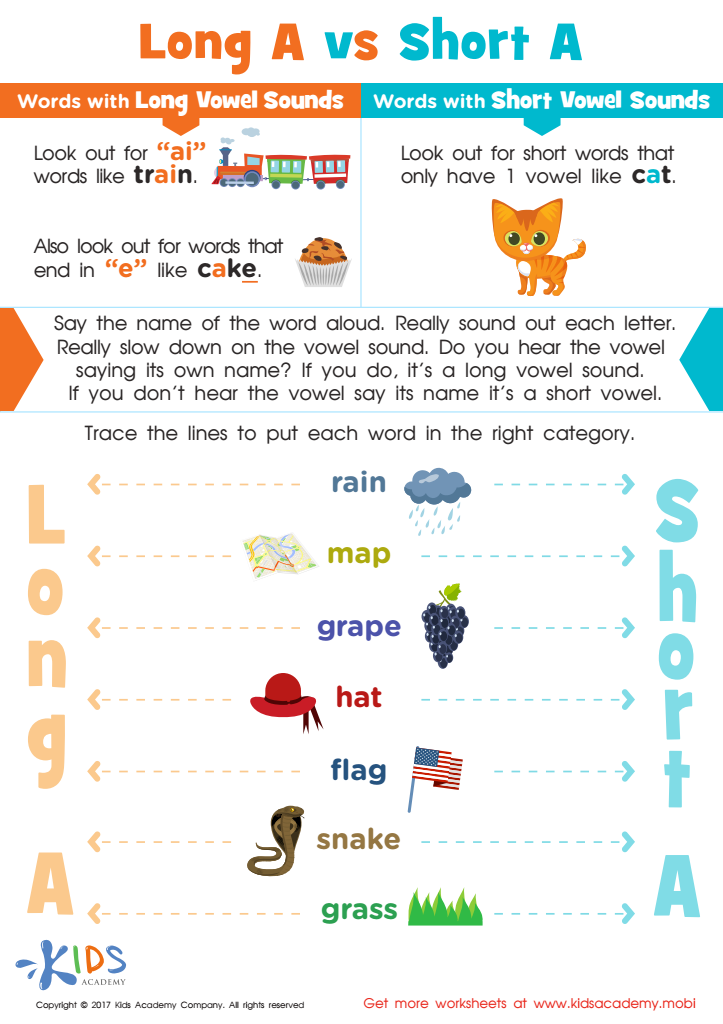
Long and Short Vowel A Spelling Worksheet








Vowel recognition is a foundational skill in early literacy that significantly impacts a child’s reading and writing development. For children aged 3-8, understanding vowels—specifically their sounds and roles within words—is essential for language acquisition. Vowels form the backbone of syllables, and mastering their recognition enables young learners to decode words, spell correctly, and develop a love for reading.
Parents and teachers should prioritize vowel recognition normalization because it lays the groundwork for more complex phonetic awareness. This skill enhances literacy experiences, allowing children to read independently with confidence and engage more meaningfully with texts. Recognizing vowels also aids in the differentiation of sounds, which is crucial for effective communication.
Investing time in vowel recognition not only fosters academic achievement but also encourages a positive attitude toward learning. Children who grasp these concepts early on are less likely to experience reading difficulties later in their education.
Furthermore, incorporating playful and engaging activities that promote vowel recognition can foster a supportive and enriching learning environment, making the process enjoyable. Ultimately, focusing on this essential skill supports children in becoming competent readers and writers, setting the stage for lifelong learning and success.