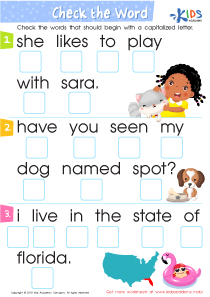
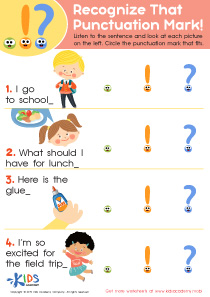
Word identification Normal Grammar Worksheets for Ages 3-8
5 filtered results
-
From - To
Discover our engaging Word Identification Normal Grammar Worksheets, perfect for children aged 3-8. These worksheets are designed to enhance your child's early literacy skills, focusing on recognizing and understanding words within sentences. Through fun and interactive activities, young learners will build a strong foundation in grammar and writing. Our worksheets cater to different learning levels, ensuring each child progresses at their own pace. Improve your child’s word recognition and sentence structure with our expertly crafted resources, helping them excel in their early education. Start their learning journey today with our comprehensive and fun grammar worksheets!
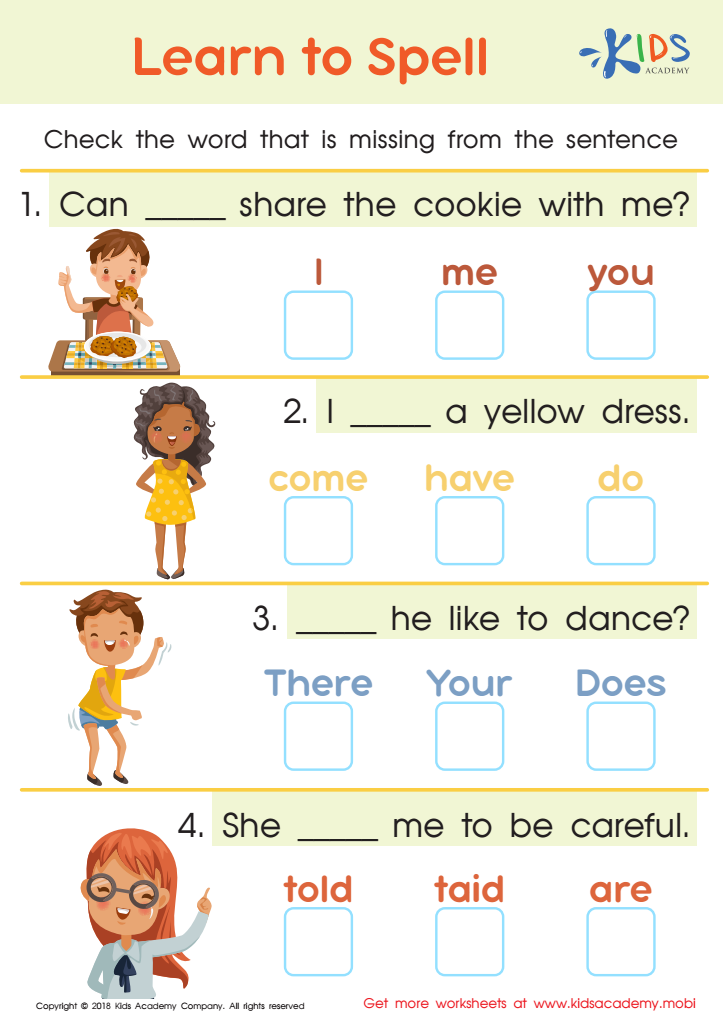
Learn to Spell Worksheet
 Assign to My Students
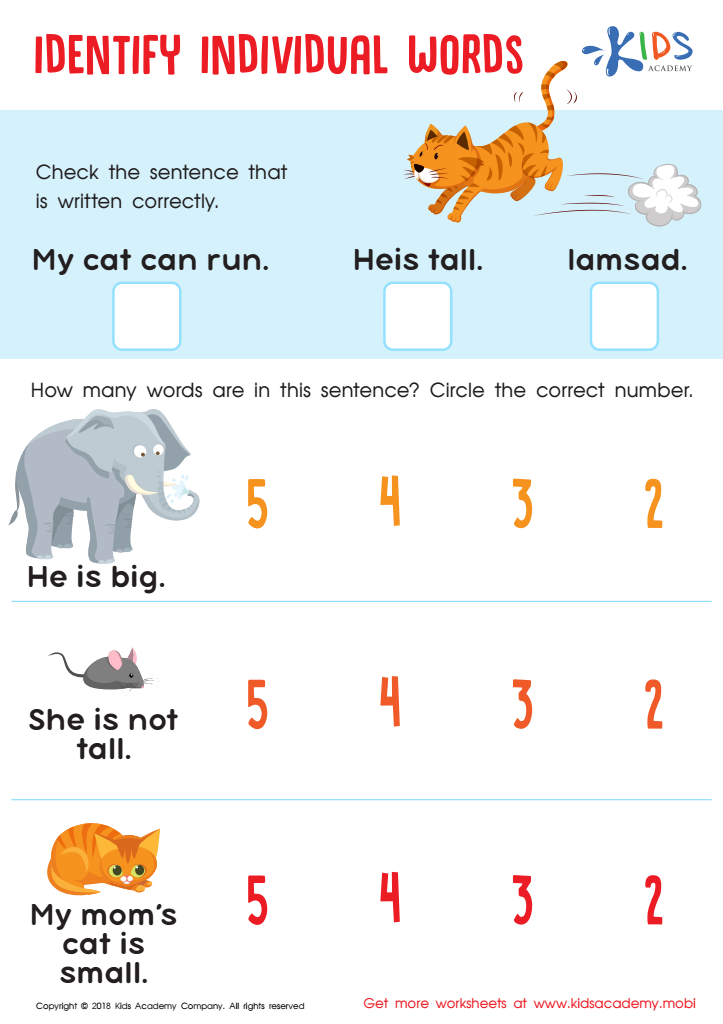
Identify Individual Words Worksheet
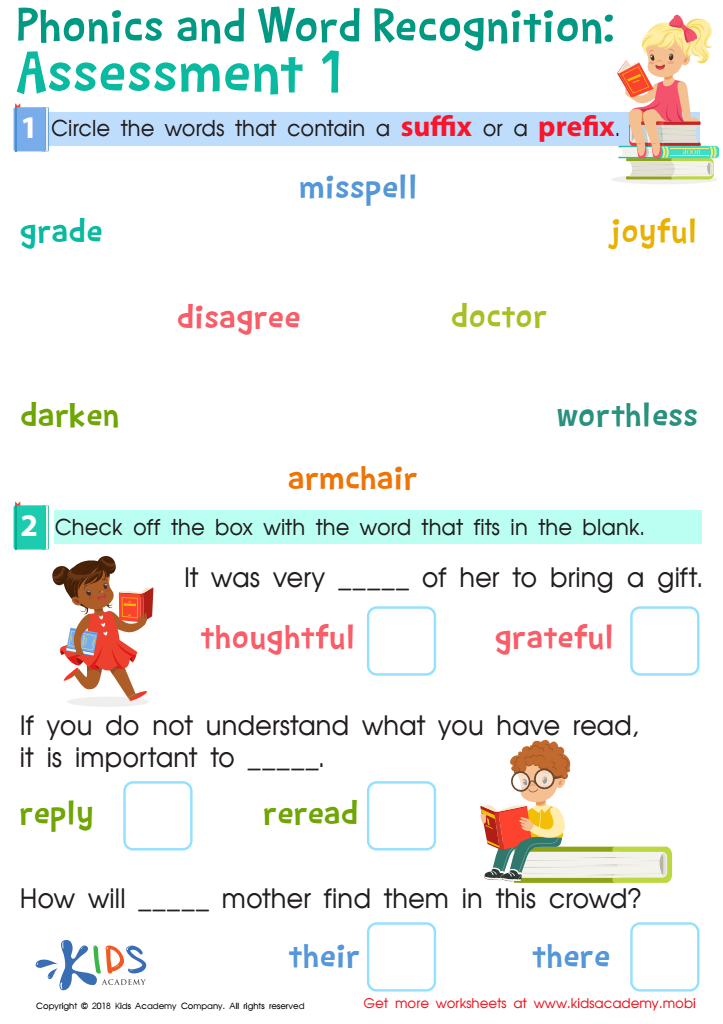
Phonics and Word Recognition: Assessment 1 Worksheet
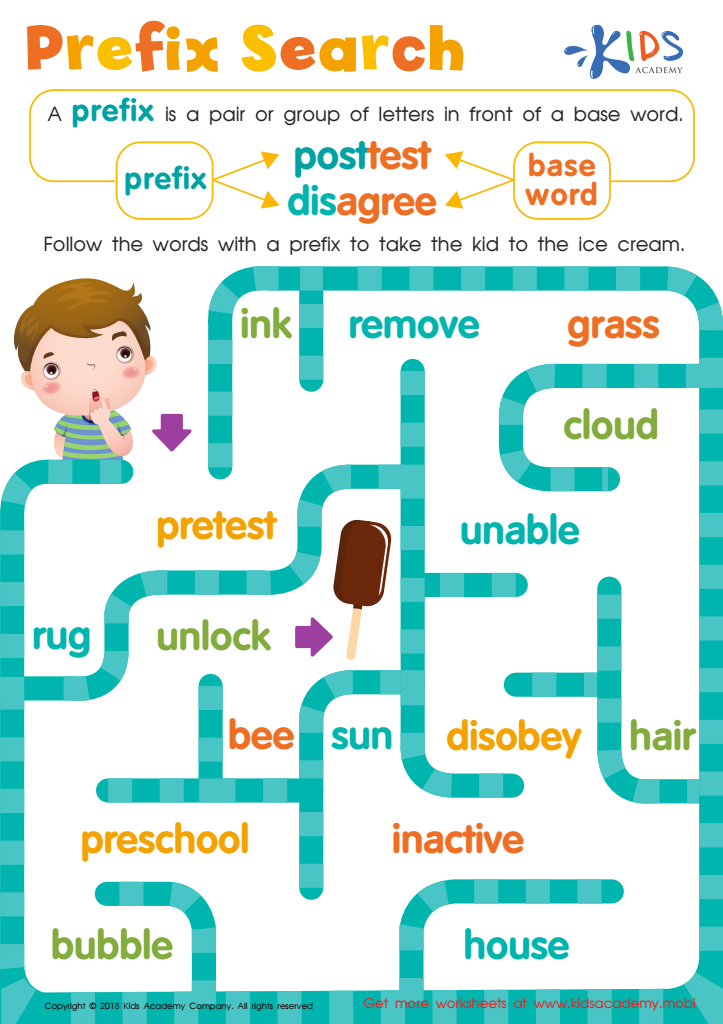
Reading: Prefix Search Worksheet
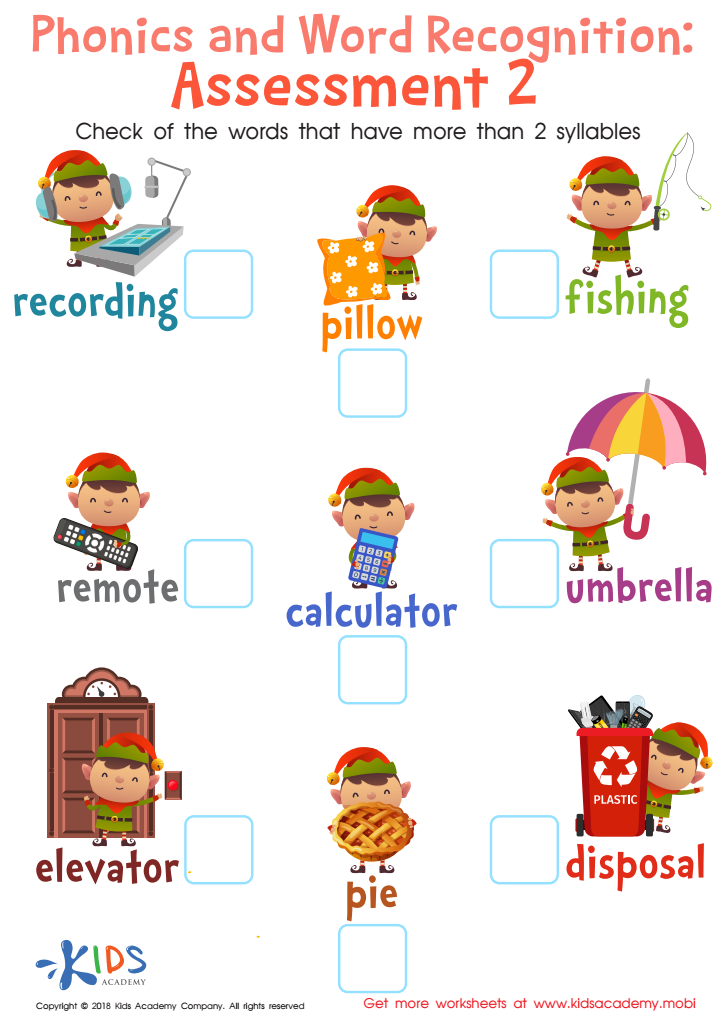
Phonics and Word Recognition: Assessment 2 Worksheet








Parents and teachers should care deeply about word identification and grammar skills for children ages 3-8 because these early years are critical for language development. During this time, the brain is exceptionally adaptable and ready to absorb new information, making it an ideal period for developing foundational literacy skills.
Learning word identification helps children recognize words quickly and accurately, which is vital for reading fluency. When children can identify words effortlessly, they can focus on comprehending the meaning of the text rather than getting stuck on decoding each word. This improves overall reading proficiency, which is essential for academic success.
Normal grammar skills also play a crucial role in effective communication. By understanding and using proper grammar, children can express their thoughts clearly and understand the messages conveyed by others. This not only aids in social interactions but also supports cognitive development by promoting critical thinking and logical reasoning.
Moreover, early literacy skills, including word identification and grammar, are linked to success in other academic areas, such as math and science, as they enable children to follow instructions, understand complex concepts, and solve problems more efficiently.
Fostering these skills during early childhood sets the stage for lifelong learning and opens up opportunities for academic achievement and effective communication throughout a child's life.