Reading Improvement Normal Writing Worksheets for Ages 3-8
4 filtered results
-
From - To
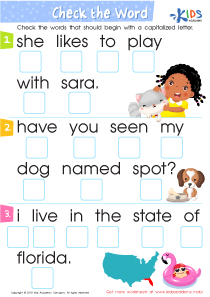
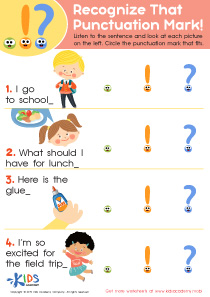
Unlock your child’s reading potential with our "Reading Improvement Normal Writing Worksheets for Ages 3-8." Tailored to foster a love for reading, our worksheets blend fun and education, enhancing vocabulary and comprehension skills. Engaging activities include tracing, matching, and fill-in-the-blank exercises that make learning enjoyable. Specially designed by education experts, each worksheet strengthens fine motor skills and boosts confidence. Perfect for at-home practice or classroom use, these resources offer a structured pathway to reading mastery for young learners. Start your child’s reading journey today and watch them thrive with our expertly crafted learning tools!
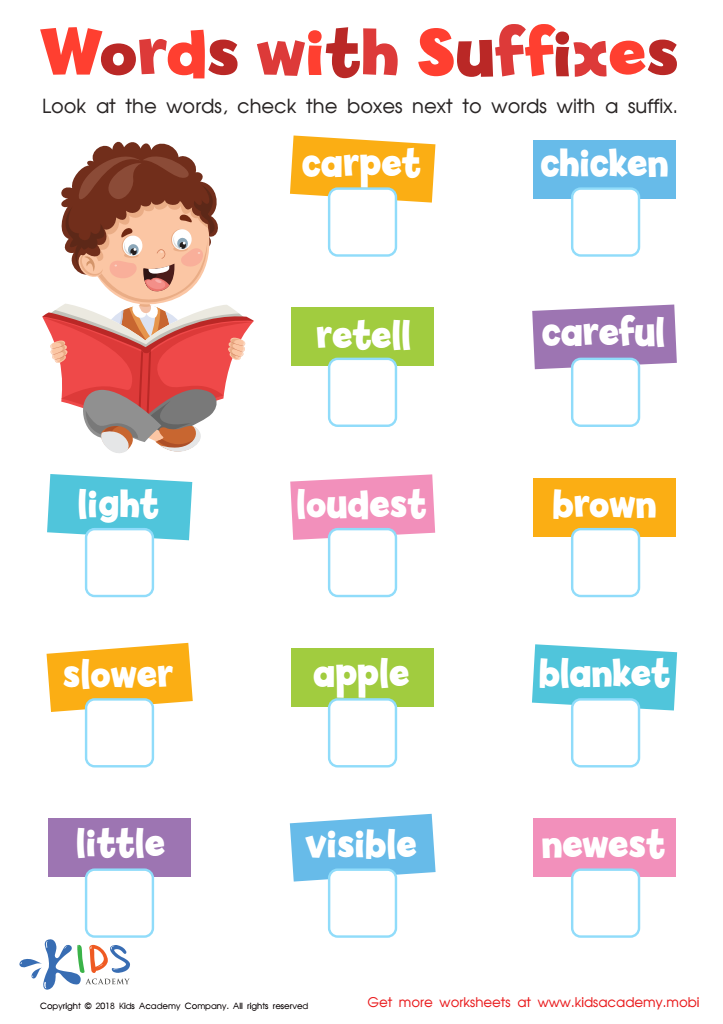
Reading: Words With Suffixes Worksheet
 Assign to My Students
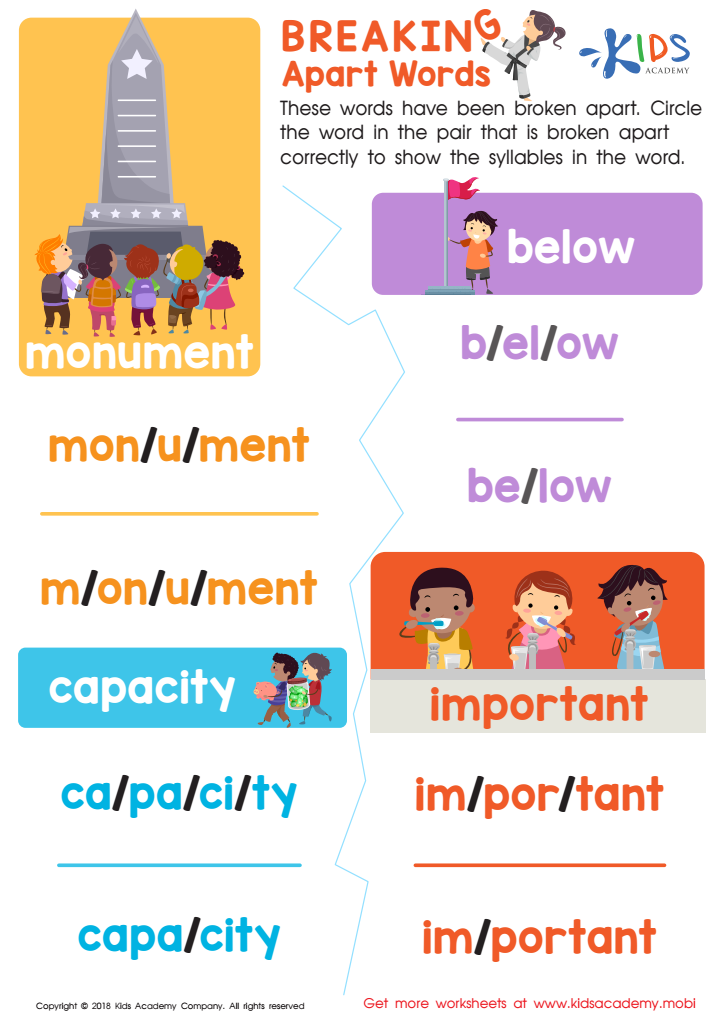
Breaking Apart Words Worksheet
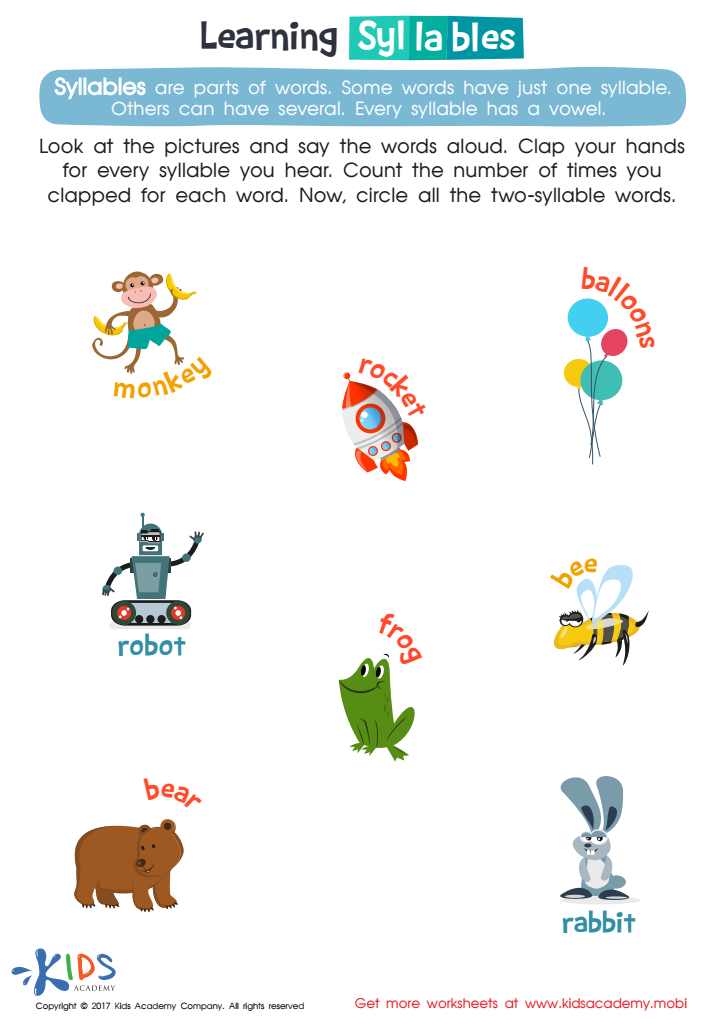
Learning Syllables Word Structure Worksheet
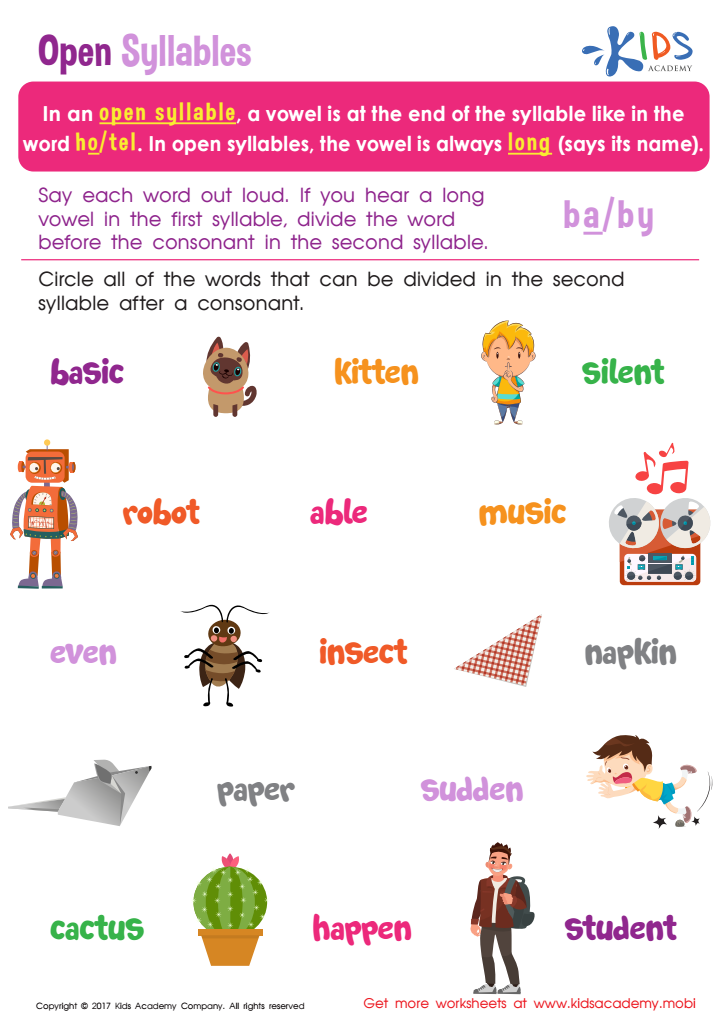
Open Syllable Printable Worksheet







Parents and teachers play a critical role in the early literacy development of children ages 3-8, making reading improvement crucial at this stage. Proficiency in reading serves as the foundation for future learning and academic success. During these formative years, children's brains are exceptionally receptive to language acquisition and literacy skills, so fostering a love for reading early can have long-term benefits.
Improved reading skills enhance vocabulary, comprehension, and critical thinking, essential not only for academic achievement but also for effective communication and social interaction. Children who develop strong reading habits early are more likely to perform well in other subjects, as reading is integral to understanding instructions, problem-solving, and following narratives in subjects like history and science.
Additionally, reading together strengthens the bond between parents, teachers, and children. It provides opportunities for positive and enriching interactions, helping children feel supported and encouraged. Storytime can become a cherished routine that instills a lifelong love of learning and exploration.
Furthermore, early reading skills can identify and address potential learning challenges, allowing for timely interventions. By prioritizing reading improvement, parents and teachers not only contribute to a child's academic success but also to their overall cognitive and emotional development, creating a solid foundation for lifelong learning and well-being.