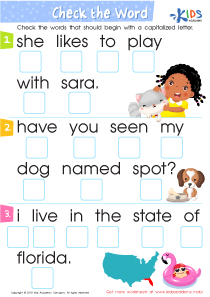
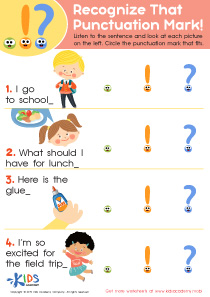
Understanding adjectives Normal Writing Worksheets for Ages 3-8
3 filtered results
-
From - To
Discover the joy of learning with our "Understanding Adjectives Normal Writing Worksheets" designed for children ages 3-8. These engaging worksheets make it easy for young learners to grasp the concept of adjectives, enhancing their descriptive language skills. Each activity is crafted to stimulate creativity and imagination while helping children describe people, places, and things with greater detail. Designed to be fun and interactive, our worksheets include vibrant illustrations and straightforward instructions, making them perfect for classroom or home use. Foster your child's love for language and boost their writing confidence with these essential tools tailored for early learners!
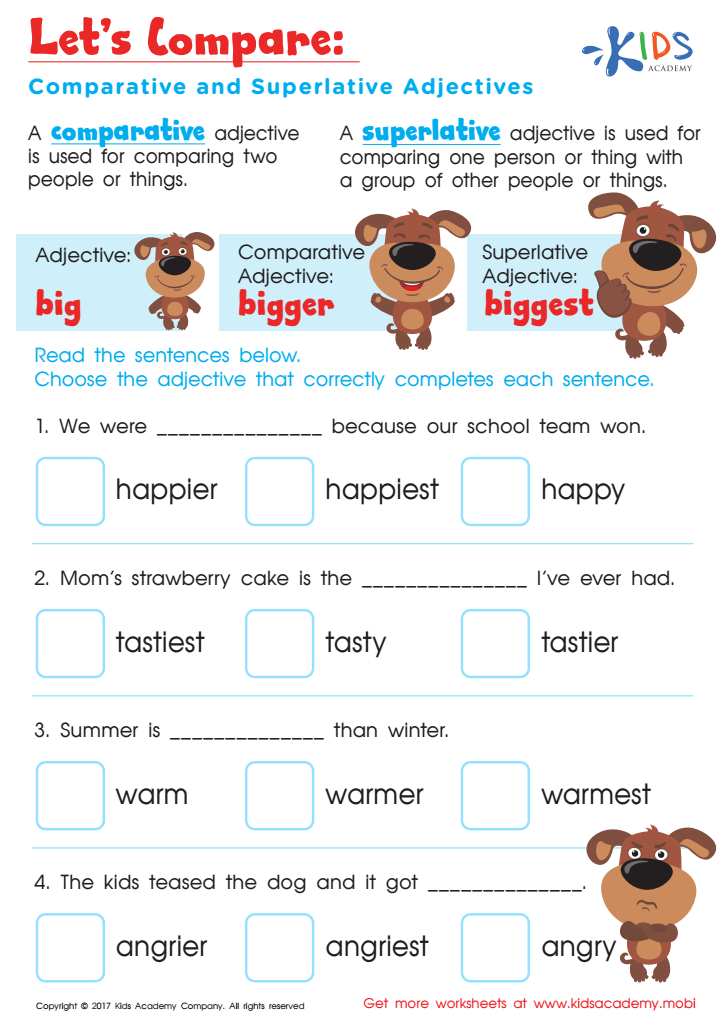
Comparative and Superlative Worksheet
 Assign to My Students
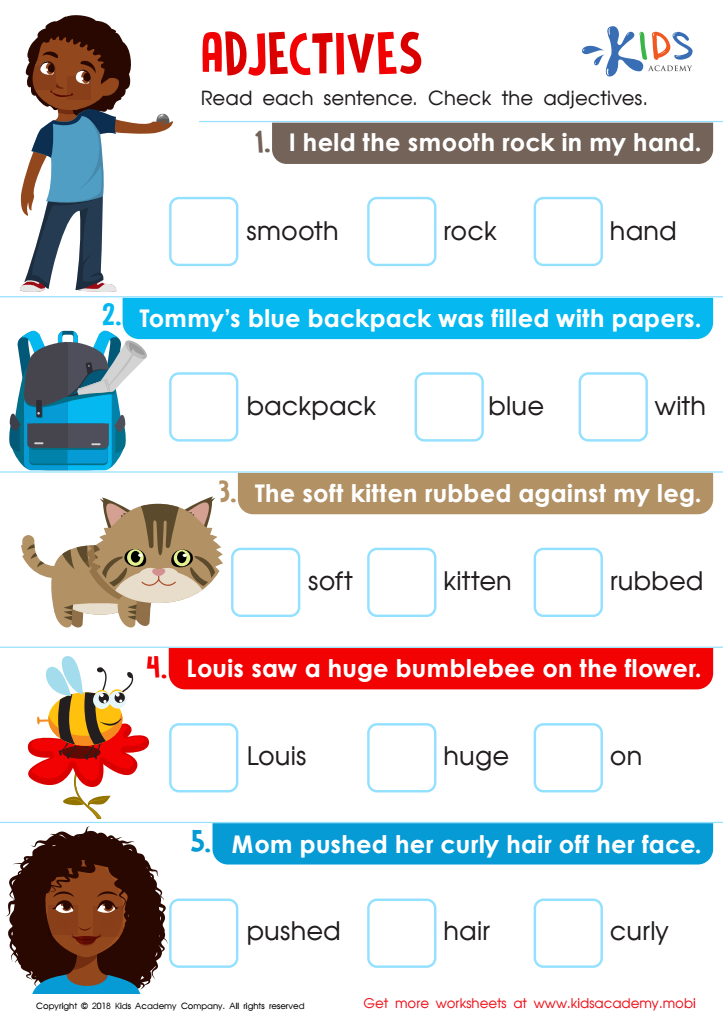
Adjectives Worksheet
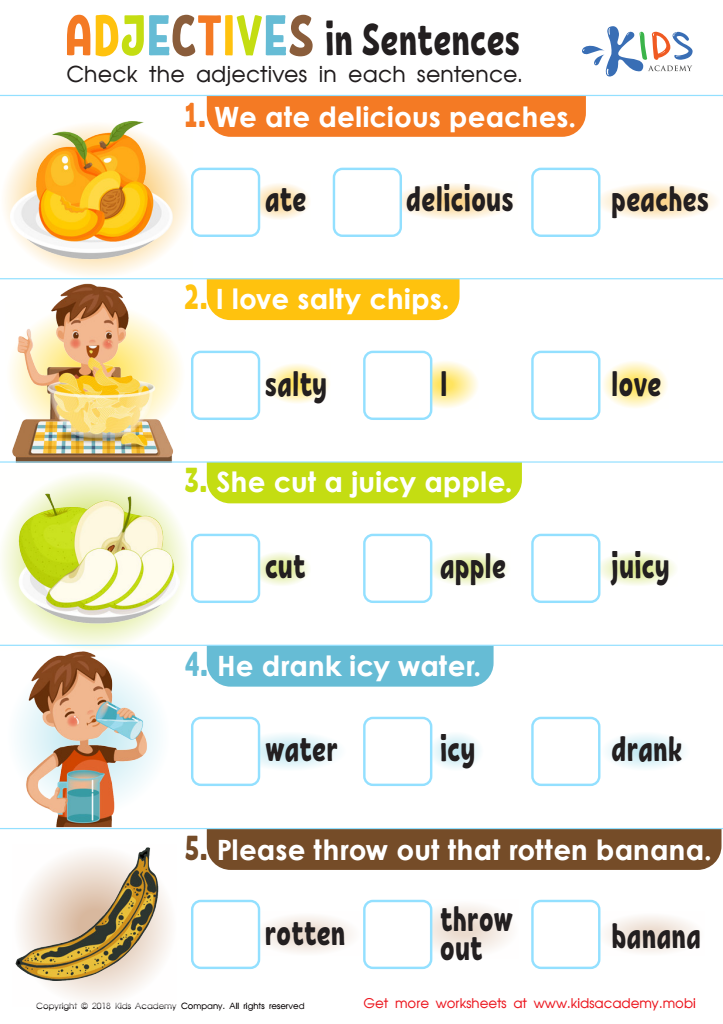
Adjectives in Sentences Worksheet







Understanding adjectives is crucial for young learners, as they form a foundation for effective communication and literacy. For parents and teachers of ages 3-8, nurturing this understanding fosters linguistic growth critical for their overall development. Adjectives add depth to language, helping children describe and express their thoughts more vividly. When kids learn how to use adjectives, they enhance their storytelling abilities and become more engaged readers and writers.
Through using adjectives, children begin to categorize and relate experiences, making their descriptions richer and more engaging. This language skill enhances cognitive development by encouraging critical thinking as they compare and contrast different objects, people, or emotions. Therefore, encouraging familiarity with adjectives allows children to express their personalities and feelings accurately, helping them navigate social interactions.
Additionally, a solid grasp of adjectives aids academic success. As reading comprehension becomes more important in later grades, children who understand descriptive language are better prepared to interpret texts and themes. Importantly, parental and teacher involvement can create an engaging environment—whether through playful conversations, storytelling, or activities that highlight adjectives—ensuring children thrive in their language journey. Investing time to teach adjectives enriches both communication skills and creativity, fostering well-rounded future learners.