Filters

7 filtered results

Clear all filters
Favorites
With answer key
Interactive

7 filtered results

Difficulty Level

Grade


Enhance your child's vocabulary with our engaging Normal Writing Worksheets, designed specifically for ages 3-8. These worksheets provide a fun and interactive way for young learners to develop essential language skills. Through captivating visuals and stimulating exercises, children will expand their vocabulary, boost their confidence, and improve their writing abilities. Each worksheet is crafted to cater to various learning levels, making them suitable for classrooms or at-home practice. With a focus on creativity and comprehension, our vocabulary development resources foster a love for language in children. Start your child's language journey today with our user-friendly worksheets!

Check out this FREE Trial Lesson on Writing for age 3-8!

Prefixes un-, pre-

Favorites
With answer key
Interactive
  • 3-8
  • Vocabulary development
  • Writing
  • Normal
Words with Un– Worksheet

Words with Un– Worksheet

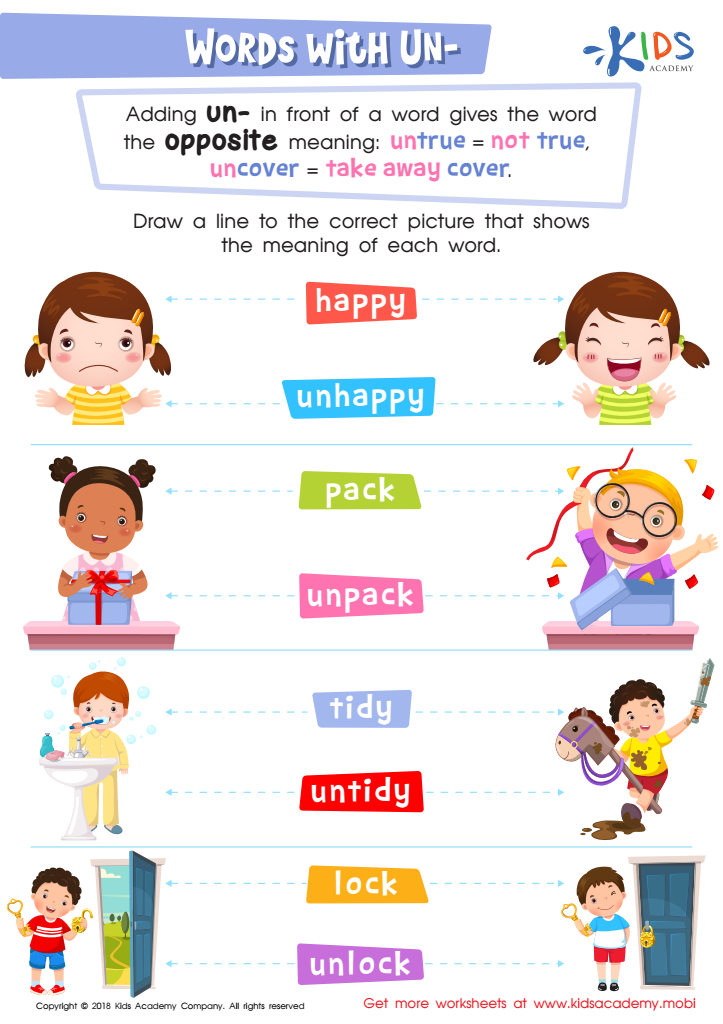
Prefixes can change the meaning of words. Adding "Un-" can give the opposite meaning, like Un-true, Un-happy, and Un-finish. Help your child learn with this worksheet. Draw a line to the picture that shows each word's meaning.
Words with Un– Worksheet
Worksheet
Handwriting PDF Worksheets | Tracing Color Words | Yellow

Yellow Tracing Color Words Worksheet

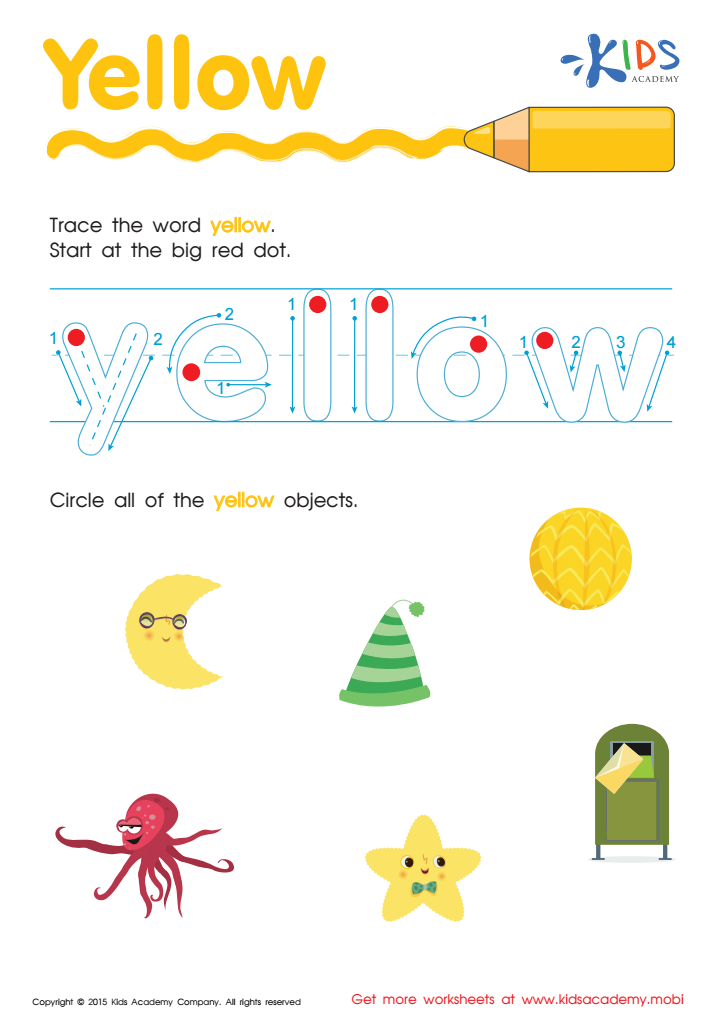
Tracing is a great way to start learning handwriting! Our printable worksheet helps your kindergartener practice and master the basics. They'll trace lines and fill in the word "yellow" with bright colors, sure to captivate and inspire them for more practice. Check out here for more tracing of color words.
Yellow Tracing Color Words Worksheet
Worksheet
Phonics and Word Recognition: Assessment 3 Worksheet

Phonics and Word Recognition: Assessment 3 Worksheet

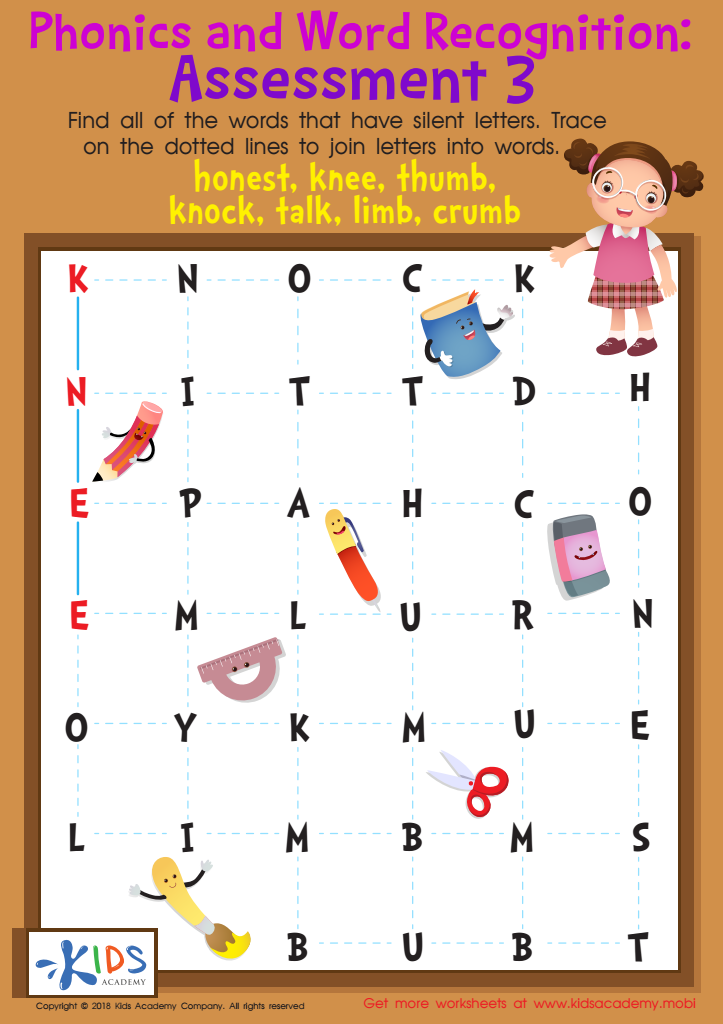
Silent letters can be tricky for kids learning to read and write. Show them how they work with words like 'knee' and 'dumb'. Then, challenge them to come up with their own. Give them a worksheet with silent letters and trace the lines to join the letters into words.
Phonics and Word Recognition: Assessment 3 Worksheet
Worksheet
Sight Words with Blends Worksheet

Sight Words with Blends Worksheet

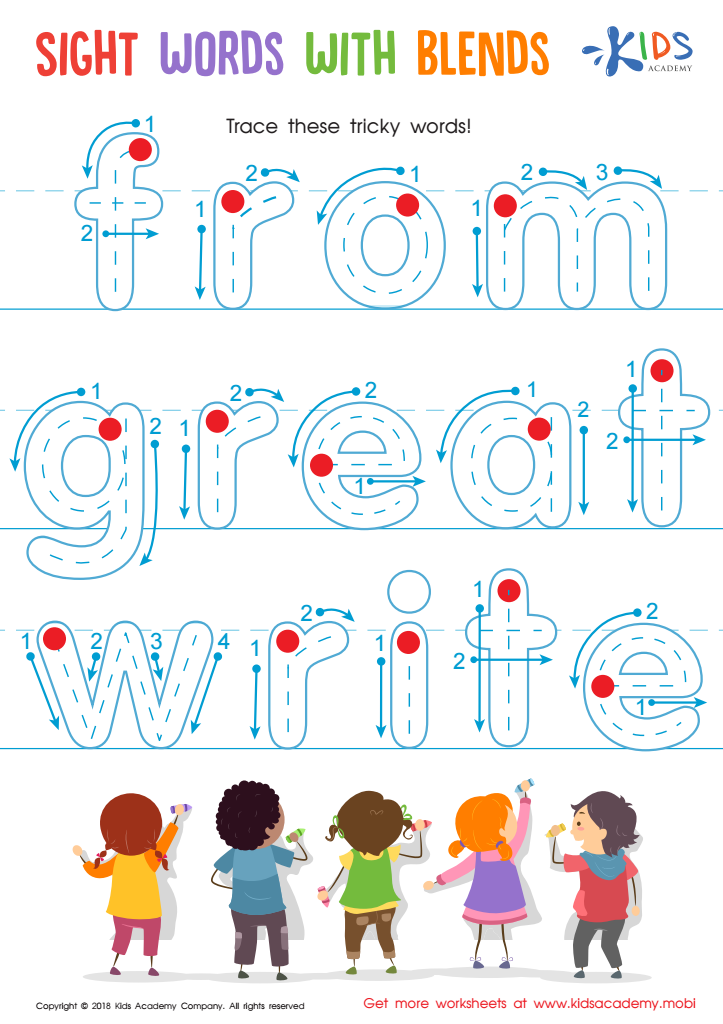
This free PDF lets your children trace and write sight words with tricky blends. The guide numbers help them start from the top, building fine motor skills and enhancing sight word vocab. It's a great way to give your kids a solid foundation for reading!
Sight Words with Blends Worksheet
Worksheet
Reading: Break Them Apart Worksheet

Reading: Break Them Apart Worksheet

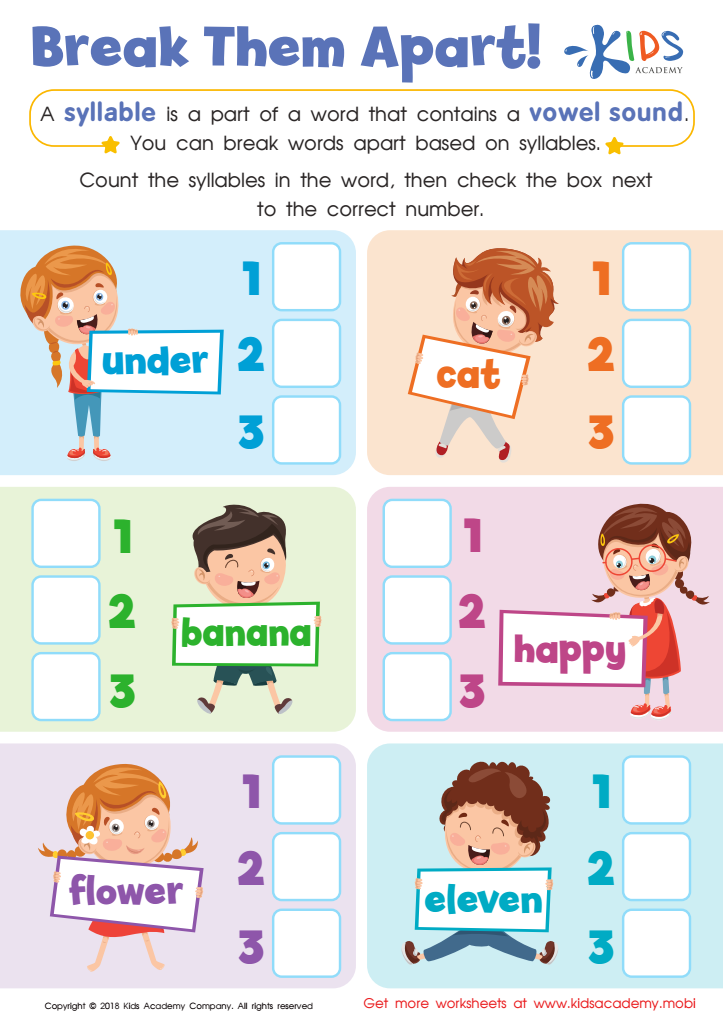
See if students understand syllables with this fun worksheet. It teaches them that a syllable is a word part with a vowel sound. Kids read each word and choose how many parts it has. Doing this often helps them decode new words and gain confidence.
Reading: Break Them Apart Worksheet
Worksheet
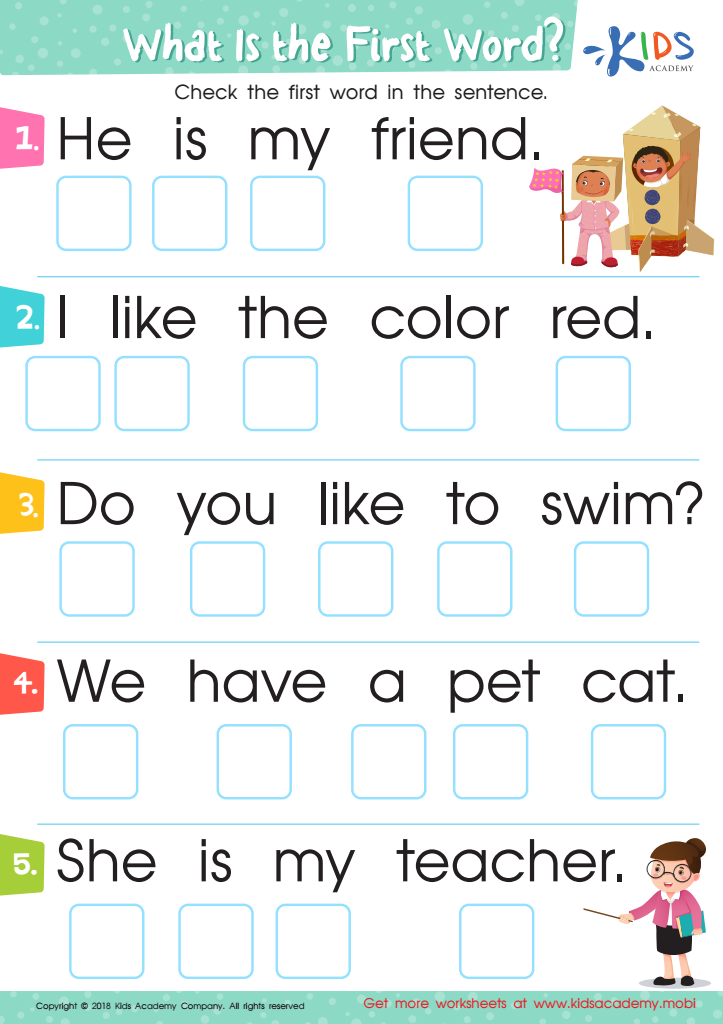
What is the First Word? Worksheet

What is the First Word? Worksheet

Help your students test their sentence-reading skills with this printout! After teaching the alphabet, have them identify and write the first word in each sentence. With this exercise, they'll gain reading proficiency and be better prepared to write their own sentences.
What is the First Word? Worksheet
Worksheet
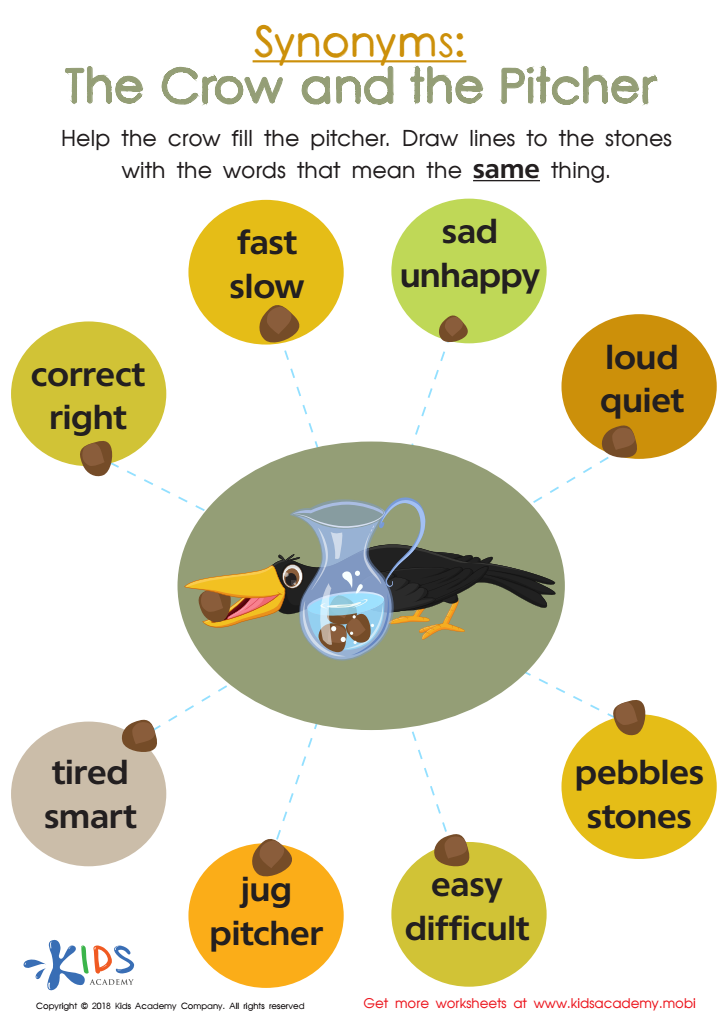
The Crow and the Pitcher Synonyms Worksheet


The Crow and the Pitcher Synonyms Worksheet

Give your child the building blocks for effective communication with an ELA lesson! Help the crow in this Kids Academy worksheet find the correct stones to fill the pitcher - only those next to synonym pairs! This is a fun way for kids to learn and expand their vocabulary and language skills.
The Crow and the Pitcher Synonyms Worksheet
Worksheet


Vocabulary development is a crucial aspect of a child's language acquisition, especially for ages 3-8. During these formative years, children experience rapid brain growth, and their capacity to learn language is at its peak. A robust vocabulary not only enables effective communication but also lays the groundwork for literacy skills, reading comprehension, and overall academic success.

Parents and teachers should prioritize vocabulary development as it directly influences a child's self-expression, social interactions, and confidence in various settings. A rich vocabulary allows children to articulate their thoughts and feelings clearly, fostering better relationships with peers and adults. Moreover, vocabulary exposure at this age can enhance cognitive skills, encouraging critical thinking and creativity.

Research highlights that children with well-developed vocabularies enter school with a significant advantage, demonstrating improved reading abilities and academic performance. Reading aloud, engaging in conversations, and providing varied experiences can enrich vocabulary acquisition.

By nurturing vocabulary development, parents and teachers can empower children with essential tools for learning and life, preparing them for future challenges and opportunities, both academically and socially. Thus, investing time and effort in vocabulary growth during these early years is invaluable for a child’s overall development.