
Alphabet understanding Normal Alphabet Worksheets for Ages 3-9
7 filtered results
Difficulty Level
Grade
Age
-
From - To
Subject
Activity
Standards
Welcome to our Alphabet Understanding Normal Alphabet Worksheets, designed for children aged 3-9! These engaging worksheets support young learners in mastering the fundamentals of the alphabet. With a variety of fun activities, your child will enhance letter recognition, improve their fine motor skills, and develop early literacy abilities. Our thoughtfully created resources facilitate interactive learning experiences that cater to different learning styles. From letter tracing to matching games, each worksheet is crafted to inspire creativity while reinforcing essential skills. Explore our collection today to help your child build a strong foundation in reading and writing!
Favorites
With answer key
Interactive
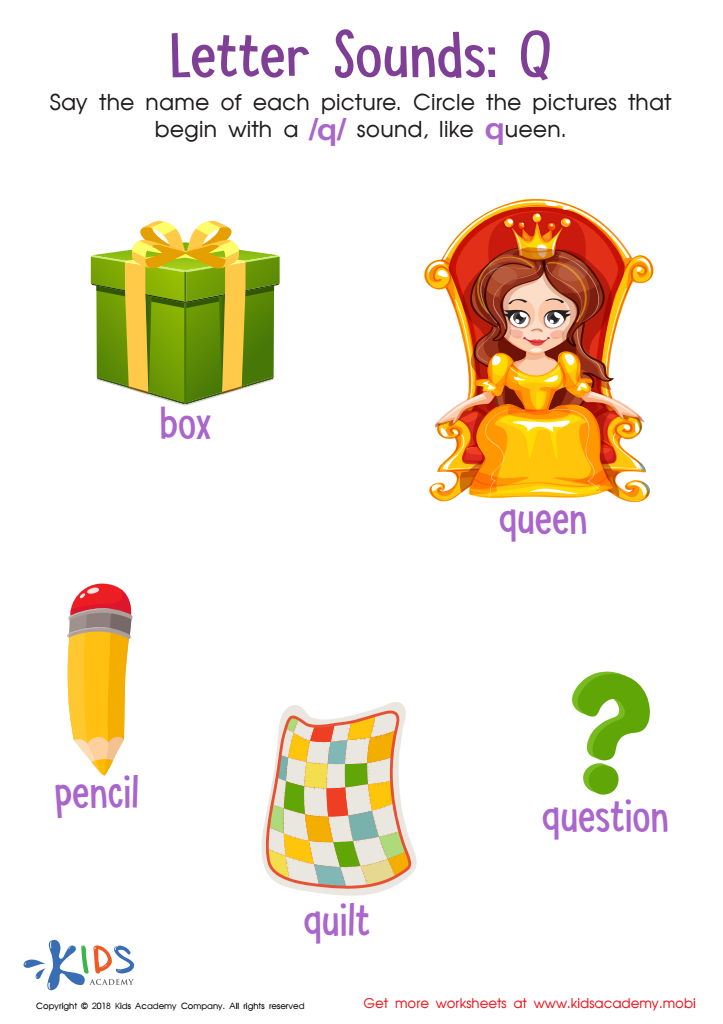
Letter Q Sounds Worksheet
Kids can get confused between "K" and "Q" sounds. Help them learn with this phonics worksheet. They'll name each image and read the word underneath. Point out that words with "Q" also have a "U" which affects how it sounds. Have them circle the matching pictures and watch as they learn this unique letter sound.
 Assign to My Students
Letter Q Sounds Worksheet
Worksheet
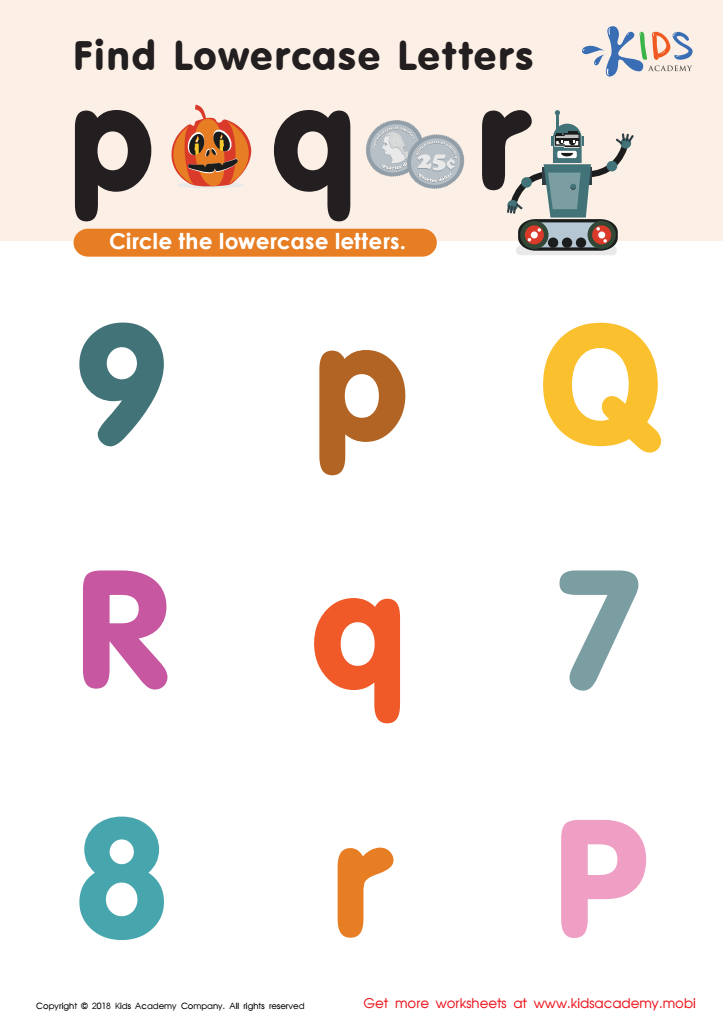
Find lowercase Letters p q r Worksheet
Help your child spot the lowercase letters among the numbers and uppercase letters in this worksheet. It's a great way to teach them to identify and write the lowercase and uppercase letters. Assist them in completing the exercise to give them a better understanding of the alphabets.
Find lowercase Letters p q r Worksheet
Worksheet
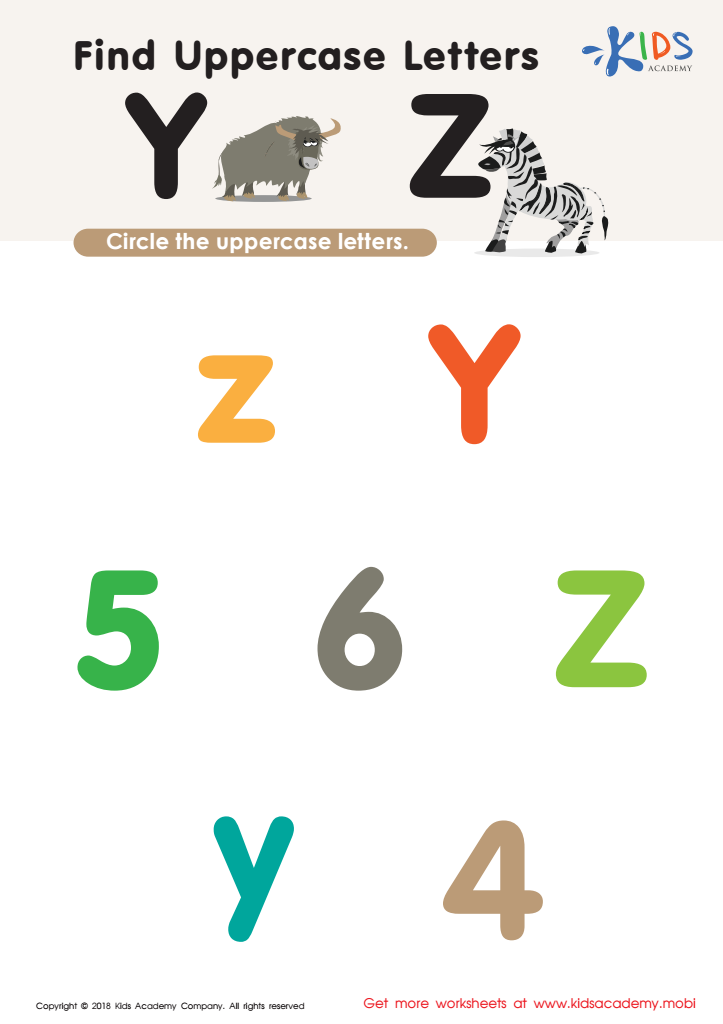
Find Uppercase Letters Y Z Worksheet
Download the worksheet! Help your youngster to learn the alphabet and distinguish uppercase from lowercase letters by having them circle the uppercase ones. It's an important first step towards reading and writing success!
Find Uppercase Letters Y Z Worksheet
Worksheet
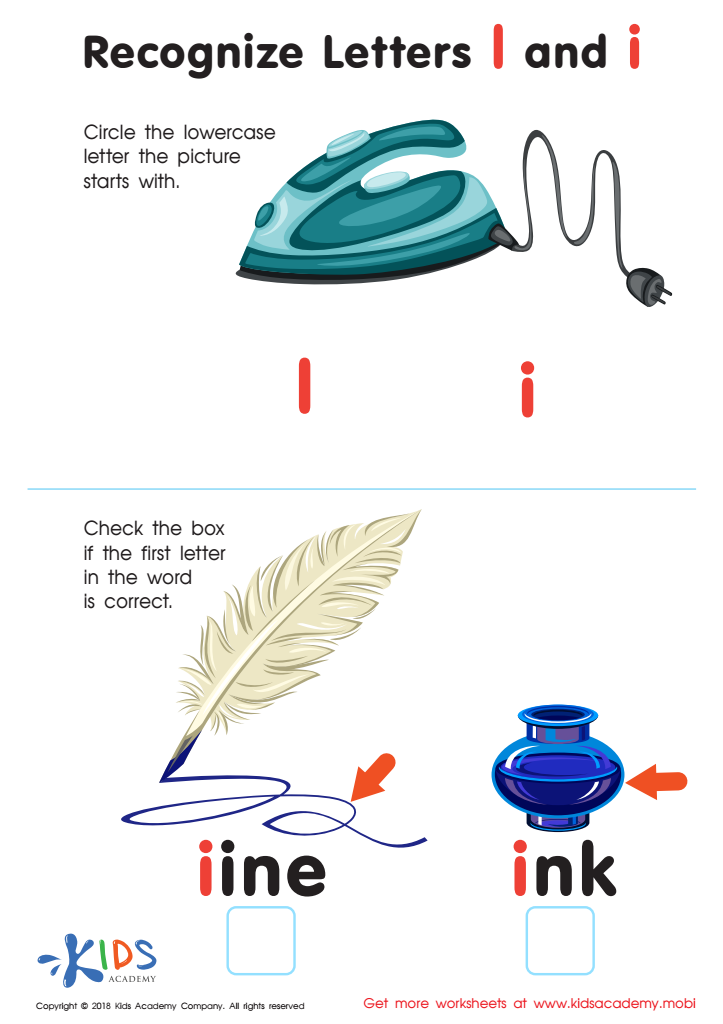
Recognize Letters l and i Worksheet
Help your child become familiar with uppercase and lowercase letters. Have them look at the pictures in the worksheet and circle the lowercase letter the picture starts with. For example: which one is the lowercase "i", the capital "I" or the small "i"?
Recognize Letters l and i Worksheet
Worksheet
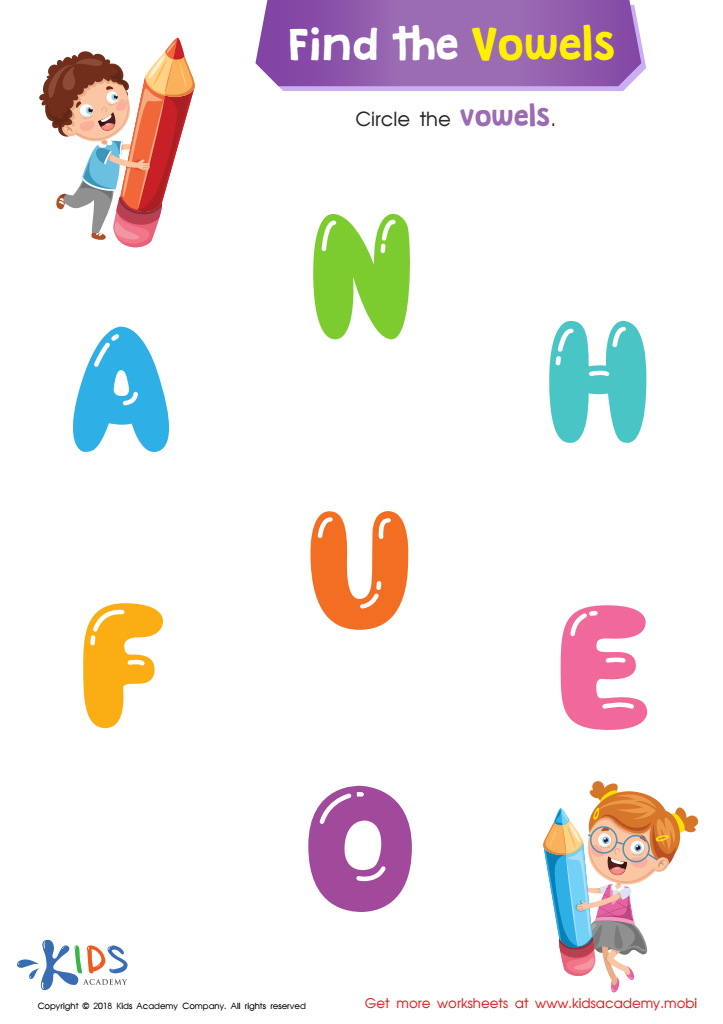
Find the Vowels Reading Worksheet
This worksheet helps kids identify vowels with bright colors and engaging activities to strengthen their visual discrimination and fine motor skills. Young learners will find it easy to succeed and be excited to keep reading!
Find the Vowels Reading Worksheet
Worksheet
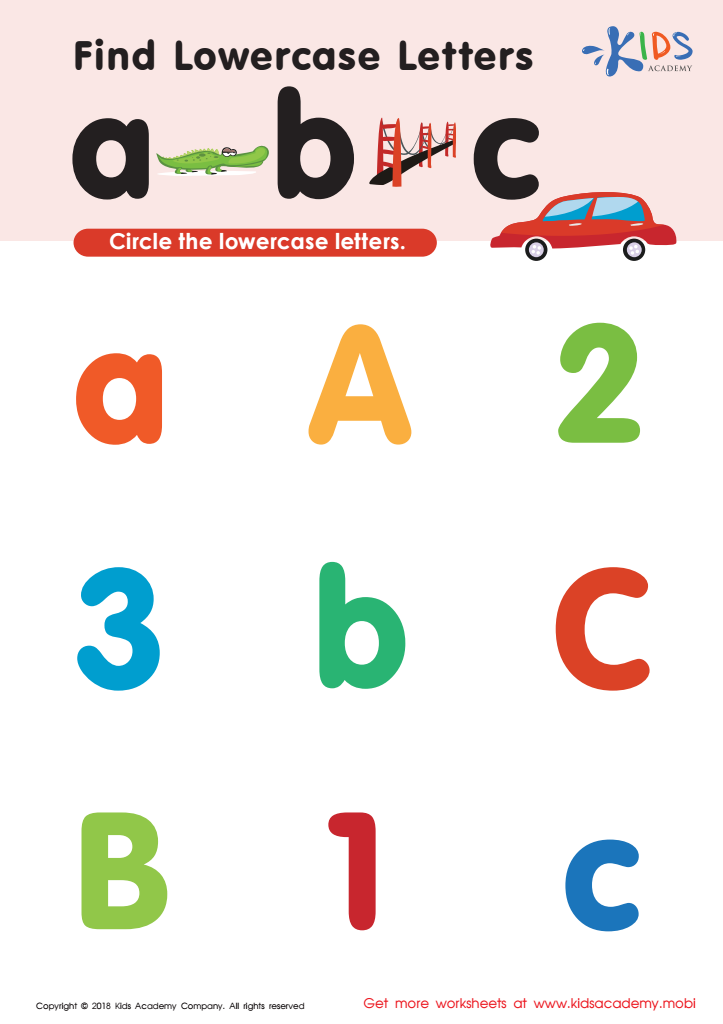
Find lowercase letters a b c Worksheet
Help your child identify lowercase letters with this worksheet. Carefully look at each letter and have your child circle the lowercase ones. This exercise is vital in helping them understand the alphabet and the difference between lower and uppercase letters.
Find lowercase letters a b c Worksheet
Worksheet
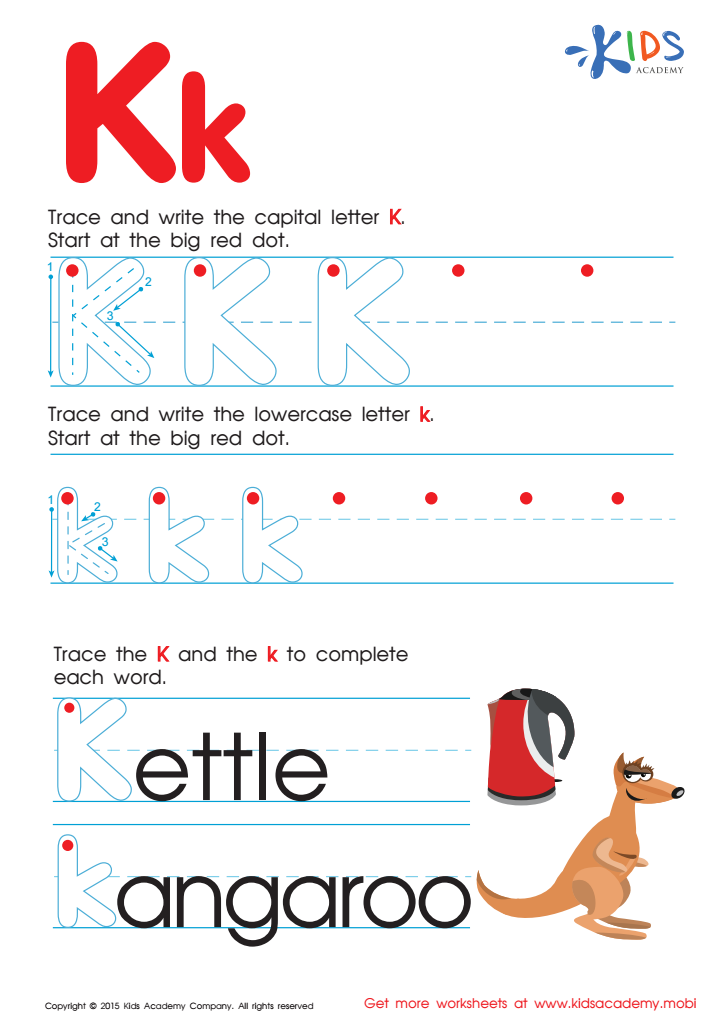
Letter K Tracing Page
Trace and write the letter K; start at the big red dot. Use it to complete words like "Kettle" and "Kangaroo". Visit Kids Academy for more free alphabet worksheets for kindergarten.
Letter K Tracing Page
Worksheet
Join Kids Academy for Free
Who is primarily going to use this learning content?







Understanding the alphabet is a crucial foundational skill for children aged 3-9, a period when they embark on their literacy journey. For parents and teachers, fostering alphabet understanding is important because it lays the groundwork for reading and writing, two essential skills for academic success. Recognizing letters and their corresponding sounds helps children decipher words, enhancing their comprehension and vocabulary.
At this young age, children are highly curious and responsive to learning through play and engaging activities, making it an ideal time to introduce alphabet concepts. When parents participate in this learning process by reading aloud, singing the alphabet song, or using letter games, they create an enriching environment that reinforces language development.
Additionally, strong alphabet skills boost children's confidence and eagerness to learn, paving the way for positive attitudes toward schooling. For teachers, reinforcing alphabet understanding in their curriculum is vital for meeting educational standards and ensuring students are well-prepared for more complex literacy tasks in the future.
Overall, prioritizing alphabet comprehension impacts not just academic performance but also fosters a lifetime love for reading, supporting overall personal and cognitive development.







