Sound-letter association Normal Alphabet Worksheets for Ages 3-9
3 filtered results
-
From - To
Unlock the power of literacy with our Sound-Letter Association Normal Alphabet Worksheets for ages 3-9! Designed to enhance reading skills, these printable worksheets engage young learners through fun activities focused on matching sounds to letters. As children explore various words and images, they build essential phonemic awareness, setting a strong foundation for reading and writing. Each worksheet encourages interactive learning, helping kids to recognize letters and associate them with their corresponding sounds in a playful and enjoyable way. Ideal for at-home practice or in the classroom, our resources inspire a lifelong love of learning. Dive into the world of letters today!
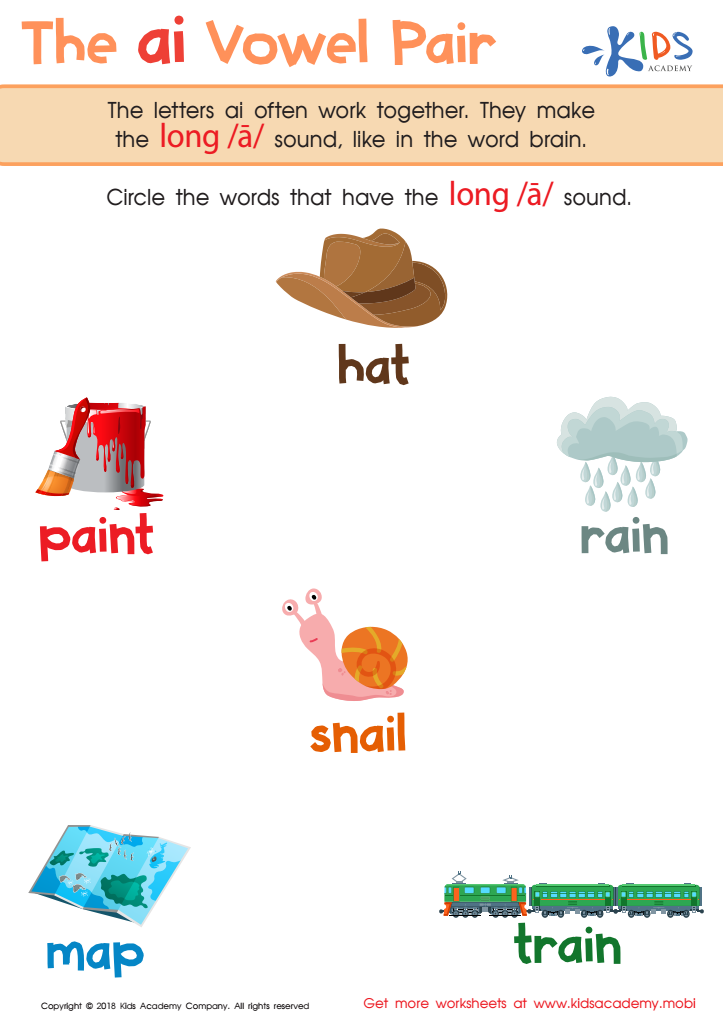
The AI Vowel Pair Worksheet
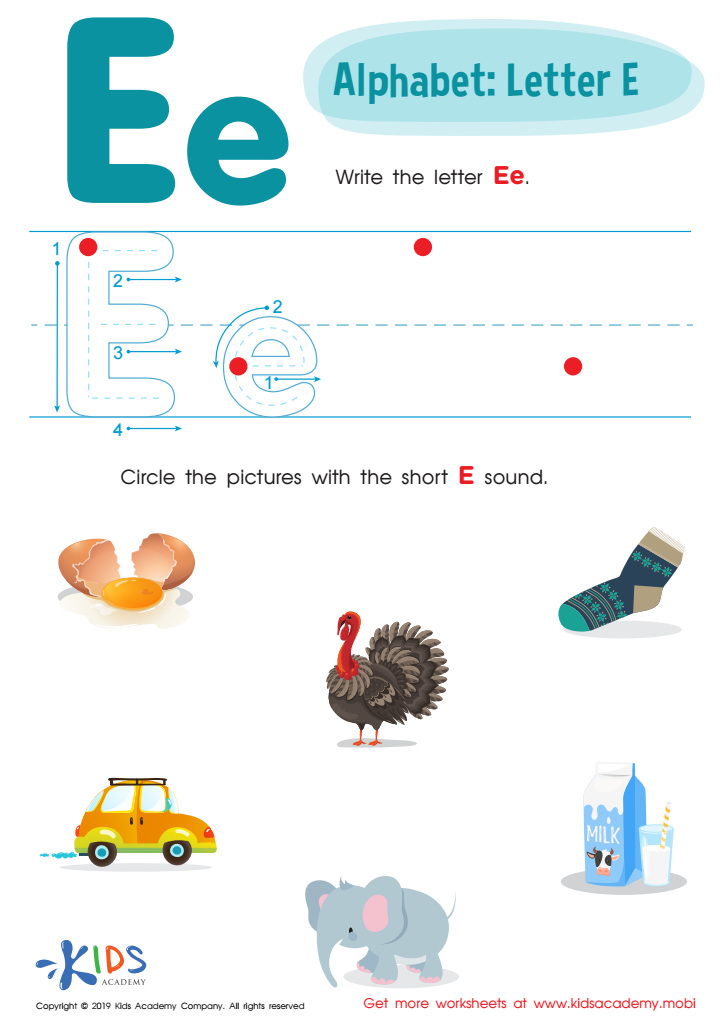
Letter E Tracing Worksheet
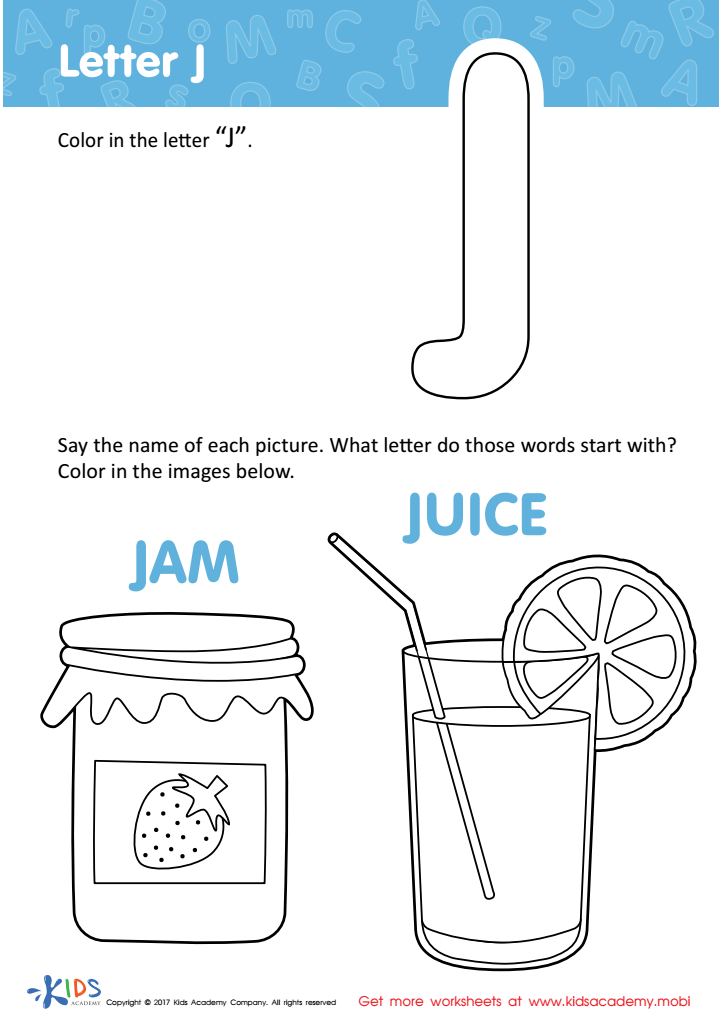
Letter J Coloring Sheet
 Assign to My Students






.jpg)

Sound-letter association, often referred to as phonics, is critical for early literacy development in children ages 3-9. During these formative years, children are developing the foundational skills necessary for reading and writing. Understanding the relationship between sounds and their corresponding letters helps children decode words, which is essential for reading fluency. When parents and teachers emphasize sound-letter associations, they provide children with the tools to sound out unfamiliar words, enhancing their confidence and independence in reading.
Moreover, early mastery of phonics contributes significantly to vocabulary growth and comprehension skills. Children who grasp sound-letter associations tend to develop stronger spelling abilities, meaning they can express themselves effectively in writing. As reading opens doors to new knowledge and experiences, fostering these skills in children equips them for academic success across all subjects.
Additionally, researchers note that early intervention in teaching sound-letter associations can mitigate issues related to reading difficulties later in life. Thus, both parents and teachers play a crucial role in nurturing these abilities, ensuring that children have positive experiences with literacy and encouraging a lifelong love of reading. Supporting children's understanding of sound-letter associations is not just about academics; it's about empowering them for future success.







