Understanding syllables Normal Alphabet Worksheets for Ages 3-9
3 filtered results
-
From - To
Discover our "Understanding Syllables" Alphabet Worksheets specially designed for children aged 3-9! These engaging, printable worksheets make learning fun while helping kids grasp the concept of syllables. Our activities are tailored to enhance phonemic awareness and improve reading skills by breaking words into easily manageable parts. Perfect for parents, teachers, and homeschoolers, our worksheets support children through interactive exercises and colorful illustrations that make learning the basics of the alphabet a joyful experience. Help your little learners master syllables and build a strong foundation for reading and writing with our expertly crafted resources.
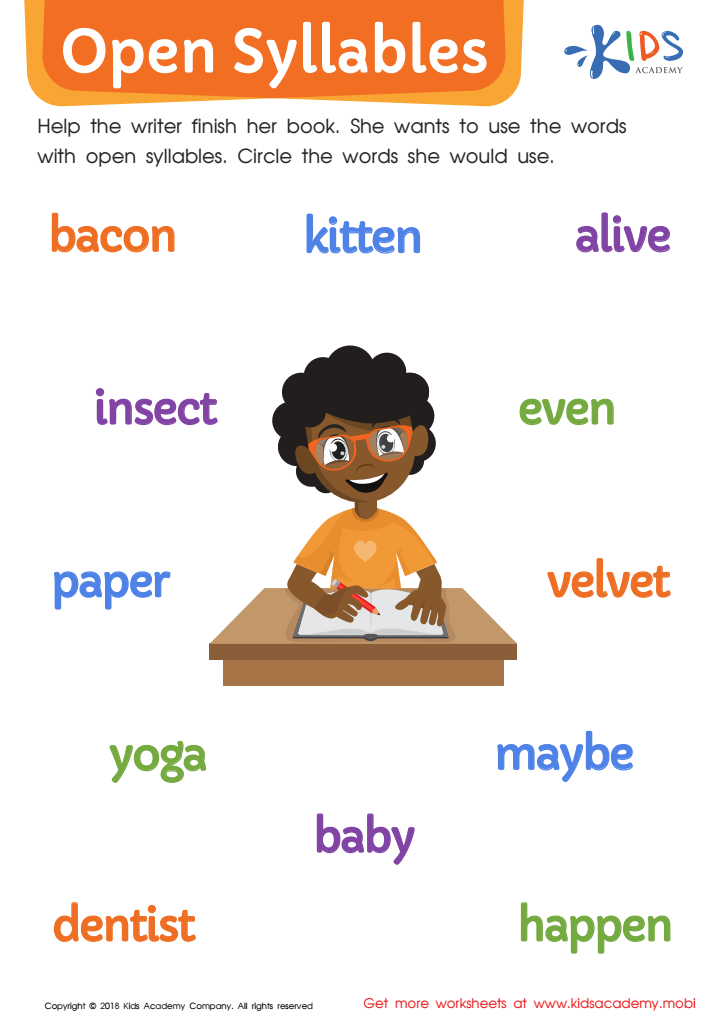
Open Syllables Worksheet
 Assign to My Students
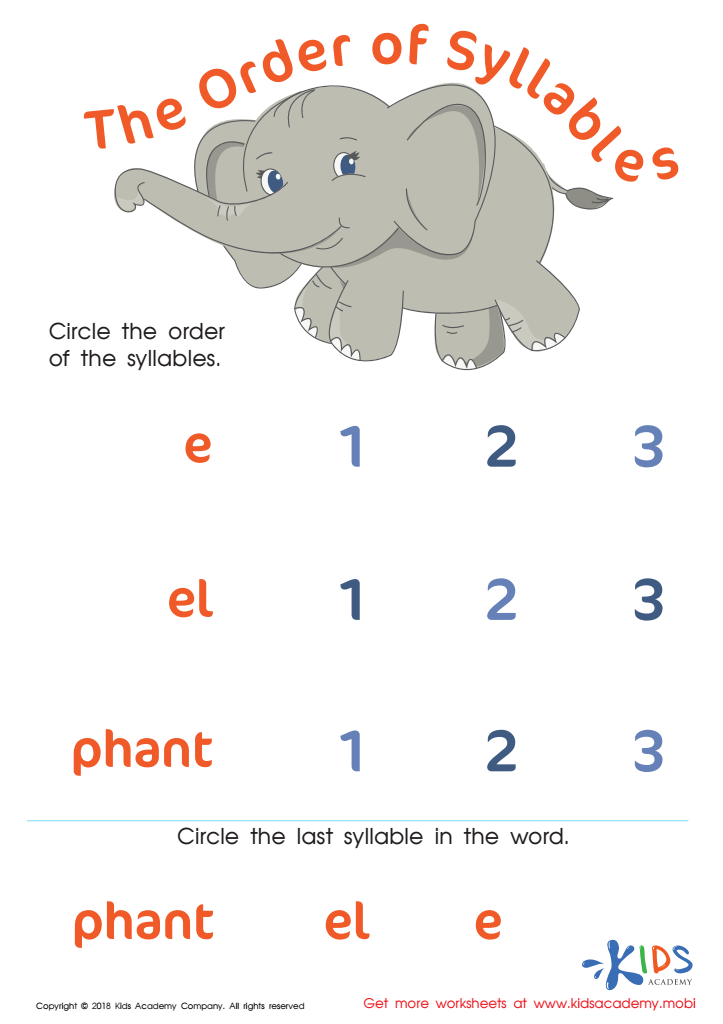
The Order of Syllables Worksheet
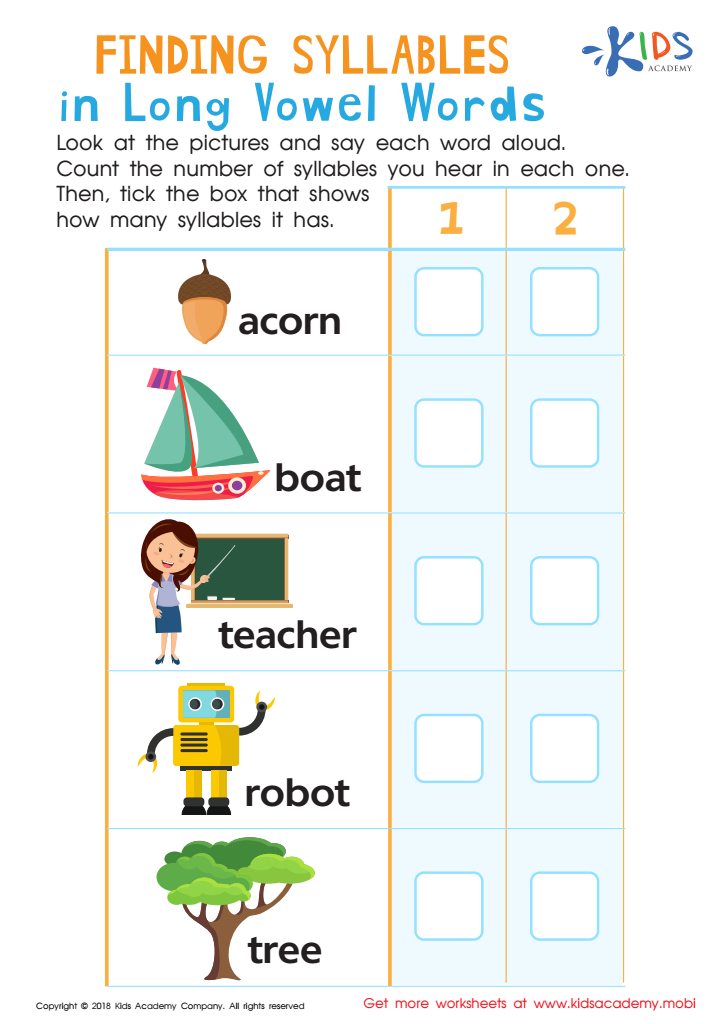
Finding Syllables in Long Vowel Words Worksheet







Understanding syllables and the normal alphabet are fundamental building blocks in early literacy development for children ages 3-9. Syllables are the discrete units of sound that make up words, breaking them down into manageable chunks. This phonological awareness helps children in learning to decode and blend sounds, essential skills for reading proficiency. When a child can distinguish and count syllables, they are better equipped to spell, read, and pronounce words accurately. Mispronunciations become teachable moments that improve their language skills.
Similarly, mastering the alphabet provides the foundation for all future learning in reading and writing. Knowing the normal alphabet (both upper and lower case) allows children to recognize letters and associate them with specific sounds. This skill is pivotal for word recognition and the development of a robust vocabulary.
For parents and teachers, the focus on syllables and the alphabet translates into more effective teaching methods, resulting in confident readers. Early literacy is linked to academic success across subjects, as the ability to read well impacts all areas of learning. Moreover, fostering these skills young will enhance a child's lifelong communication abilities, including speaking, listening, and writing. By understanding and supporting these early literacy concepts, parents and teachers play a critical role in setting children on a path toward educational success and beyond.







