Vocabulary development Normal Letter Sounds Worksheets for Ages 3-9
6 filtered results
-
From - To
Boost your child's vocabulary development with our Normal Letter Sounds Worksheets, tailored for ages 3-9. Designed to make learning fun and effective, these worksheets incorporate engaging activities that help young learners recognize, pronounce, and use letter sounds in context. From identifying initial consonants to mastering blends and digraphs, each worksheet is crafted to build a strong phonetic foundation. With vibrant illustrations and interactive exercises, your child will enjoy exploring the world of words while enhancing their reading and spelling skills. Perfect for homeschooling or supplementary practice, our worksheets support a lifetime love of learning.
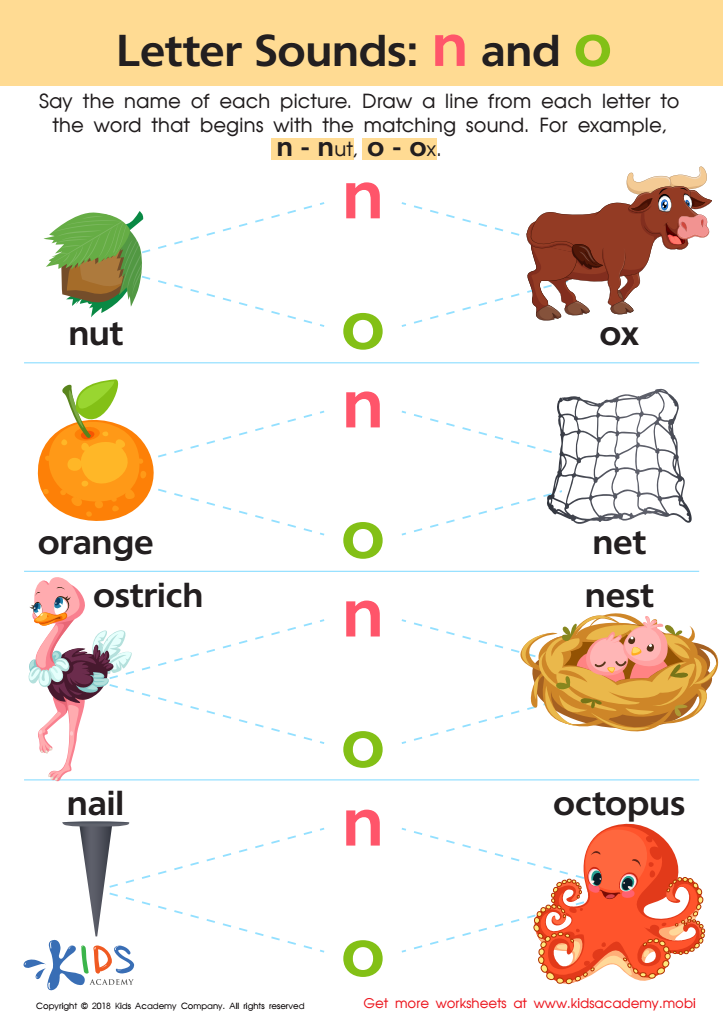
Letter N and O Sounds Worksheet
 Assign to My Students
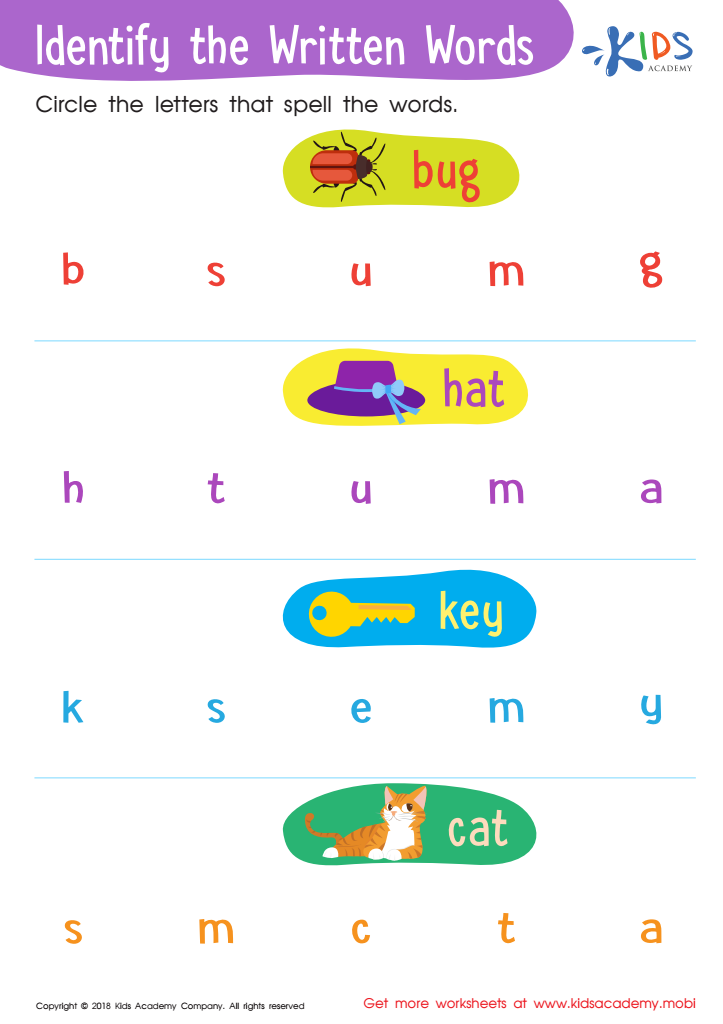
Identify the Written Words Worksheet
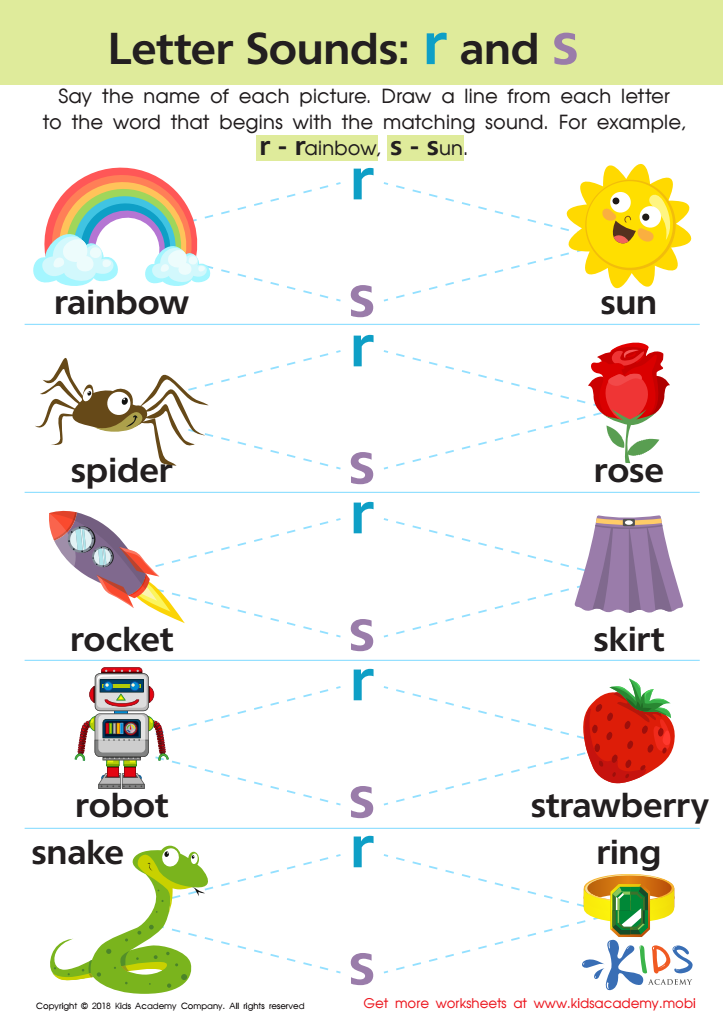
Letter R and S Sounds Worksheet
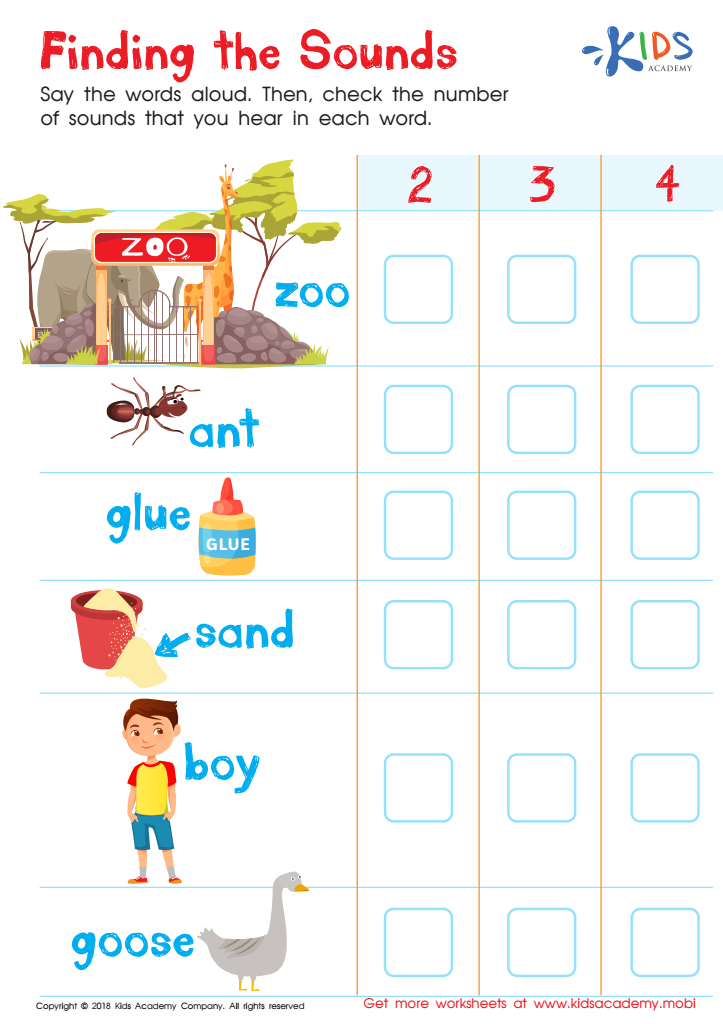
Finding the Sounds Worksheet
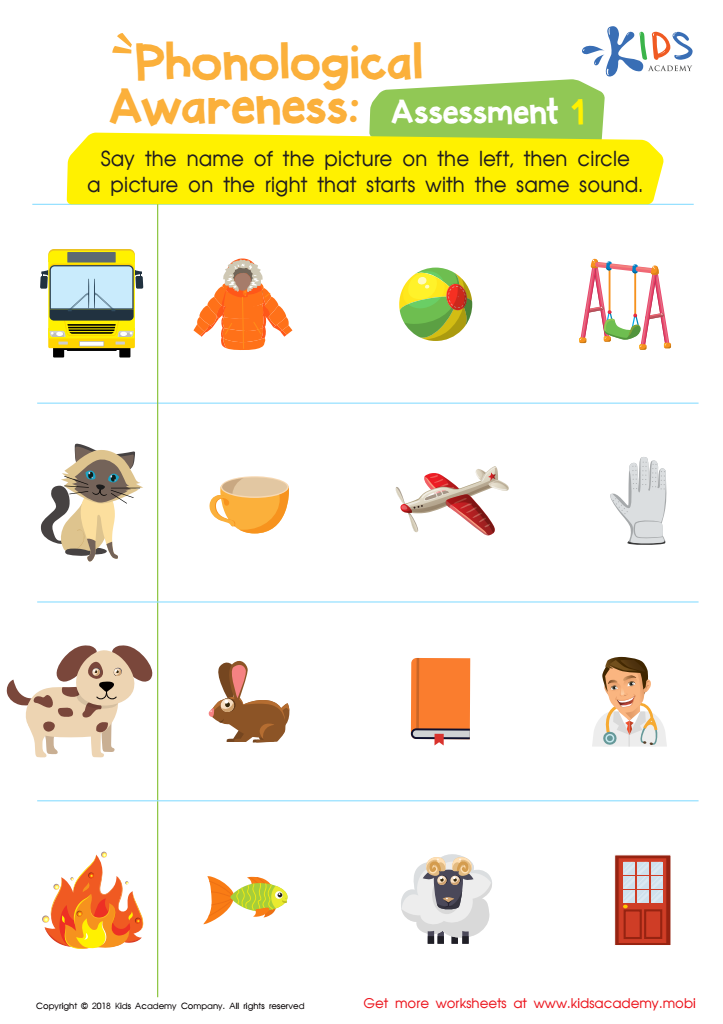
Phonological Awareness: Assessment 1 Worksheet
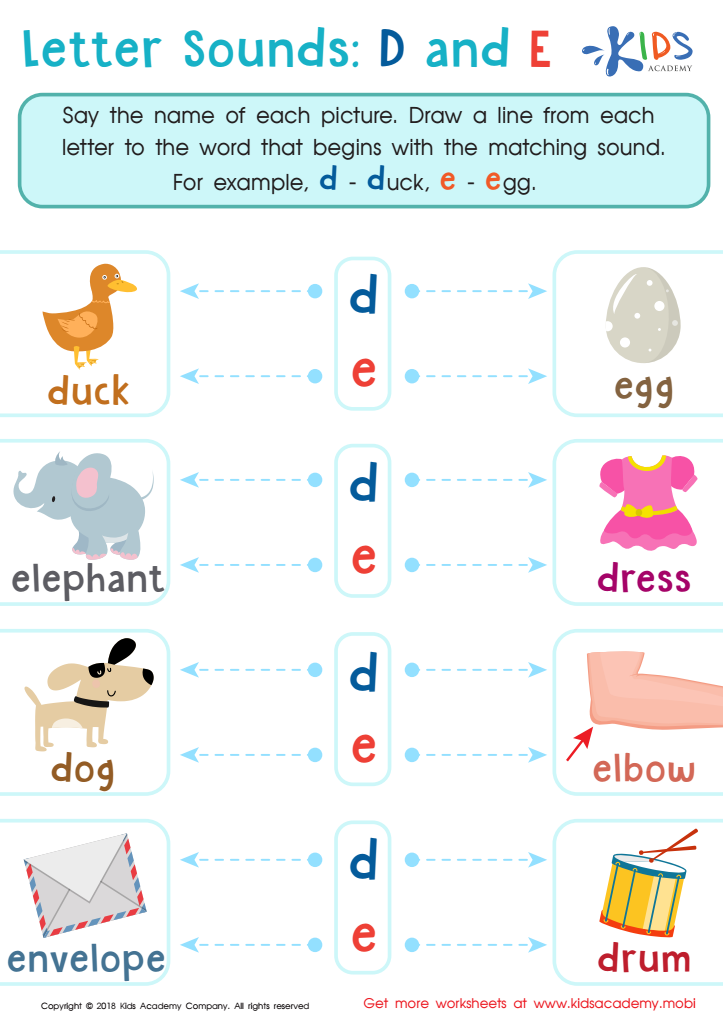
Letter D and E Sounds Worksheet








Vocabulary development and mastering normal letter sounds for children ages 3-9 are critical building blocks for future academic success and effective communication. During these formative years, children undergo rapid brain development, and exposing them to rich and varied vocabulary helps enhance their language, reading, and cognitive skills.
Understanding vocabulary and letter sounds well promotes early literacy, making learning to read a more natural and less frustrating process. When children can recognize and sound out letters, they are better equipped to decode words, understand text context, and expand their reading comprehension.
Strong vocabulary usage also aids in clearer verbal and written communication, allowing children to express their thoughts and emotions effectively. This proficiency makes it easier for them to interact socially and adapt to new environments, contributing positively to their social and emotional development.
Parental and teacher involvement is crucial in this process. Engaging children in conversations, reading aloud, playing word games, and providing diverse reading materials stimulate their curiosity and vocabulary growth. Management from parents or teachers ensures that any difficulties are addressed early, preventing potential future academic setbacks.
Overall, a strong foundation in vocabulary and letter sounds not only enriches immediate academic skills but also sets the stage for lifelong learning and success.






