Letter formation Normal Tracing Letters Worksheets for Ages 3-9
3 filtered results
-
From - To
Enhance your child's handwriting skills with our "Letter Formation Normal Tracing Letters Worksheets," designed for ages 3-9. These engaging worksheets provide a fun and effective way for young learners to practice tracing both uppercase and lowercase letters. Using a clear, easy-to-follow format, children develop fine motor skills and letter recognition, laying the foundation for successful writing. Our user-friendly worksheets cater to various learning styles, ensuring that every child can gain confidence in their writing abilities. Perfect for home or classroom use, these resources promote early literacy while making learning enjoyable. Download and watch your child's skills flourish!

Letter P Tracing Page
 Assign to My Students
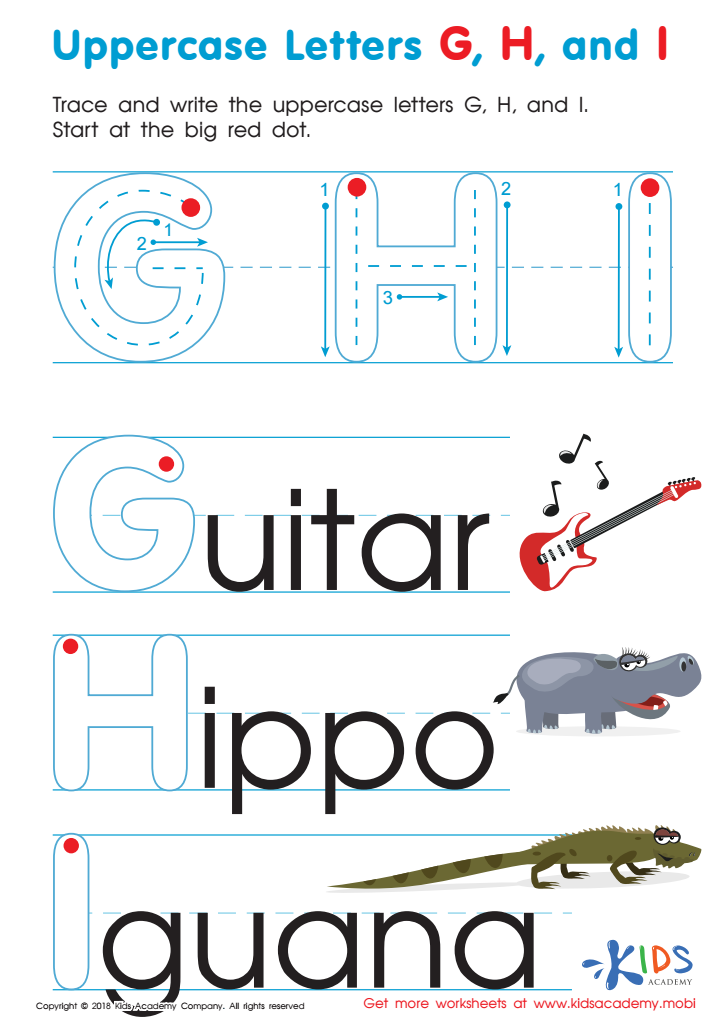
Uppercase Letters G, H, and I Worksheet

Letter G Tracing Page







Parents and teachers should prioritize the importance of letter formation and tracing letters for children aged 3-9 because these foundational skills are essential for academic success and fine motor development. Mastering proper letter formation enhances children's writing abilities, which are critical for effective communication as they progress through their education.
During the early years, developing penmanship lays the groundwork for good writing habits. When children trace letters, they learn how to hold and control a pencil, which fosters fine motor skills and hand-eye coordination—skills vital for many other tasks. Also, correct letter formation reduces frustration for young learners, helping them gain confidence in their writing abilities.
Furthermore, tracing letters engages children in a tactile and visual learning process, accommodating various learning styles. This early engagement with letters builds literacy skills, including phonemic awareness and spelling, forming a strong base for reading and writing.
Additionally, structured letter formation activities can make learning enjoyable, capturing children's attention and motivating them to improve. Therefore, through emphasizing letter tracing, parents and teachers can create a nurturing environment that supports the overall cognitive and physical development of young learners.








