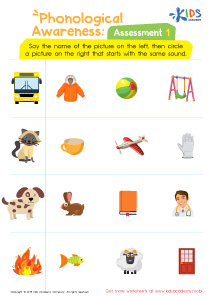
Sound recognition Normal Vowels Worksheets for Ages 3-9
5 filtered results
Difficulty Level
Grade
Age
-
From - To
Subject
Activity
Standards
Enhance your child's phonemic awareness with our Sound Recognition Normal Vowels Worksheets, tailored for ages 3-9. These engaging worksheets help young learners identify and differentiate vowel sounds, a foundational skill for reading and writing. Children will practice recognizing both short and long vowel sounds through fun exercises and activities. Crafted by educational experts, the worksheets are designed to be interactive, promoting active learning and retention. Ideal for parents and teachers, our worksheets support systematic phonics instruction, making early literacy skills development both effective and enjoyable. Visit our webpage to download your set today!
Favorites
With answer key
Interactive
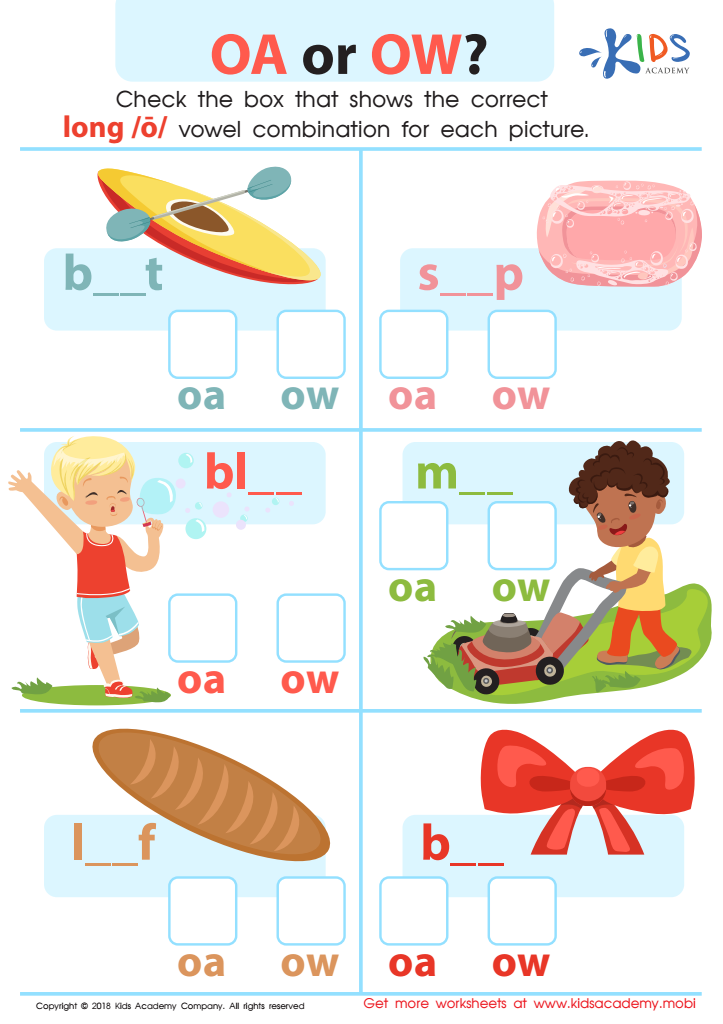
Reading: OA or OW Worksheet
This printable worksheet helps young and emergent readers with decoding words and understanding digraphs (two letters with one sound). It requires students to complete the spelling for each word based on the picture, focusing on /oa/ and /ow/ spellings. It's ideal for a reading classroom and for spelling practice.
Reading: OA or OW Worksheet
Worksheet
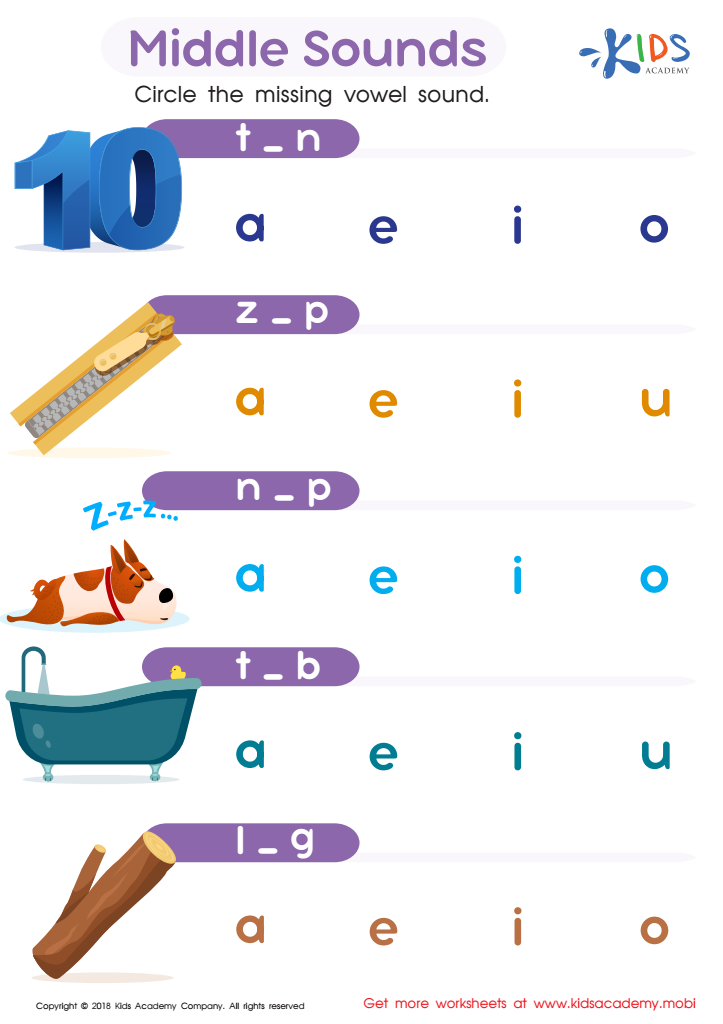
Middle Sounds Worksheet
Download this free worksheet and help your reader identify middle sounds in words. Pictures provide clues to the word, while tracing circles around the middle vowel sound strengthens fine motor and visual discrimination skills. It's a great way to teach sound discrimination between similar-sounding short vowels - a key component for proficient reading.
Middle Sounds Worksheet
Worksheet

Long and Short U Worksheet
Revised: Spice up your lesson on long and short vowels with this fun printout! Kids read the words "tube" and "tub," then reinforce the sound by coloring in the words and pictures. It's a great way to make phonics class enjoyable!
Download (PDF)
 Assign to My Students
Assign to My Students
Long and Short U Worksheet
Worksheet
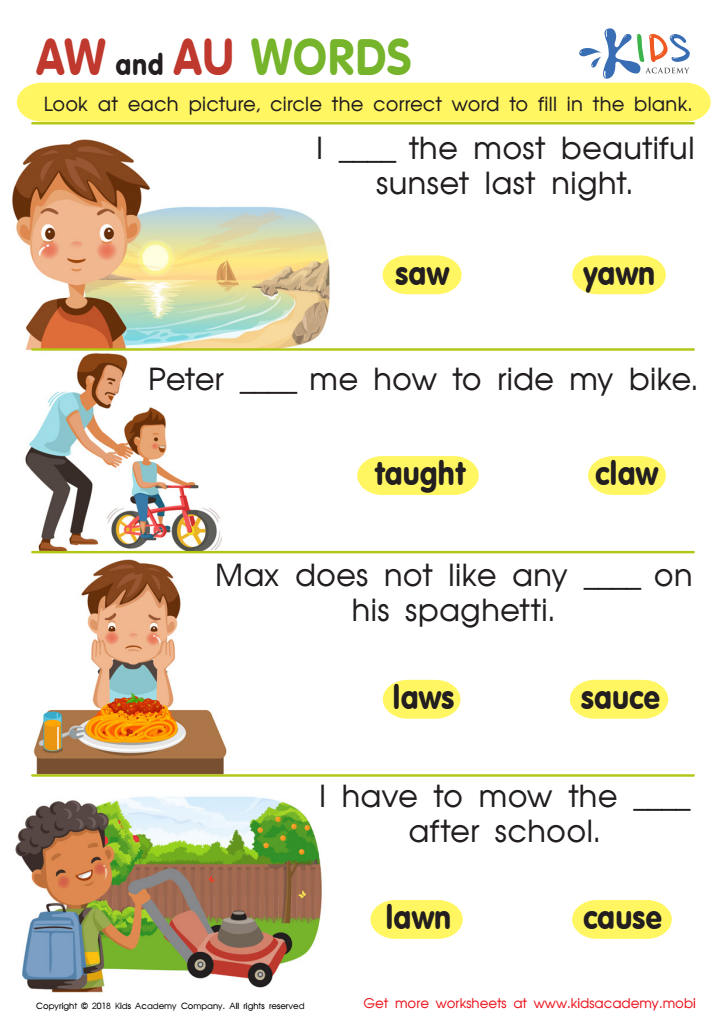
Reading: AW and AU Words Worksheet
This worksheet helps kids recognize that /au/ and /aw/ can make the same sound. Students read sentences and pick the correct word with one of the digraphs. Understanding digraphs improves decoding and reading fluency. Perfect for reading and phonics classes.
Reading: AW and AU Words Worksheet
Worksheet
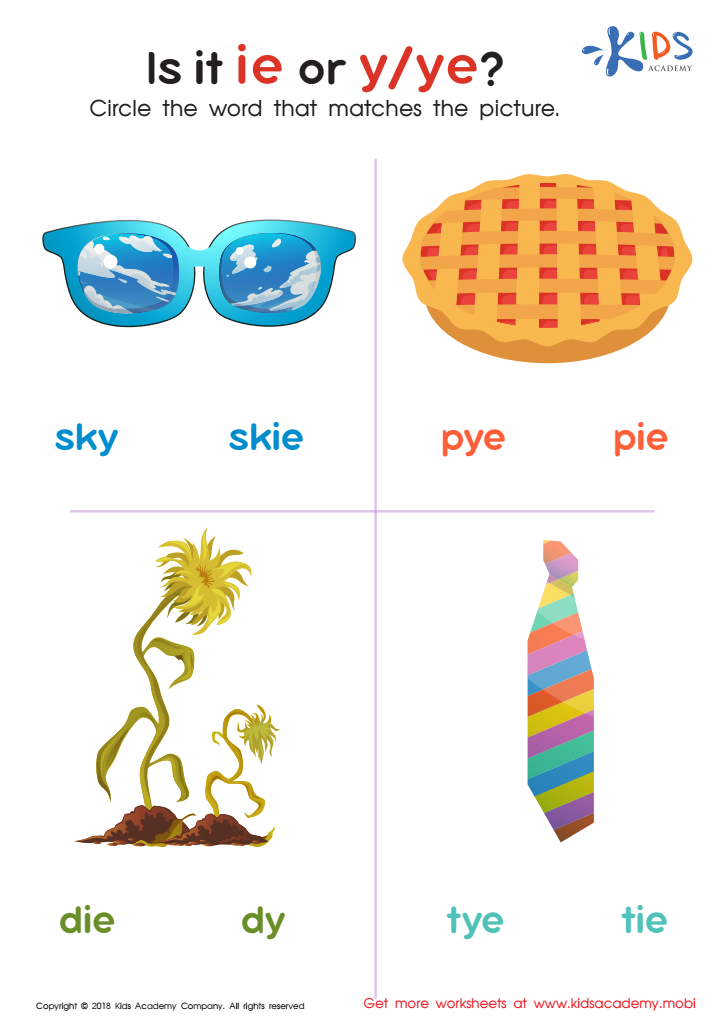
Is It IE or Y/Ye? Worksheet
Test your child's picture identification skills by pointing at common items in your house and asking them to name them. Then, look at the objects in this worksheet with your little one. Point at each one, ask for the name, then ask which spelling is correct. Help them circle the correct word.
Is It IE or Y/Ye? Worksheet
Worksheet
Join Kids Academy for Free
Who is primarily going to use this learning content?





Sound recognition and mastering normal vowels are critical for children aged 3-9 because they are foundational components of early literacy and language skills. During these formative years, children's brains are highly receptive to acquiring language. Proper vowel recognition fosters phonemic awareness—the ability to hear, identify, and manipulate individual sounds in words—which is a prerequisite for reading proficiency.
Vowel sounds are the cornerstone of word formation and pronunciation. Mastery of these sounds enables children to decode new words, thus accelerating their reading skills. Early success in reading sparks a positive feedback loop; children who experience early literacy experiences tend to develop a love for learning and continued academic success.
Moreover, clear vowel pronunciation enhances children's communication abilities. When children can correctly enunciate words, they are better understood by their peers and adults, fostering more effective and confident verbal interactions. This can lead to improved social skills and self-esteem.
Teachers and parents should thus prioritize activities and lessons that cultivate vowel sound recognition. Singing, rhyming games, and phonics-based activities are not just educational but also engaging. Investing in these skills pays dividends in a child's lifelong ability to read, write, and communicate effectively. In short, focusing on normal vowels in this age range is vital for comprehensive language development and sets the stage for future academic and personal success.