Color Identification Normal Worksheets for Ages 3-9 - Page 2
26 filtered results
-
From - To
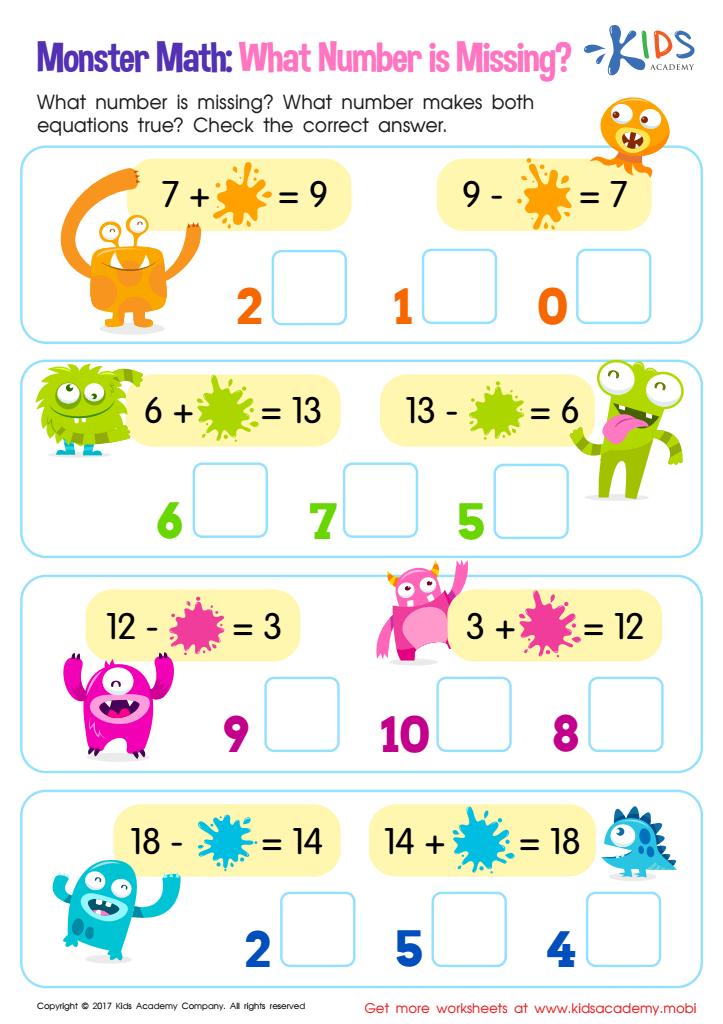
Missing Number: Monster Math Worksheet
 Assign to My Students
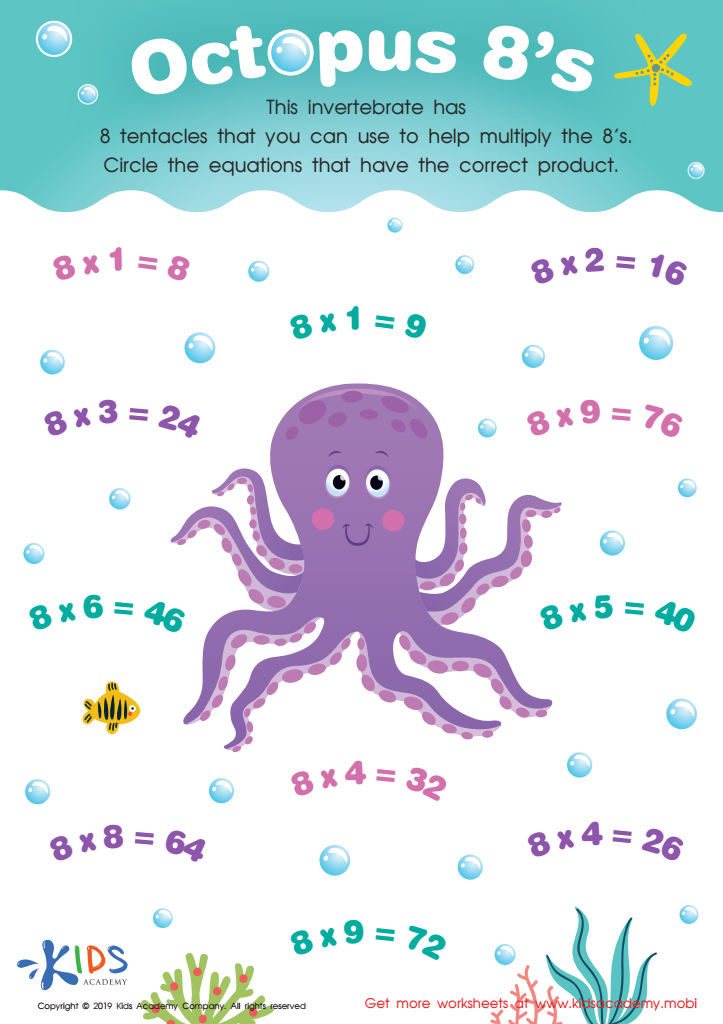
Octopus 8’s Worksheet







Color identification is a fundamental skill for children aged 3-9 and plays a vital role in their overall development. Parents and teachers should prioritize this skill for several reasons. Firstly, color recognition helps enhance cognitive development, as it engages visual perception and memory. By mastering colors, children expand their vocabulary and language skills, enabling them to articulate their observations and experiences better.
Secondly, understanding colors aids in the development of critical thinking. Kids learn to categorize and connect colors to objects in their environment, fostering their ability to classify and differentiate between items. This foundational skill is not only essential for art and creative expression but also lays the groundwork for more complex learning, such as math concepts (e.g., patterns and sorting).
Additionally, color identification plays a role in emotional and social development. Colors are often linked to feelings and moods, helping children express themselves and connect with others effectively. For example, they may learn that "red" can signify anger while "blue" can represent calmness.
Overall, fostering color recognition during early childhood supports holistic growth—cognitive, emotional, and social—making it an essential focus for parents and educators alike.








