Critical thinking enhancement Normal Worksheets for Ages 3-9
4 filtered results
-
From - To
Discover our engaging Critical Thinking Enhancement Worksheets designed for children ages 3-9! These thoughtfully crafted activities promote essential cognitive skills through fun and interactive challenges, ideal for young learners. Our worksheets encourage problem-solving, reasoning, and decision-making, helping kids to think creatively and critically. Perfect for at-home or classroom use, these resources provide an exciting way to support your child's development. With colorful illustrations and age-appropriate tasks, children remain motivated while enhancing their analytical abilities. Explore our range of printable worksheets today and foster a lifelong love for learning in your little ones!

Around the Globe Worksheet
 Assign to My Students
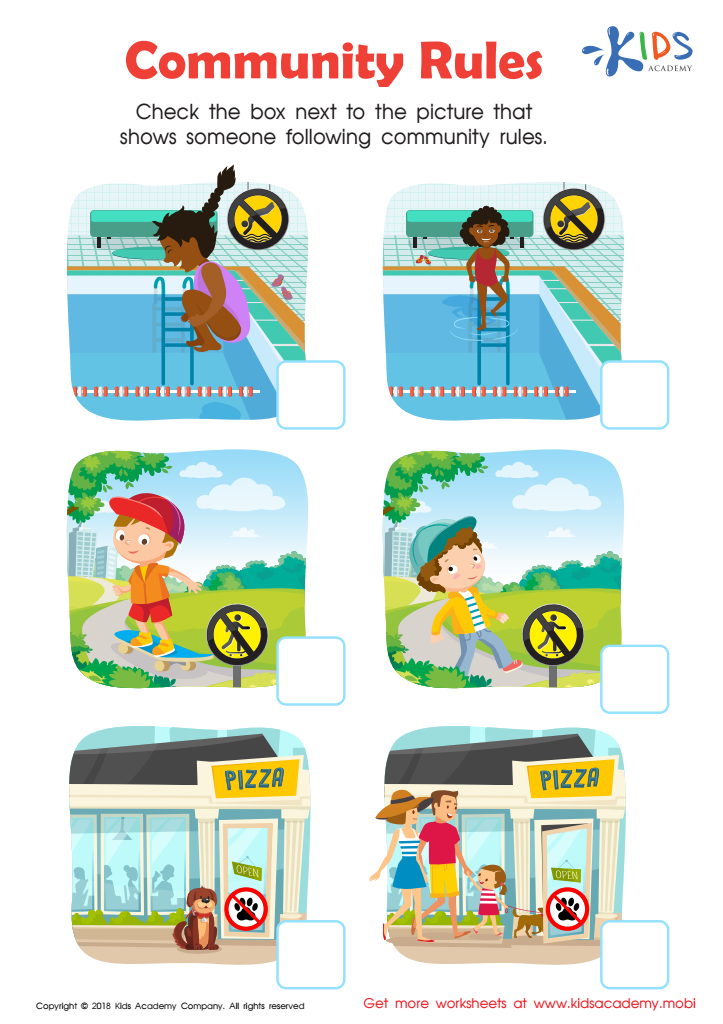
Community Rules Worksheet
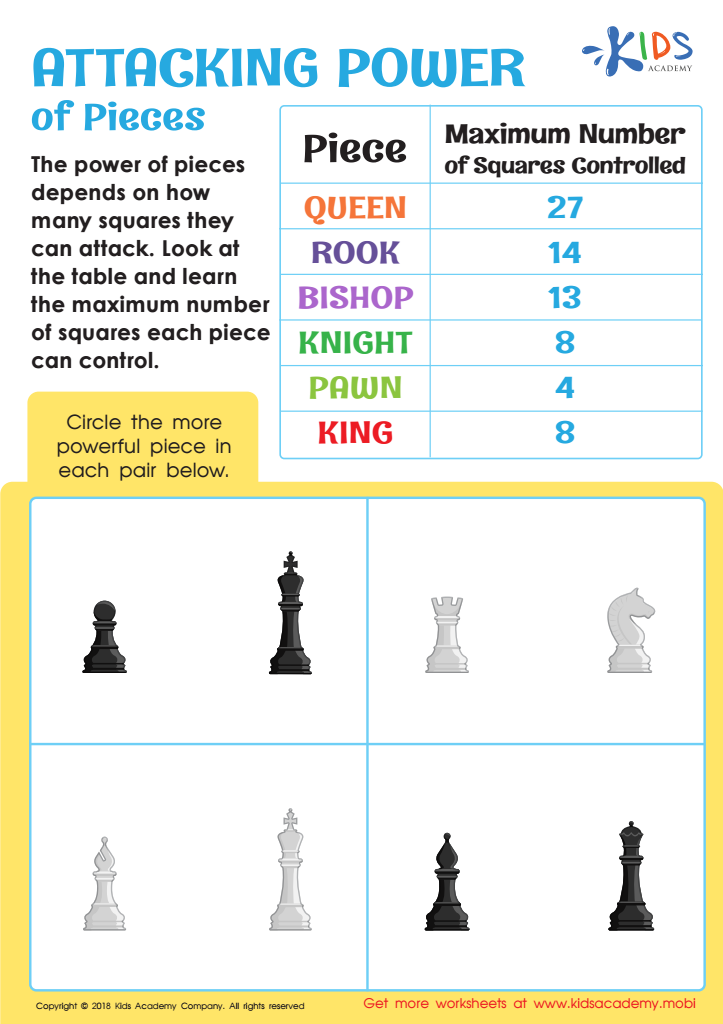
Attacking Power of Chess Pieces Worksheet

Dividing with Landforms








Critical thinking is essential for children between the ages of 3 and 9 as it lays the foundation for lifelong learning and problem-solving skills. During these formative years, children's brains are highly malleable, making it an ideal time to cultivate their ability to think critically. By enhancing critical thinking skills, parents and teachers empower children to evaluate information, make informed decisions, and approach challenges with a solution-oriented mindset.
Fostering critical thinking also encourages creativity, as children learn to ask questions, explore alternatives, and develop original ideas. This skill set is vital not only for academic success but also for navigating the complexities of everyday life. In a world filled with information, teaching children to analyze and question the validity of what they encounter helps them become discerning consumers of knowledge, promoting civic responsibility and ethical decision-making.
Moreover, enhancing critical thinking can aid in emotional and social development, as children learn to communicate effectively, consider multiple perspectives, and engage in healthy discussions. Ultimately, supporting critical thinking in young learners cultivates resilient, adaptable, and responsible individuals ready to thrive in an ever-changing world. Therefore, it is paramount for parents and teachers to prioritize and integrate critical thinking strategies into educational practices.








