Identifying story elements Normal Worksheets for Ages 3-9
3 filtered results
-
From - To
Discover our engaging "Identifying Story Elements" normal worksheets, specially crafted for children ages 3-9. These printable resources help young learners grasp basic story concepts such as characters, settings, events, and themes. Designed to nurture comprehension and critical thinking skills, our worksheets blend fun and education, providing a solid foundation in literacy. Each child-friendly activity fosters creativity and encourages an appreciation for storytelling. Perfect for classroom use or at-home learning, these worksheets align with early childhood education standards, making learning enjoyable and effective. Explore our collection and watch your child's understanding of stories flourish! Start their storytelling journey today!
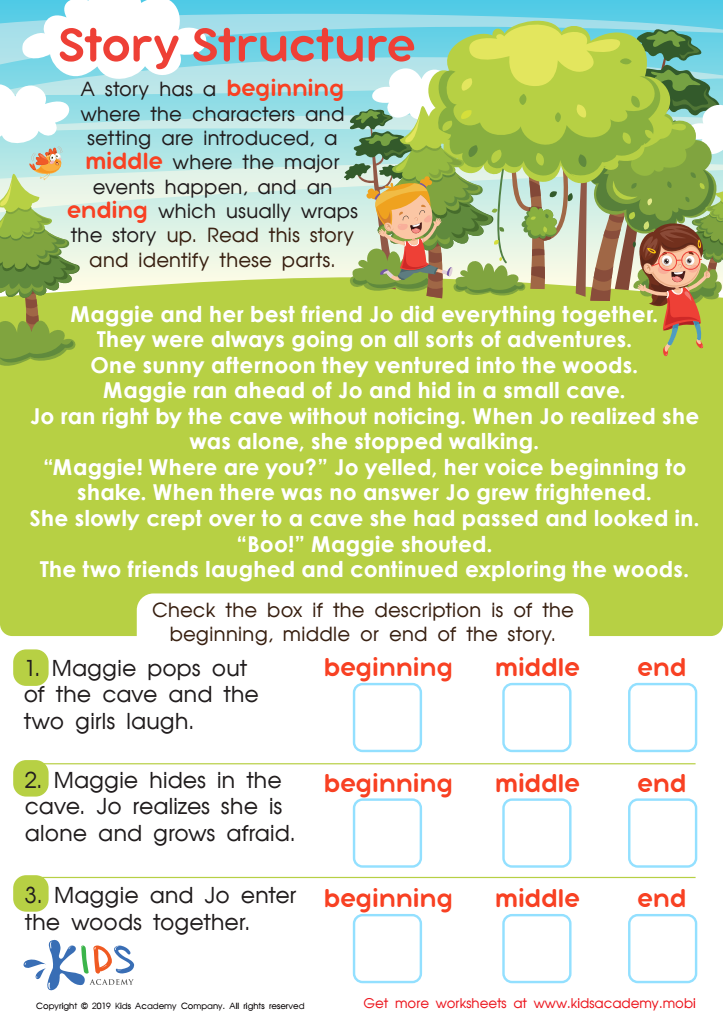
Story Structure Worksheet
 Assign to My Students
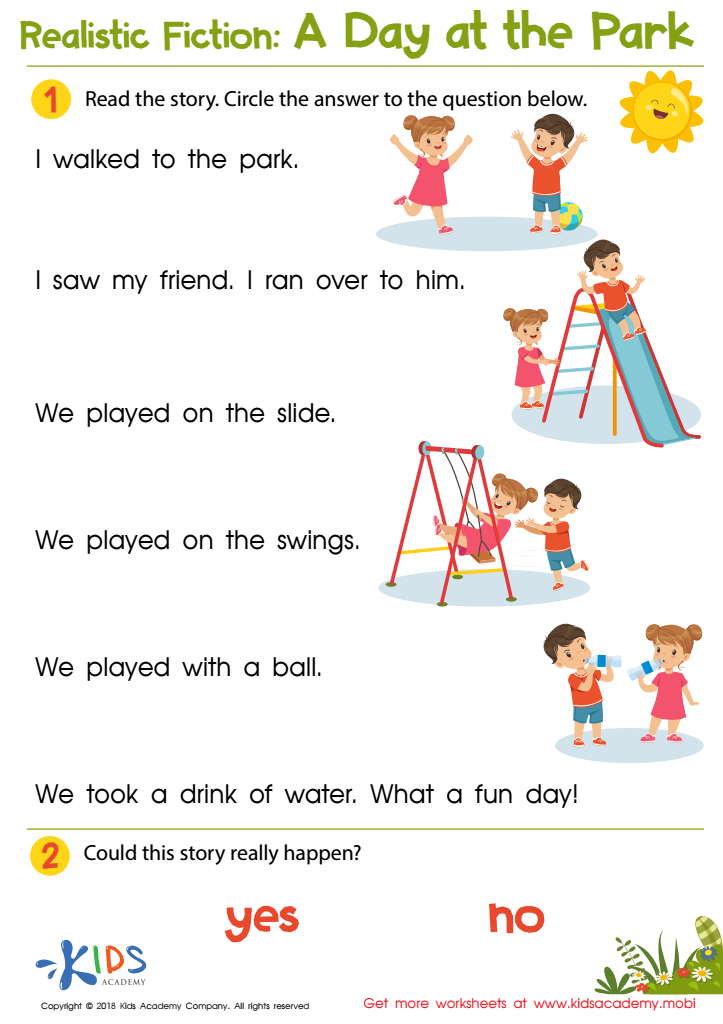
A Day at the Park Worksheet
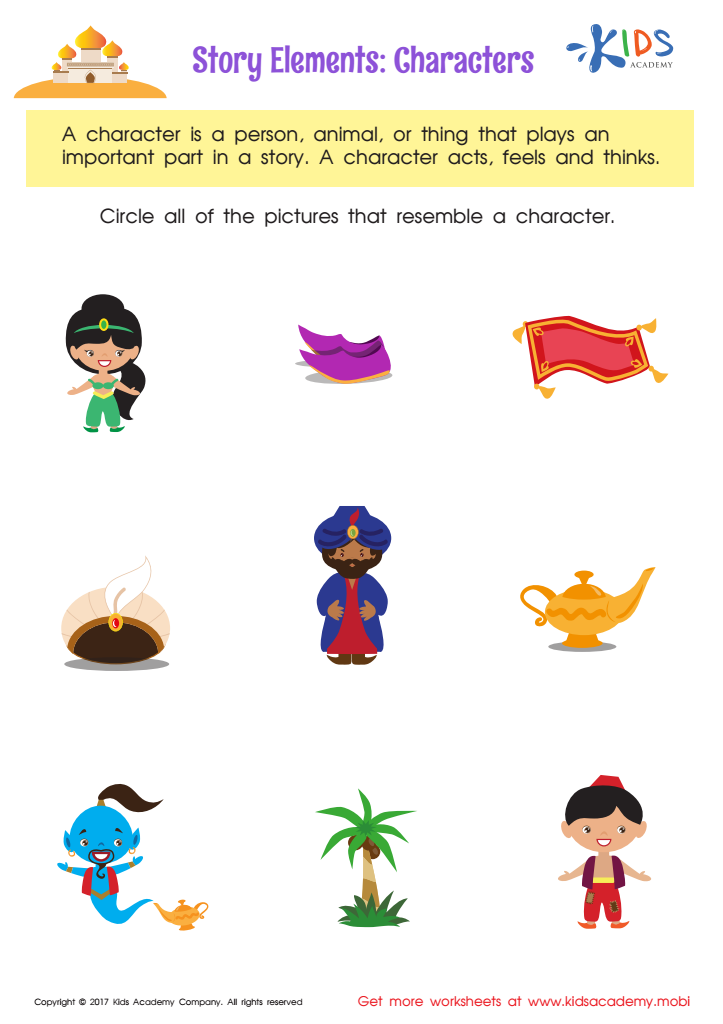
Story Elements Printable







Identifying story elements is crucial for young learners, ages 3-9, as it lays the foundational skills for reading comprehension and critical thinking. When parents and teachers help children recognize the key components—such as characters, setting, plot, conflict, and resolution—it enhances their ability to understand and engage with stories.
Understanding story elements fosters deeper connections with texts, allowing children to predict outcomes, dissect character motivations, and relate personally to the narrative. This engagement not only improves their reading skills but also nurtures important social-emotional skills by encouraging empathy and perspective-taking as they explore different viewpoints within the stories.
Additionally, recognizing these elements serves as stepping stones for creativity. Children learn to construct their stories with coherence and flow, developing their narrative skills. This process also enriches vocabulary as they become more familiar with literary language.
Finally, these skills cultivate a love for reading and storytelling, creating lifelong learners. Parents and teachers who emphasize the importance of story elements equip children with tools necessary for both academic success and personal growth, making it essential for fostering a well-rounded education.








